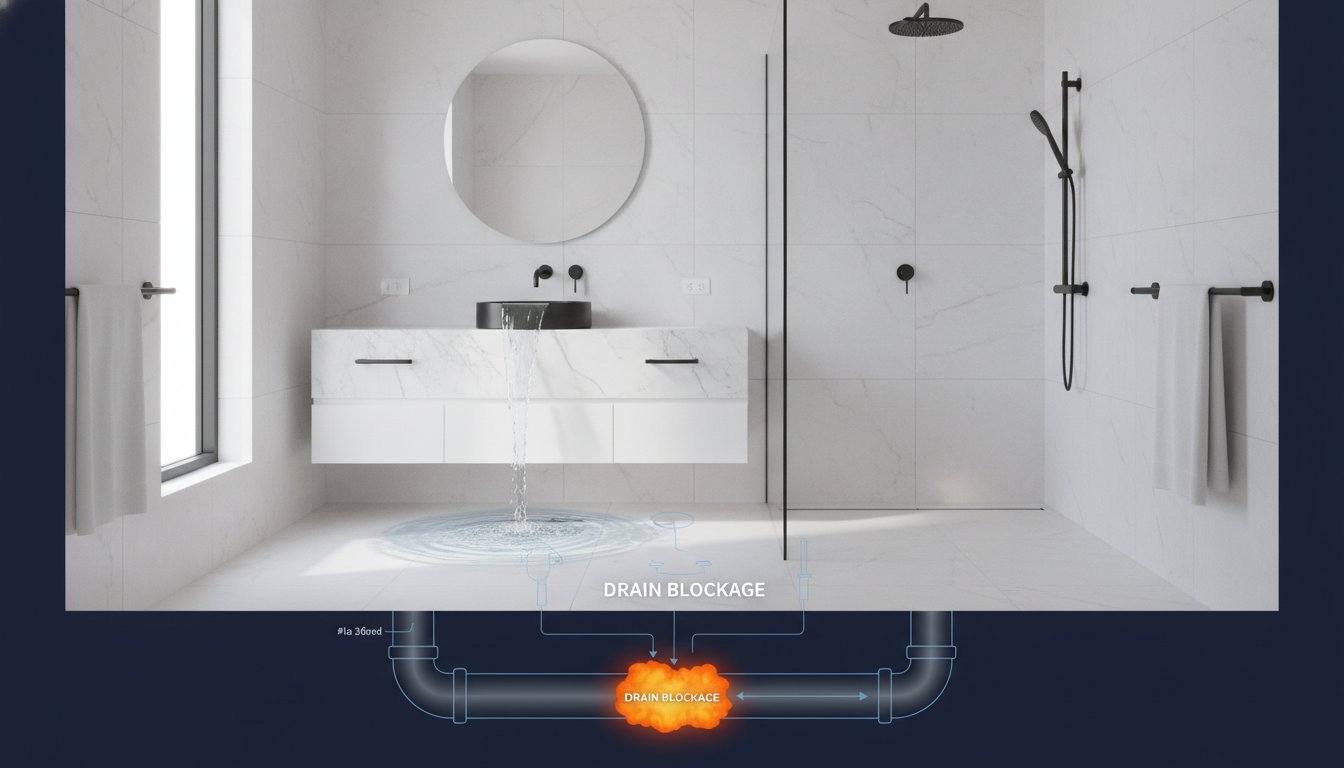
5 Critical Signs of a Main Drain Clog You Shouldn’t Ignore in 2026
A single slow drain is an annoyance, but three slow drains are a household emergency waiting to happen. If you're noticing multiple fixtures backing up, you're likely searching for the signs of a main drain clog to avoid a total disaster. Since up to 80% of plumbing services are considered urgent, it's normal to feel a spike of anxiety about your home's safety and the fear of raw sewage in your living space, right?
We're here to lower your blood pressure and provide a professional path forward. Our goal is to help you identify a catastrophic blockage before it floods your home. This article provides an expert diagnostic checklist to confirm if the main line is the real culprit. You'll learn how to catch a blockage early, discover steps to prevent immediate water damage, and know exactly when you need to call for a FAST, reliable solution to get your home back to normal, hassle-free.
Key Takeaways
- Understand why a main drain clog is a system-wide emergency that stops all wastewater from leaving your property.
- Learn to spot the 5 critical signs of a main drain clog, including the "Red Alert" of multiple fixtures backing up at once.
- Master the simple two-step multi-fixture test to confirm if the issue is a localized pipe or a catastrophic sewer line blockage.
- Get immediate instructions on how to shut down your water usage to prevent sewage from flooding your living spaces.
- Discover how professional video camera inspections and heavy-duty snaking solve the problem FAST and without the mess.
What is a Main Drain Clog and Why Is It an Emergency?
Your home relies on a single, hidden artery to stay functional. This pipe, known as the main sewer line, carries every drop of wastewater from your toilets, sinks, and showers out to the city sewer or your private septic tank. Understanding What is a Main Drain? is the first step in realizing how high the stakes are when things go wrong. A main drain clog is a total system blockage that prevents any water from leaving the property. When this line fails, your entire home's plumbing system comes to a grinding halt. It's not just a minor inconvenience. It's a full-blown emergency that requires immediate attention to protect your family and your property.
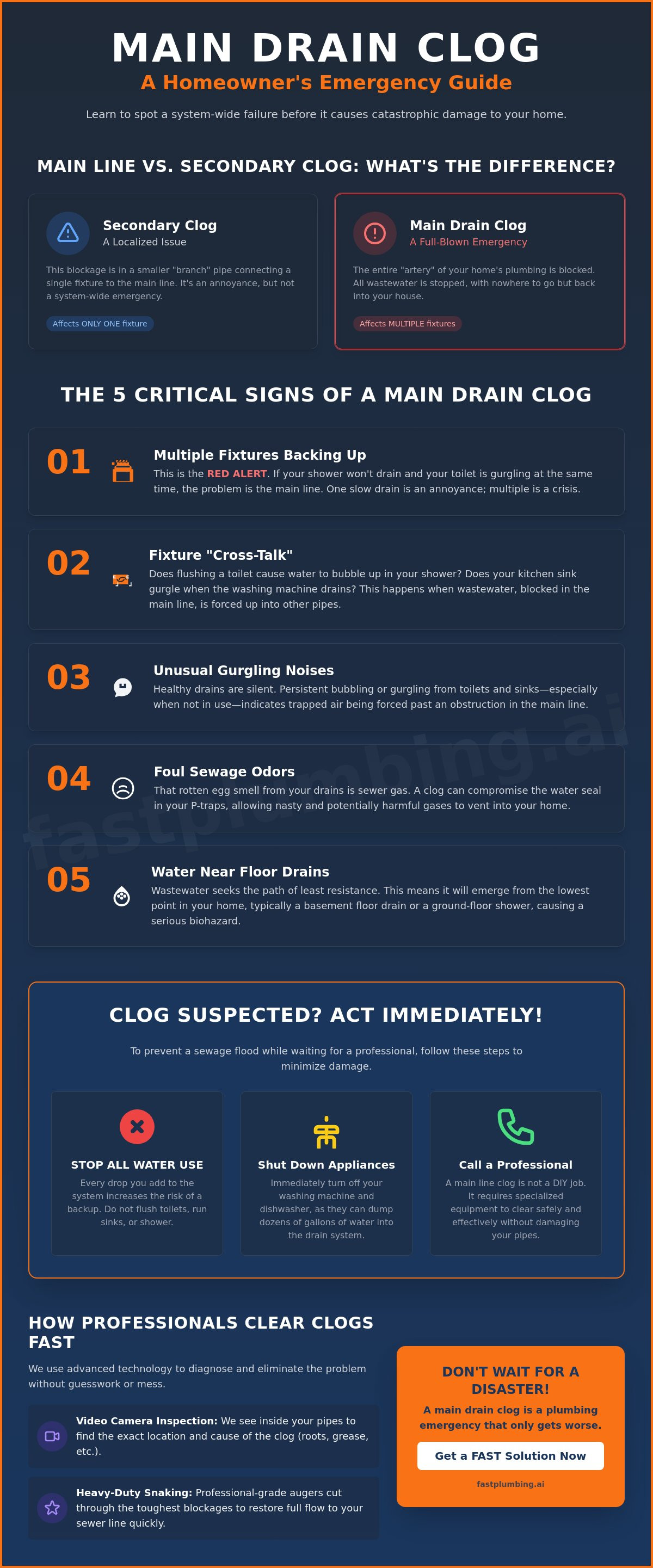
Main Line vs. Secondary Drain Clogs
To solve the problem FAST, you have to know where it's hiding. Secondary clogs, or branch line issues, only affect a single fixture. Think of the small pipe under your kitchen sink or the one connected to your guest bathroom toilet. If only one sink is slow, it's a local problem you can likely handle. However, spotting the signs of a main drain clog means looking at the bigger picture. We use the "System-Wide" rule. If two or more separate areas are backing up at the same time, the main line is almost certainly the culprit. Does your kitchen sink gurgle when you flush the toilet? That's a red alert that your main line is struggling to move waste. You don't want to ignore these warnings until the water has nowhere left to go.
The Consequences of a "Wait and See" Approach
Taking a "wait and see" approach with a sewer line is a recipe for disaster. Wastewater is stubborn. It will always seek the path of least resistance. In most homes, this means raw sewage will eventually force its way up through the lowest points, such as basement floor drains or your downstairs bathtub. This creates a serious biohazard for your family and can lead to rapid mold growth or even foundation damage if leaks occur behind your walls. Early detection is your best defense. Catching the signs of a main drain clog early allows for professional drain cleaning that saves your pipes and your property. You want a home that stays clean and safe, right? Acting ASAP prevents a simple blockage from turning into a total home renovation. We focus on getting your system back to normal so you can stop worrying about what's lurking under your floors.
The 5 Critical Signs of a Main Drain Clog
Recognizing the signs of a main drain clog before your basement turns into a swamp is the difference between a simple service call and a five-figure restoration bill. When your main line is blocked, your home will start "talking" to you through its fixtures. You need to listen. The most obvious red alert is when multiple fixtures back up simultaneously. If your kitchen sink is slow and your guest bath is also gurgling, the problem isn't a single pipe. It is a system-wide failure. You shouldn't wait for the water to hit your ankles. Check for these specific symptoms right now to get ahead of the crisis.
Fixture Cross-Talk: The Smoking Gun
Your toilet is the canary in the coal mine for your entire sewer system. Because it sits on the largest drain line in your home, it is often the first fixture to react when the main line is struggling. Have you noticed the water level in your shower rising while the washing machine is draining? That is a classic example of "cross-talk." When the main line is blocked, wastewater has nowhere to go. It is forced back up into the lowest available openings, which are usually your tubs or floor drains. You can learn more about to see exactly how these connections work. If your sink "burps" every time the dishwasher runs, your main line is sending you a clear warning. It is time to act before that burp becomes a flood.
Identifying Unusual Drainage Noises
There is a major difference between a standard "glug" from a sink and a deep-system gurgle. A healthy drain is silent. If you hear persistent bubbling or gurgling sounds coming from your pipes even when they aren't in use, you have a problem. This happens because air is trapped in the main line by a growing obstruction. As water tries to push past the clog, air bubbles are forced back up through the P-traps in your sinks and toilets. These noises often get louder at night or during heavy appliance use when the system is under the most pressure. If your home sounds like it's brewing a pot of coffee in the walls, your main drain is likely gasping for air. You want a quiet, functional home again, right?
Physical evidence is the final confirmation. If you smell a rotten egg or sewage odor wafting from your floor drains, that is sewer gas escaping because the water seal has been compromised. Even worse is finding water pooling around the floor drain in your basement or utility room. This means the backup has already reached the lowest point of your home. If you see standing water near your HVAC system or water heater, stop using your water immediately. You can reach out to Fast Plumbing for a rapid diagnostic check to stop the damage before it spreads. We solve these issues FAST so you can get back to your life without the mess.
The Multi-Fixture Test: Confirming the Blockage
You've noticed the symptoms. Now you need a clear confirmation. Don't just keep guessing while the pressure builds in your pipes. This controlled test helps you identify the signs of a main drain clog without causing an accidental flood. By following a tactical diagnostic approach, you can prove the blockage exists before the situation turns into a biohazard. Follow these steps in order to get the answers you need right now.
- Step 1: Locate the lowest drain in your house. In most homes, this is a basement shower, a floor drain near the HVAC unit, or a utility sink.
- Step 2: Flush the toilet furthest from the main stack. Have someone watch the lowest drain. If you see water rising or hear air bubbling up through that drain, the main line is obstructed.
- Step 3: Run the bathroom sink for two full minutes. Watch the toilet in the same room. If the water level in the bowl moves or starts gurgling, air is trapped in the system by a main line clog.
- Step 4: Check the "cleanout" pipe outside your home. Look for a white or black capped pipe near the foundation or in the yard. Standing water or overflow here is the final proof.
How to Safely Check Your Main Cleanout
Finding your cleanout is the most direct way to see what's happening. Look for a threaded cap, usually made of PVC or cast iron, located in your yard or near the foundation. Use a pipe wrench to carefully loosen the cap. Wear gloves and eye protection. You must be prepared for pressure. If the main line is full, wastewater might spray out the moment the seal is broken. If you see standing water inside the pipe, you have confirmed one of the major signs of a main drain clog. This isn't a problem that will fix itself. You need a professional solution ASAP to prevent a total backup into your living space.
Interpreting the Results
The location of the water tells a story. If the cleanout pipe is empty but your interior drains are still backed up, the clog is likely located under your home's slab. If the cleanout is full of standing water, the blockage is further out, somewhere between the house and the city sewer main. This information is vital. It allows us to solve the problem FAST upon arrival because we know exactly which tools to pull off the truck. We value your time and your home's cleanliness. Having these answers ready ensures a hassle-free repair that gets your life back to normal. You want the job done right the first time, right? This test gives you the certainty to make that happen.
Immediate Action: What to Do While Waiting for a Plumber
Stop everything right now. If you have confirmed the signs of a main drain clog, your home is in a state of emergency. Every single drop of water you send down a drain now has nowhere to go but back up into your living space. This is the moment to take control of the situation and minimize the damage. You want to protect your floors and your family's health, right? Follow these steps immediately to stabilize your home.
- Stop all water usage. No flushing. No showers. Definitely no laundry.
- Shut off the main water supply. This prevents a family member from accidentally washing their hands or starting the dishwasher while you are focused on the crisis.
- Clear the area. Move boxes, rugs, and valuables away from basement floor drains and downstairs tubs.
- Keep the kids and pets away. Standing wastewater is a biohazard. Secure the area to prevent accidental exposure.
It is a common mistake to think that shutting off the water valve solves the problem. It doesn't. The pipes are already full of wastewater. Gravity is still working against you. Even with the water off, the fluid already in the system is a threat until the blockage is removed. You need a professional to clear the path so your home can breathe again.
Why Chemical Cleaners Are Dangerous for Main Lines
Don't reach for that bottle of liquid drain cleaner. In a main line backup, the pipe is full of standing water. The chemicals will never reach the actual clog. Instead, they sit in your pipes, creating a toxic soup that can corrode cast iron or cause PVC to crack from the intense heat of the chemical reaction. This makes the job much more dangerous for the plumber who eventually has to clear the line. When you weigh the risks, the choice between DIY vs professional drain cleaning is easy. Chemicals fail; professional tools solve the problem FAST and without damaging your infrastructure.
Preparing for the Plumber’s Arrival
You can help us get to work ASAP by clearing a path. Make sure your outdoor cleanout is accessible. If it is buried under mulch or hidden behind a heavy planter, move it now. Note which fixture first showed the signs of a main drain clog. Was it the downstairs toilet? The kitchen sink? This data helps us diagnose the blockage in minutes. We pride ourselves on a clean-up that looks like it is our own home, but keeping the area clear from the start makes the process even more hassle-free. If you need help now, contact Fast Plumbing for a rapid response that stops the flood in its tracks.
Professional Solutions: How We Clear Main Drain Clogs FAST
Once you've spotted the signs of a main drain clog, you need a solution that is as fast as the emergency itself. We don't believe in guesswork. Our team arrives with a tactical plan to restore your home's safety and comfort ASAP. We start with a high-definition Video Camera Inspection to see the exact cause of the blockage before we ever touch your pipes. This eliminates unnecessary digging and ensures we apply the right tool for the job. You deserve to see the problem for yourself, right? We show you the real-time footage so you can make an informed decision without the stress.
Professional snaking is our go-to for immediate relief from physical obstructions. While a standard plunger might clear a local sink, our heavy-duty motorized augers are designed to travel 100 feet or more into your main line. They can chew through tough waste buildup and small root intrusions that stop your system in its tracks. It is a clean, effective way to get your water flowing again without a hassle. We focus on speed and responsiveness to ensure your day isn't ruined by a stubborn pipe.
Hydro Jetting: The Ultimate Pipe Restoration
For homes with recurring issues or heavy grease buildup, we recommend the gold standard of drain cleaning. High-pressure hydro jetting a sewer line uses specialized nozzles to scour the entire interior diameter of your pipes. Unlike a snake that just pokes a hole through a clog, hydro jetting removes every trace of debris, scale, and grease. It is the best preventative measure for older homes in 2026. This process leaves your pipes in a "like-new" condition, which significantly reduces the chance of future backups. You get a long-term solution that protects your property for years to come.
When the Problem Is More Than a Clog
Sometimes, the signs of a main drain clog actually point to a structural failure. If our camera reveals a collapsed pipe or severe tree root intrusion, a simple cleaning won't fix the underlying issue. In these cases, we offer modern sewer line repair techniques that prioritize your yard's integrity. We focus on trenchless solutions whenever possible. This means we can often repair or replace your sewer line without destroying your landscaping or driveway. We treat your property as if it were our own. Our goal is always the least invasive, most effective solution that solves the problem permanently. We get in, fix the issue, and clean up so thoroughly you'll forget we were ever there.
Protect Your Home and Restore Your Peace of Mind ASAP
You've learned how to identify the critical signs of a main drain clog before it turns into a household disaster. By recognizing fixture cross-talk and performing a tactical multi-fixture test, you can take control of the situation. Remember to stop all water usage immediately to prevent a biohazard flood in your living space. You now have the knowledge to protect your property and your family's health.
Facing a backup right now? You don't have to wait in fear. Our licensed and insured professionals provide 24/7 emergency service to handle any sewer crisis. We take pride in our work and guarantee a clean-up like it is our own home. We move quickly to ensure your repair is fast and hassle-free. You want your home back to normal, right? Our team is standing by to solve your plumbing problems with total confidence.
Call Fast Plumbing now for a 1-minute callback guarantee! We are the reliable neighbor you can count on to get your home back to normal today.
Frequently Asked Questions
Can a main drain clog fix itself over time?
No, a main drain clog will never fix itself. These blockages are made of solid materials like grease, tree roots, or "flushable" wipes that do not dissolve in water. If you wait, the blockage will only grow as more debris catches on the obstruction. You need to act ASAP to prevent a total backup into your living space.
How do I know if my main sewer line is clogged or just one toilet?
Check your other fixtures to find the answer. If only one toilet is slow, it is likely a local branch clog. However, if your shower fills with water when you flush the toilet, those are definitive signs of a main drain clog. System-wide reactions always point to the main line.
Is it okay to use a plunger on a main drain clog?
Don't waste your time using a plunger on a main line issue. Plungers are designed to clear clogs in local traps, like the "S" curve under your sink. They cannot create enough pressure to move a heavy blockage located 50 feet away in your yard. You need professional tools to reach that depth.
What is the most common cause of a main drain blockage?
The most common culprits are tree roots and "flushable" wipes. Even wipes labeled as safe for sewers don't break down like toilet paper. They snag on pipe imperfections and act like a net for grease and hair. This creates a solid dam that stops all wastewater from leaving your home.
How much does it usually cost to clear a main sewer line in 2026?
Costs for sewer cleaning in 2026 depend on the severity of the blockage and the specific method used, such as snaking or hydro jetting. Factors like the length of your sewer line and the accessibility of the cleanout will influence the total. You should request a professional camera inspection for an accurate, hassle-free quote.
Can tree roots cause a main drain clog even if I don’t have trees in my yard?
Yes, tree roots can reach your pipes from long distances. Roots are highly aggressive and will travel over 100 feet from a neighbor's yard or the city street to find moisture. They enter through tiny cracks in your pipes and grow quickly once they find the nutrients inside your sewer line.
What happens if I ignore the signs of a main drain clog?
Ignoring the signs of a main drain clog leads to a total system failure. Raw sewage will eventually back up into your lowest drains, creating a dangerous biohazard in your home. This results in expensive structural water damage and potential mold growth. You want to avoid a five-figure restoration bill, right?
How long does a professional main drain cleaning take?
Most professional cleanings are completed in one to three hours. The exact time depends on the tool we use and the toughness of the clog. A standard snake is very fast, while a deep hydro jetting takes a bit more time to ensure your pipes are scoured clean. We work hard to get your life back to normal FAST.
