
7 Critical Signs of a Broken Sewer Line in Your House (and What to Do FAST)
Is that stubborn gurgling in your toilet just a simple clog, or is your home's foundation about to face a sewage nightmare? It's a question that keeps many homeowners awake at night, especially when you start noticing strange smells or slow drains. You want to protect your property, but the fear of a torn-up yard or a massive repair bill often leads to hesitation. We understand that anxiety. It's frustrating to feel like your house is working against you, right?
Recognizing the early signs of a broken sewer line in house is the best way to stop a minor leak from becoming a total catastrophe. In this guide, we'll give you the clarity you need to act FAST. You'll discover the seven critical red flags that mean your main line is failing. We also explain how modern video camera inspections provide an instant diagnosis, and why trenchless repair methods can often fix the issue without a single shovel hitting your lawn. Let's get your home back to normal before the damage spreads.
Key Takeaways
- Learn the "Multiple Clog" rule to quickly distinguish between a simple drain issue and the dangerous signs of a broken sewer line in house.
- Identify why unusually lush, green patches in your lawn or soggy, indented soil are urgent warnings of a structural pipe failure.
- Understand the critical first steps to take during a crisis, including why you must stop all water flow immediately to prevent a total home flood.
- Discover how modern video camera inspections provide a FAST diagnosis without the need for messy or expensive investigative digging.
- Find out how trenchless repair technologies solve your sewer problems permanently and hassle-free, keeping your yard and foundation intact.
Telltale Interior Signs: How Your Drains Signal a Sewer Crisis
A broken sewer line is more than just a messy inconvenience. It is a structural failure in the main pipe that carries waste away from your home and into the municipal sanitary sewer system. When this pipe cracks, collapses, or detaches, the waste has nowhere to go but back into your living space. Identifying the early signs of a broken sewer line in house can save you from thousands of dollars in foundation repairs and biohazard cleanup. You need to know exactly what to look for before the situation spirals out of control. We are here to help you move FAST.
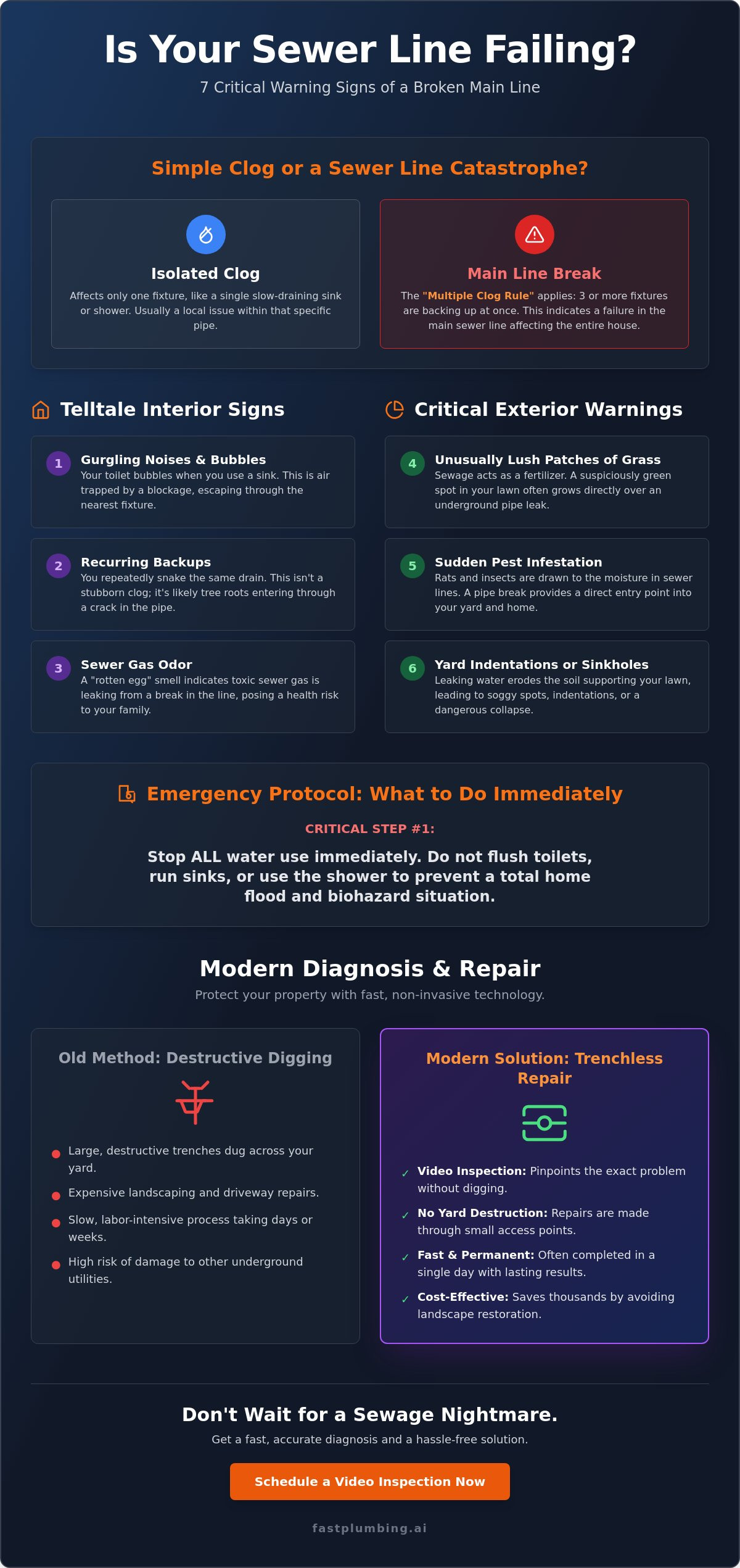
The most reliable way to diagnose a main line failure is the "Multiple Clog" rule. If one sink is draining slowly, you likely have a local clog in that specific pipe. However, if three or more fixtures are backing up at once, you are facing a sewer break. It's statistically impossible for three separate drains to fail simultaneously without a common denominator. That denominator is your main sewer line. When the primary exit is blocked by a structural collapse, every drain in your home will struggle to clear. This is a clear signal that you need a professional inspection ASAP.
Have you noticed your toilet bubbling when you run the bathroom sink or the shower? This is known as the Gurgle Test. It happens because air is trapped in the system by a structural blockage or a break. As water tries to push past the obstruction, the displaced air escapes through the nearest opening, which is usually your toilet bowl. If you see these bubbles or hear a constant glugging sound, your system is crying for help. You should act quickly to prevent a total backup into your living room or basement.
The Red Flag of Recurring Backups
If you find yourself calling a plumber to snake the same drain every few months, you don't have a stubborn clog. You likely have a broken pipe. Small cracks in older lines act like magnets for tree roots. These roots enter the pipe to reach the moisture inside, creating a thick web that catches hair, grease, and paper. While professional drain cleaning can clear the debris temporarily, it won't fix the hole in the pipe. The roots will grow back. This cycle will continue until the structural issue is solved permanently.
Unusual Noises and Sewer Gas Smells
A healthy plumbing system is silent and odorless. If you start smelling rotten eggs in your basement or behind your walls, it's a major warning. This scent is actually sewer gas. Sewer gas is a toxic byproduct of decomposing waste that should never be present in a healthy home. Inhaling raw methane and other sewer gases can lead to headaches, dizziness, and long term health risks. These smells often escape through cracks in the line, signaling that the integrity of your pipes is gone. Don't ignore the odor. It's a sign that your home's safety is at risk, and you need a solution that is both fast and hassle-free.
Exterior and Structural Warning Signs You Can't Ignore
While the drains inside your home provide the first clues, your property’s exterior often reveals the true extent of the damage. You should regularly walk your yard to look for the physical signs of a broken sewer line in house that might not be visible from your bathroom. These external red flags are often more dangerous because they indicate that the waste is already escaping into the environment surrounding your foundation. We want to help you spot these issues before they compromise your home's structural integrity.
Have you noticed a patch of grass that looks suspiciously healthy? While a lush, vibrant green spot in the middle of a brown lawn might seem like a blessing, it's often a bad omen. Sewage acts as a potent fertilizer. If a pipe is leaking underground, the surrounding soil becomes saturated with nutrient-rich waste. This fuels rapid plant growth directly above the break. If you haven't recently fertilized that specific spot, you likely have a pipe failure leaking raw sewage into your soil. It is a messy problem that requires a fast solution.
Cracks in your main line also act as a welcome mat for unwanted guests. Rats and cockroaches are naturally drawn to the moisture and organic matter found in sewer systems. A structural break provides them with a direct tunnel into your yard and, eventually, your home. If you are dealing with a sudden pest infestation that won't go away, the source might be beneath your feet. Addressing the pipe break is the only way to stop the cycle of pests permanently.
Yard Anomalies and Sinkholes
Soil collapse is a major safety hazard. When a sewer line breaks, the escaping water washes away the dirt supporting your lawn. This creates hollow pockets underground. Eventually, the surface will indent or turn into a soggy, soft mess. You might even see a "sewer sinkhole" form during dry weather. If you see pooling water when it hasn't rained, treat it as a 911 plumbing emergency. You need to explore sewer line repair options immediately to stabilize your ground and prevent further erosion.
Foundation and Slab Damage
The most expensive consequence of a broken line is structural settlement. Continuous moisture from a leak can cause the soil beneath your home to shift. This movement puts immense pressure on your concrete foundation. Over time, you will see cracks in your walls or floors. These are often the same slab leak symptoms that signal a hidden water threat. The EPA warns about the dangers of sewer backups and overflows, which can lead to five-figure repair bills if the foundation piers begin to sink. Don't wait for the walls to crack. If you suspect an issue, request a professional inspection ASAP to protect your home's integrity and value.
Is It Just a Clog or a Full Sewer Line Collapse?
How do you tell the difference between a minor drain headache and a total home disaster? Knowing the specific signs of a broken sewer line in house helps you avoid the trap of treating a structural failure like a simple clog. While a local blockage is annoying, a main line collapse is an emergency that threatens your foundation and your health. You need to act FAST to determine which one you're facing. Delaying the diagnosis only gives the problem more time to destroy your property.
The age of your property is a massive factor. If your home was built before 1970, you likely have clay or cast iron pipes. These materials are prone to sudden collapse as they reach the end of their lifespan. Adding chemical drain cleaners to these aging pipes is like pouring gasoline on a fire. These harsh chemicals generate heat and corrode the already thin walls of your sewer line, turning a small crack into a massive hole. Stop using them immediately. If a plunger doesn't restore your flow, it's time to stop DIY attempts and call an emergency plumber for a real solution.
Try the "One vs. All" test to locate the blockage. Is the problem limited to just your kitchen sink? That is usually a local clog. Are the toilets, showers, and laundry lines all backing up simultaneously? That is a sewer line failure. When the main exit is broken, no water can leave the house. This is the ultimate red flag. If your home is failing this test, you are dealing with a structural break rather than a simple hairball.
The Problem with DIY Solutions
Store-bought snakes are dangerous for older homes. These stiff metal cables can easily puncture brittle clay pipes or get stuck in a collapsed section of cast iron. Using them often makes a bad situation worse. Furthermore, temporary fixes like plunging or light snaking only mask the growth of tree roots inside the pipe. You might clear a small path for water, but the roots will continue to rip the pipe apart until it totally fails. Don't fall into the "out of sight, out of mind" trap. A temporary fix for a broken pipe is just a countdown to a flood.
When to Call for Professional Diagnostics
A recurring backup is your final warning before a total collapse. If you've had to clear your main line more than once in a year, the pipe is physically compromised. Getting a definitive answer now prevents sewage from entering your living space later. Professional diagnostics cost less than a single day of water damage cleanup. We use advanced technology to show you exactly what is happening underground so you can make an informed decision. Don't guess with your home's safety; get the facts ASAP and solve the problem permanently.
Emergency Response: What to Do the Moment You Suspect a Break
Stop the flow. This is the single most important thing you can do the moment you suspect a break. If you see the signs of a broken sewer line in house, every flush and every second the faucet runs adds to the pressure on your cracked pipes. You must immediately cease all water usage. This means no showers, no laundry, and absolutely no running the dishwasher. We know this is a massive disruption to your day, but it is the only way to prevent raw sewage from flooding your living space. Minutes matter when your foundation is at stake.
Safety comes next. Raw sewage is a dangerous biohazard filled with bacteria and pathogens. Keep children and pets far away from any interior drains or "wet spots" in your yard. If you must enter an affected area, wear heavy-duty personal protective equipment and avoid all direct contact. You should also take high-quality photos of any backups or yard puddles. This documentation is vital for your insurance claim and helps us provide a clear breakdown of plumbing repair costs later on. Once you've secured the area, call a professional who offers a 24/7 emergency guarantee to prevent further property loss.
Immediate Safety Protocols
Never touch standing sewage water with bare skin. It is a major health risk. You should also avoid using the dishwasher or washing machine during a suspected break to prevent flooding. We prioritize your family's safety above all else. When our team arrives, they follow a strict protocol to "Clean-Up Like It's Their Own." We don't just fix the pipe; we respect the integrity of your home and leave it spotless.
Preparing for the Plumber's Arrival
You can help us move even faster by locating your main cleanout access point before we arrive. This is usually a capped pipe located outside your house or in the basement. Clearing a path to this area and your crawlspace allows for FAST access to the problem site. We value your time as much as our own. That's why our 1-minute callback guarantee is a core part of our service. When you're facing a crisis, you shouldn't have to wait for a return call, right? Contact us for an immediate inspection to get your home back to normal today.
Professional Sewer Line Solutions: Fast, Clean, and Permanent
Once you've confirmed the signs of a broken sewer line in house, the next step is choosing a solution that doesn't involve destroying your property. Modern plumbing technology has completely changed how we handle main line failures. We no longer have to guess where a break is located or dig up your entire driveway just to find a leak. Our goal is to provide a permanent fix that is both fast and hassle-free. We treat your home with military-like respect; ensuring the job is done right the first time without leaving a mess behind.
We use a multi-step diagnostic process to determine the best path forward for your specific situation. If your pipes are structurally sound but blocked by a massive root mass, we may recommend hydro jetting. This high-pressure water treatment clears the line safely without the need for invasive repairs. However, if the pipe has collapsed or cracked, we move immediately to trenchless technology. These solutions are designed to restore your home's function ASAP while protecting your landscaping and foundation from unnecessary damage.
The Power of Video Inspection
Guessing at a sewer break is a thing of the past. We use high-definition video camera technology to travel deep into your lines. This allows us to see the exact location and nature of the break without digging a single hole. You can see the high-definition footage for yourself on a monitor; providing total transparency before any work begins. This data helps us determine if you need a localized patch or a full replacement. It is the most efficient way to get a definitive answer and start the repair process immediately.
Trenchless 'No-Dig' Technology
We specialize in trenchless repair methods like pipe bursting and cured-in-place pipe (CIPP) lining. Pipe bursting involves pulling a new, high-density polyethylene (HDPE) pipe through the old one, while CIPP lining creates a "pipe within a pipe" using a specialized resin. Both methods are the ultimate clean-up solutions because they require minimal entry points. Modern HDPE sewer piping has a 50-year lifespan; meaning this is a permanent fix for your property. You get a brand-new sewer system without the nightmare of a torn-up yard.
Why Choose Fast Plumbing, LLC?
With over 29 years of experience, we've handled the most complex sewer line failures imaginable. Our team is fully licensed and insured, and we prioritize punctuality above all else. We know that a sewer crisis is stressful. That's why we focus on good, regular communication and a rapid response time. We promise to treat your property as if it were our own; following through on our "Clean-Up Like It's Their Own" guarantee. Don't let a broken pipe ruin your week. Get your sewer line fixed FAST—Call us now!
Stop the Damage and Restore Your Home FAST
A failing sewer system doesn't have to mean a ruined foundation or a destroyed yard. By recognizing the early signs of a broken sewer line in house, such as multiple slow drains and unusually lush patches of grass, you can prevent a total collapse. Remember to stop all water usage the moment you suspect a break and prioritize a professional camera inspection to see the exact issue without any unnecessary digging. Modern trenchless technology allows us to fix your pipes permanently while keeping your landscaping intact.
You deserve a solution that is quick, reliable, and respectful of your property. With over 29 years of master plumber expertise, our team is ready to solve your crisis with military-like precision and a "Clean-Up Like It's Their Own" promise. We value your time, which is why we offer a 1-minute callback guarantee. Don't let a small crack turn into a five-figure structural repair bill. Don't wait for a backup—get a FAST sewer inspection today! We are here to bring you peace of mind and a hassle-free resolution right to your door.
Frequently Asked Questions
Can a broken sewer line cause foundation problems?
Yes, a broken sewer line is one of the most common causes of foundation failure. Constant moisture from an underground leak causes the soil beneath your home to shift, expand, or wash away entirely. This movement puts immense pressure on your concrete slab, leading to structural cracks and expensive settlement issues. You need to act FAST to stabilize the ground before the damage becomes permanent.
How much does it cost to fix a broken sewer line in 2026?
Total costs vary based on the depth of the pipe, the material being used, and the repair method you choose. Trenchless solutions might have a different upfront cost than traditional digging, but they often save you thousands by protecting your landscaping and driveways. We provide a clear, upfront breakdown after our initial inspection so there are never any surprises. You want a solution that is both permanent and budget-friendly, right?
Does homeowners insurance cover a broken sewer line?
Standard homeowners insurance policies often exclude sewer line repairs unless you have a specific rider for service line coverage. Most policies only cover damage if the break was sudden and accidental rather than caused by age or root intrusion. We recommend checking your policy for "Sewer Backup" or "Service Line" endorsements immediately. Documenting the signs of a broken sewer line in house with photos can help your case during a claim.
Can I still use my water if the sewer line is broken?
No, you must stop all water usage immediately if you suspect a break. Every gallon of water you send down the drain has nowhere to go; meaning it will either back up into your home or saturate the soil around your foundation. This includes toilets, showers, and appliances like dishwashers. Ceasing all water flow is the best way to prevent a total biohazard catastrophe in your living space.
How long does it take to replace a main sewer line?
Most sewer line replacements take between one and three days to complete. If we use trenchless technology, the process is often much faster because we don't have to spend days excavating and restoring your yard. Our goal is to get your home back to normal ASAP with minimal disruption to your daily routine. We value your time and work hard to ensure a hassle-free experience from start to finish.
What are the health risks of a broken sewer pipe in the house?
Raw sewage contains dangerous pathogens, bacteria, and parasites that pose a severe risk to your family. Exposure can lead to serious illnesses like E. coli, Salmonellosis, and Hepatitis A. Additionally, a broken pipe can release toxic sewer gases like methane and hydrogen sulfide into your air. These gases can cause headaches, dizziness, and respiratory issues. Keeping your home safe is our top priority.
How do I know if it's my responsibility or the city's?
Homeowners are typically responsible for the "upper lateral" pipe that runs from the house to the property line or the city's main connection. The city generally handles the "lower lateral" and the main sewer line under the street. If the signs of a broken sewer line in house are present, the issue is almost always within your area of responsibility. A quick video inspection can confirm exactly where the break is located.
What is the fastest way to detect a sewer leak?
A professional video camera inspection is the fastest and most accurate way to detect a leak. We feed a high-definition camera through your pipes to get an instant, real-time view of any cracks, collapses, or root intrusions. This eliminates all the guesswork and allows us to start repairs immediately. Our 1-minute callback guarantee ensures you get an expert to your door fast so we can solve the problem before it spreads.
