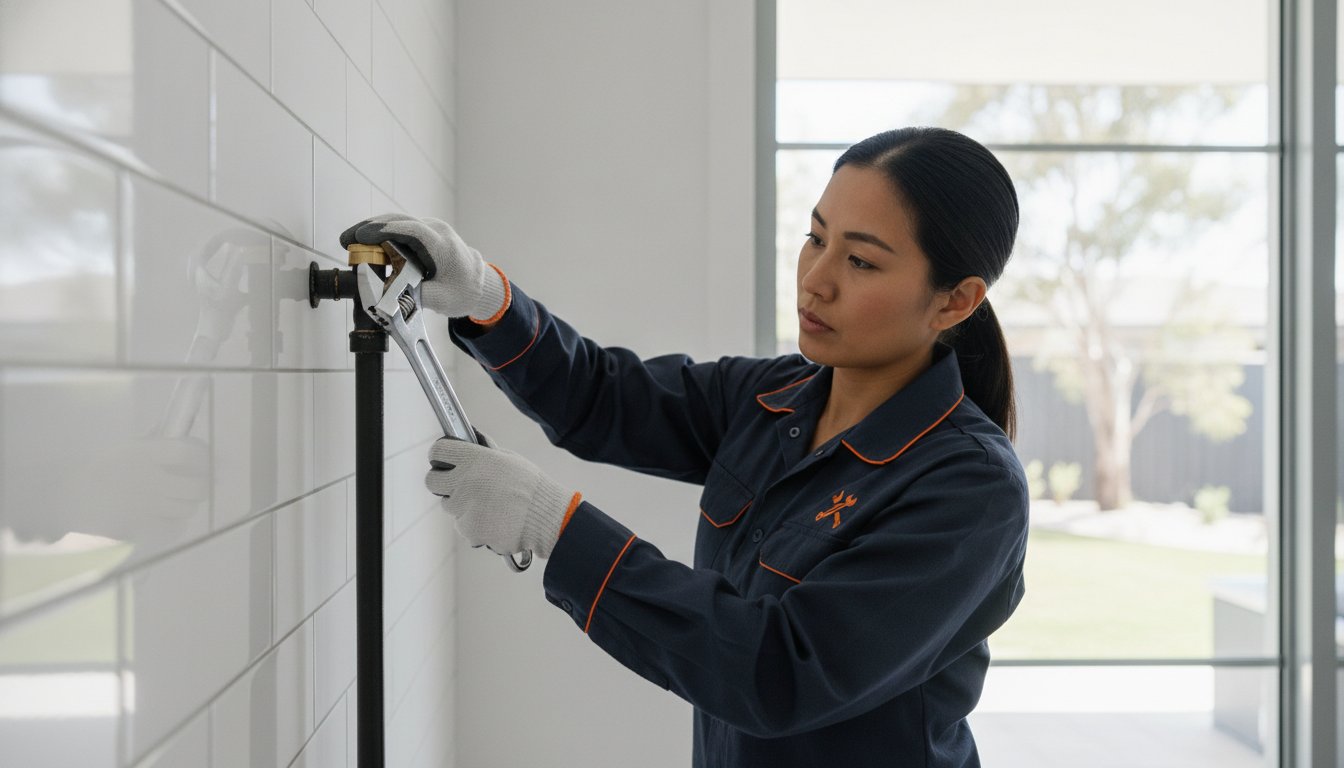
Cost to Cap a Gas Line: 2026 Price Factors and Safety Guide
That old, unused pipe in your laundry room isn't just an eyesore; it's a safety risk that could derail your entire home renovation. You want it sealed and out of the way so you can move forward, but worrying about the cost to cap a gas line shouldn't be what stops you. It's stressful to deal with the fear of potential leaks or the headache of local building codes when you just want the job done right. You deserve a solution that is fast, professional, and leaves your home safer than we found it, right?
We're here to take the mystery out of your plumbing project. This guide breaks down the essential factors that drive service pricing in 2026, including new federal safety regulations and permit requirements. You will learn exactly what to expect during a professional service call and why a certified seal is the only way to protect your property and your family. We'll show you how to get a fast, hassle-free resolution so you can get back to your remodel with total confidence and peace of mind.
Key Takeaways
- Learn why the technical difference between capping and plugging is vital for a secure, leak-proof seal in your laundry room or kitchen.
- Discover how pipe accessibility and wall placement directly influence the cost to cap a gas line during your home renovation.
- Understand the invisible dangers of slow gas leaks and why DIY gas work can lead to denied insurance claims and safety hazards.
- Find out how our professional threading and bleeding process ensures your home meets all 2026 local building codes.
- See how our 1-minute callback guarantee and commitment to cleanliness provide a FAST, hassle-free resolution for your property.
What Does It Mean to Cap a Gas Line?
Capping a gas line means more than just turning a valve. It's the process of permanently and securely sealing a gas pipe that is no longer in use to prevent hazardous leaks in your home. Whether you're switching to an electric stove, removing a gas dryer, or decommissioning an old fireplace, this step is non-negotiable for safety. You might think a temporary valve shut-off is enough, but it isn't. Valves can fail or be bumped open by accident; a permanent cap is the only way to ensure 100% security.
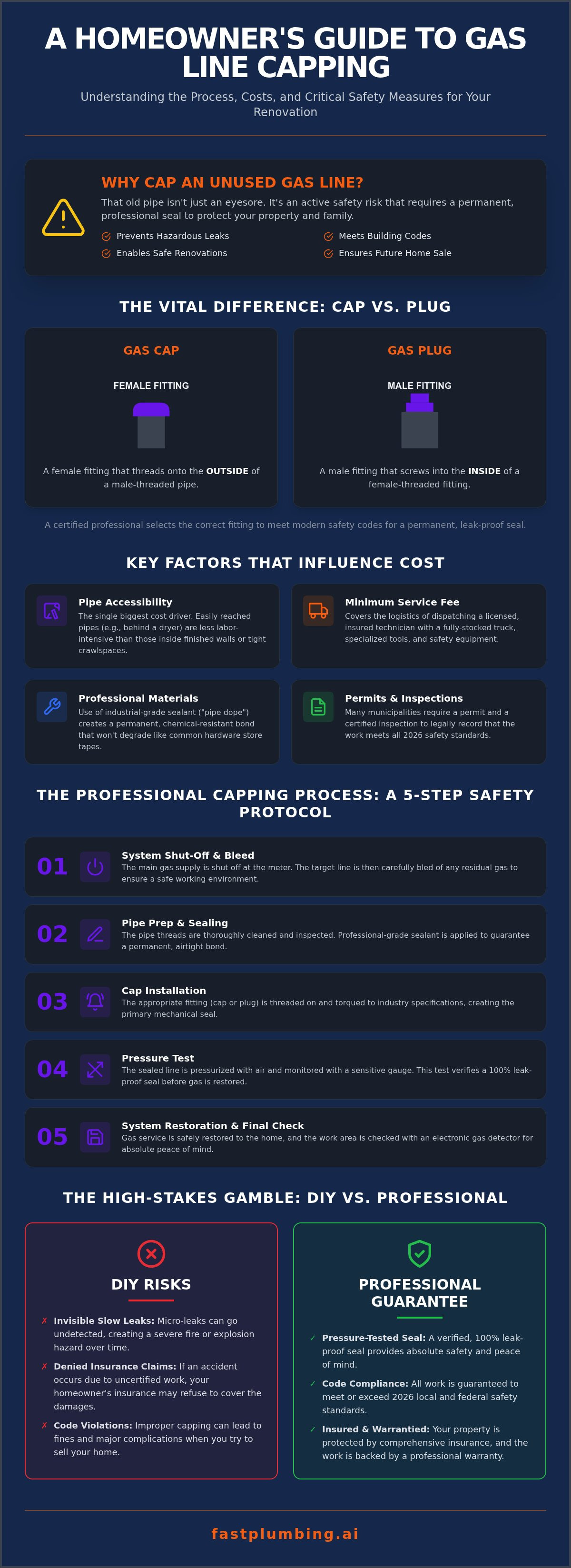
There's a technical difference between a cap and a plug that every homeowner should know. A cap is a female Piping and plumbing fitting that threads onto the outside of a pipe. A plug is a male fitting that screws into the inside of a socket. Choosing the right one depends on how the line was originally installed. When a professional evaluates the cost to cap a gas line, they look at these specifics to ensure the seal meets modern safety standards.
Capping vs. Full Line Removal
Most homeowners choose to cap the line at the appliance point. This is a smart move for future-proofing your home. It keeps the infrastructure in place if you or a future buyer ever want to switch back to gas. Capping at the manifold is a great way to manage the cost to cap a gas line while ensuring an entire branch of the home is decommissioned. Full line removal is typically reserved for major renovations where the pipes are physically in the way of new construction. It's often unnecessary for standard appliance swaps.
The Role of the Shut-Off Valve
Local building codes usually require an accessible shut-off valve even after a line is capped. This provides a "double-block" safety principle. If the valve fails, the cap holds the pressure. If the cap is ever damaged, the valve provides a backup. During the process, we often find old valves that have seized up over decades of disuse. We replace these immediately to ensure you have a functional, safe system. Our goal is a FAST resolution that leaves your home meeting every local code, right? We handle the technical details so you can focus on your renovation.
Key Factors That Influence the Cost to Cap a Gas Line
Understanding the cost to cap a gas line starts with looking beyond the simple metal fitting. While the hardware itself is inexpensive, the variables surrounding your specific home layout change the scope of the work. Every home is different, right? A line easily reached behind a laundry room dryer is a different project than one buried deep in a tight crawlspace or hidden behind finished drywall. Accessibility is the single biggest factor that determines how long our technicians stay on-site to ensure your home is safe.
You might wonder why a small job has a baseline cost. Most professional providers use a minimum service fee to cover the logistics of getting a licensed expert to your door. This fee ensures you get a fully stocked truck, professional-grade tools, and the 29+ years of experience needed to handle volatile gas lines. If you have multiple appliances to decommission, it's always more cost-effective to bundle them. Capping three lines in one visit is much faster and more efficient than scheduling three separate calls.
Materials also play a role in the final tally. We don't use standard hardware store tape that can degrade over time. Instead, we use professional-grade sealant, often called pipe dope, to create a permanent, chemical-resistant bond. This helps prevent the dangers of DIY gas line work, such as micro-leaks that can build up in enclosed spaces. If you need a gas line expert to evaluate your system, we can be there FAST to provide a clear, upfront assessment.
Labor and Time on Site
Every gas job requires a standard diagnostic and prep period. We don't just cap and leave. We bleed the residual gas from the pipes and perform a rigorous pressure test to verify the seal. If your gas line is recessed inside a wall, the project might include additional time for careful access and eventual wall repairs. Our "Clean-Up Like It's Their Own" policy ensures that even if we have to work in a tight spot, your home stays tidy and professional throughout the process.
Permits and Inspections
Do you need a permit? In many municipalities, any modification to a gas system requires a local permit and a follow-up inspection. This isn't just red tape. A certified inspection provides a legal record that the work meets 2026 safety standards. Skipping this step can lead to major headaches when you try to sell your home later. Buyers and home inspectors look for these certifications to ensure the property is safe for the next family. We handle the technical side of code compliance so your renovation stays on track without any legal surprises.
The Professional Capping Process: What Are You Paying For?
Don't be misled by online forums suggesting this is a five-minute DIY fix. When you invest in the professional cost to cap a gas line, you aren't just buying a small metal fitting. You're paying for a rigorous four-step safety protocol designed to eliminate every trace of risk in your home. The process begins with a total system shut-down and the careful bleeding of residual gas from the lines. Fast Plumbing, LLC ensures the pipe is completely inert before any tools make contact, preventing accidental ignition and keeping your household safe from the start.
A secure seal requires a perfect fit, which often means more than just twisting a cap on. If the existing pipe end is corroded, stripped, or improperly sized, our technicians cut and thread the pipe on-site to create factory-grade grooves. This ensures a metal-to-metal bond that holds under pressure. We then apply specialized, gas-rated anaerobic sealants. Unlike standard hardware store tapes that can brittle or dry out over time, these professional sealants expand and harden to form a permanent, vibration-proof barrier. This level of precision is why the cost to cap a gas line is an investment in long-term property protection that lasts for decades.
The Pressure Test: Your Safety Insurance
A simple soap bubble test is a fine preliminary check, but it isn't the final word on safety. To meet rigorous Australian safety standards for gas installations, we use a precision manometer to monitor the system's integrity. This advanced tool detects even microscopic pressure drops that would be impossible to see with the naked eye. We pressurize the line and watch the gauge for a specific duration to ensure there is zero fluctuation. We won't leave until the entire branch is verified as stable. This technical verification is your insurance, providing the peace of mind that your home's gas system is sealed tight and fully compliant with local regulations.
Clean-Up and Property Protection
We believe a professional plumbing job should leave no trace behind. Gas line work involves messy pipe oil and sharp metal shavings, but we protect your floors and surfaces from the moment we enter. Our "Clean-Up Like It's Their Own" policy is a core brand promise at Fast Plumbing, LLC. We treat your property with absolute respect, ensuring every workspace is spotless before we finish. Once the cap is verified, we perform a final walkthrough to ensure your other gas appliances, like your water heater or furnace, are functioning perfectly. It is a FAST, hassle-free experience from start to finish, right?
Why DIY Gas Capping Is a High-Risk Gamble
Saving on the cost to cap a gas line by doing it yourself might seem like a win for your renovation budget. It isn't. The real cost of a DIY mistake far outweighs any professional service fee. Slow gas leaks are the most dangerous invisible threat in a home. Unlike a major rupture, a tiny leak can pool in wall cavities over weeks, creating a volatile environment. This isn't just about an odor; it's about structural integrity and your family's immediate safety.
Think about your homeowner's insurance policy. If a DIY gas modification leads to a fire or explosion, the provider will look for any reason to deny your claim. Without a professional invoice from a licensed plumber, you could be on the hook for every cent of the damage. Legally, non-permitted gas work is a nightmare during a property sale. Home inspectors in 2026 are trained to flag uncertified caps. You will likely end up paying a professional to redo the work anyway just to close the deal, right?
Specialized Tools You Don't Have
Professional gas plumbing requires more than a standard pipe wrench. We use specialized gas line torque tools to ensure fittings are tightened to exact specifications without stripping the threads. While you might rely on your nose to detect a leak, we use electronic combustible gas detectors that find leaks at parts-per-million levels. Even the tape matters. Using standard white plumbing tape on a gas line is a fire hazard. Gas requires specific yellow PTFE tape or anaerobic sealants designed to withstand chemical breakdown over decades.
Code Compliance and Peace of Mind
We follow the International Fuel Gas Code (IFGC) standards to the letter. These rules exist to prevent tragedies, and our 29+ years of experience ensures we never cut corners. When we finish a job, you get a professional invoice that serves as documented proof of safe decommissioning. This eliminates the "what if" anxiety that keeps you up at night during a remodel. You can finish your project knowing the job was done right the first time. If you want to secure your home today, contact our gas line specialists for an immediate, professional seal.
Get Your Gas Line Capped Fast and Hassle-Free
Waiting days for a plumber to call you back is frustrating. When you are dealing with a volatile gas line, that delay feels even worse. We understand the urgency of home safety. Our 1-minute callback guarantee is a promise that we value your schedule as much as you do. You need a professional who answers the phone and shows up on time. We provide transparent communication regarding the cost to cap a gas line from that very first contact until the final seal is verified on your property.
Gas safety issues don't wait for business hours. We are available 24/7 to handle your most pressing plumbing needs. The technicians at Fast Plumbing, LLC are hyper-disciplined experts who treat your home with total respect. While you might be concerned about the cost to cap a gas line, we focus on delivering a high-value, permanent solution. We eliminate the worry of hidden fees by providing a clear explanation of the work required before we ever pick up a wrench. Our technicians arrive at your door, fast and hassle-free, to provide the peace of mind you deserve.
Our Three-Step Service Process
We designed our workflow to be rapid and logical. It follows a strict path that eliminates ambiguity and moves you toward a resolution quickly. First, we prioritize rapid contact and scheduling that fits into your busy day. We don't believe in four-hour arrival windows that keep you trapped at home. Once on-site, we perform a professional assessment. We explain the technical requirements of the job in plain English so you know exactly what is happening. Finally, we execute the seal with military-like precision. Our "Clean-Up Like It's Their Own" policy means we leave your laundry room or kitchen spotless. You want the job done FAST and you want your house left clean, right?
Ready for a Safer Home?
Don't leave your gas safety to chance or a "someday" list. An unsealed line is a liability that grows every day it is ignored. Experience the "Fast" difference with a team that has 29+ years of industry experience. We bring professional-grade expertise and a commitment to punctuality to every door. Fast Plumbing, LLC is the reliable neighbor you can count on for expert results and honest communication. Contact Fast Plumbing, LLC now for expert gas line service and get your renovation back on track today.
Finish Your Renovation With Total Peace of Mind
Your home's safety is too important to leave to chance. By now, you understand that the cost to cap a gas line is an investment in professional verification, legal compliance, and long-term security. By choosing a certified expert, you avoid the high-risk gamble of DIY leaks and ensure your property meets every 2026 safety standard. You want a solution that is fast and hassle-free so you can get back to your remodel with total confidence, right?
With over 29 years of industry experience, the team at Fast Plumbing, LLC is ready to solve your gas line concerns immediately. We offer a 1-minute callback guarantee and 24/7 emergency service to ensure you are never left waiting. Our technicians treat your property with absolute respect, leaving it spotless and secure. Don't let an unused pipe hold up your project any longer. Book Your Fast and Professional Gas Line Service Today and let us handle the technical details while you focus on the vision for your home. Fast Plumbing, LLC is here to help you cross this off your list ASAP!
Frequently Asked Questions
Is it legal to cap a gas line myself?
In most municipalities, you are legally required to hire a licensed professional for any gas line modifications. Working with natural gas is extremely hazardous and carries risks of fire or explosion. Even if your local code allows it, DIY work often voids homeowner insurance policies. If an accident occurs, you could be left with total liability. It is always safer to call an expert to ensure the job meets 2026 safety standards.
How long does it take a professional to cap a gas line?
A standard job typically takes a professional between 30 and 60 minutes to complete. This timeframe includes the initial system shut-down, bleeding the lines, and the final high-pressure leak test. If the line is behind a wall or in a difficult crawlspace, it might take a bit longer. We focus on a FAST resolution so you can get back to your renovation without unnecessary delays or a messy workspace.
Do I need to turn off the main gas valve to cap one line?
Yes, we typically shut off the main gas valve to safely bleed the residual gas from your pipes. This step prevents accidental ignition while we are cutting or threading the line. Once the cap is securely in place and tested, we restore service to the rest of your home. We then perform a walkthrough to ensure your other appliances, like the water heater, are relit and functioning perfectly before we finish.
What happens if a gas line is not capped properly?
Improperly sealed lines lead to slow, invisible gas leaks that pool in enclosed spaces like walls or cabinets. This creates a massive explosion risk. Beyond the fire hazard, leaking gas can cause health issues or carbon monoxide buildup if venting is compromised. A professional seal is the only way to avoid these dangers. We use electronic detectors to verify every seal, ensuring your home remains a safe and reliable environment for your family.
Can I use a capped gas line again in the future?
Absolutely. One of the main benefits of capping a line at the appliance point is that it preserves your home's infrastructure. If you or a future buyer decide to switch back from electric to gas, a licensed plumber can easily remove the cap and reconnect a new appliance. This flexibility helps maintain your property value while keeping the system safely sealed in the meantime. It is a smart, future-proof solution for any homeowner.
Will the plumber check my other gas appliances while they are here?
Yes, we perform a final walkthrough as part of our standard safety protocol. After we restore the gas supply, we check to ensure your water heater, furnace, and other gas appliances are relit and operating correctly. This comprehensive check is included in the professional cost to cap a gas line. We want you to feel completely confident that your entire system is stable and safe before we head to our next call.
Do I need a permit just to cap a laundry room gas line?
Most local building departments require a permit for any modification to a gas system, including capping a line in a laundry room. This ensures the work is inspected and certified as safe by a third party. Having a permit on file is also vital when you sell your home, as buyers look for documented proof of safe renovations. We handle the technical side of code compliance so your project stays on track ASAP.
What is the difference between a gas plug and a gas cap?
The difference lies in the threading of the pipe. A gas cap is a female fitting that screws onto the outside of a pipe end. A gas plug is a male fitting that screws into the inside of a pipe opening or socket. The specific choice depends on your existing pipe configuration. When evaluating the cost to cap a gas line, we determine which fitting provides the most secure, leak-proof seal for your house, right?
