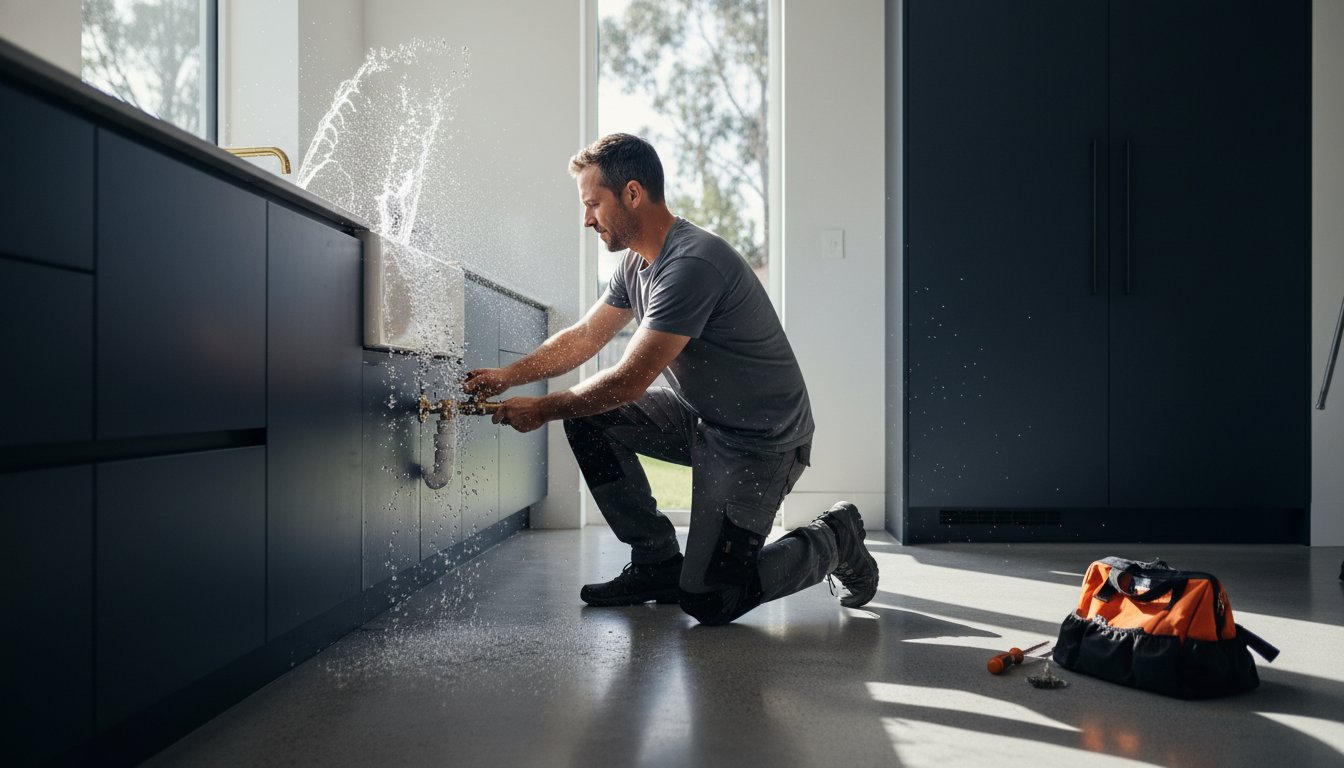
Emergency Burst Pipe Checklist: What to Do Right Now to Save Your Home
Did you know that 14,000 people in the U.S. deal with water damage every single day? If you just discovered a geyser in your kitchen or a soaking wet ceiling, you are in a high-stakes race against the clock. Knowing exactly what to do for a burst pipe in those first few minutes can be the difference between a simple repair and a massive restoration project. Mold can begin to grow in as little as 24 hours, so every second counts.
We know your heart is racing. You are likely worried about your furniture, your floors, and the potential for a giant repair bill. It is a nightmare scenario, but you can take control of this situation right now. We have helped many homeowners turn a chaotic flood into a managed, professional repair with a few decisive actions.
Follow this expert-approved checklist to stop the water FAST, protect your property, and navigate your insurance claim with confidence. We will show you how to shut down the damage immediately and get a professional solution to your door ASAP. Let's get to work.
Key Takeaways
- Learn exactly what to do for a burst pipe in the first 60 seconds to stop the flow and prevent thousands in water damage.
- Identify hidden electrical hazards and "Danger Zones" to keep your family safe while the water is still rising.
- Master the documentation process to ensure your insurance provider covers the full extent of the damage without a fight.
- Understand your professional repair options, from simple spot fixes to full material upgrades, so you can make the best long-term choice for your home.
- Discover how to secure a FAST, professional repair with a 1-minute callback guarantee to resolve the crisis ASAP.
The First 60 Seconds: Your Immediate Burst Pipe Response Checklist
Stay calm. We know the sound of rushing water is terrifying, but panic leads to expensive mistakes. Take a deep breath and focus on the steps below. If you act quickly, you can stop the flooding before it reaches your furniture or electrical outlets. This guide outlines exactly what to do for a burst pipe to regain control of your home FAST.
Locate and Kill the Main Water Supply
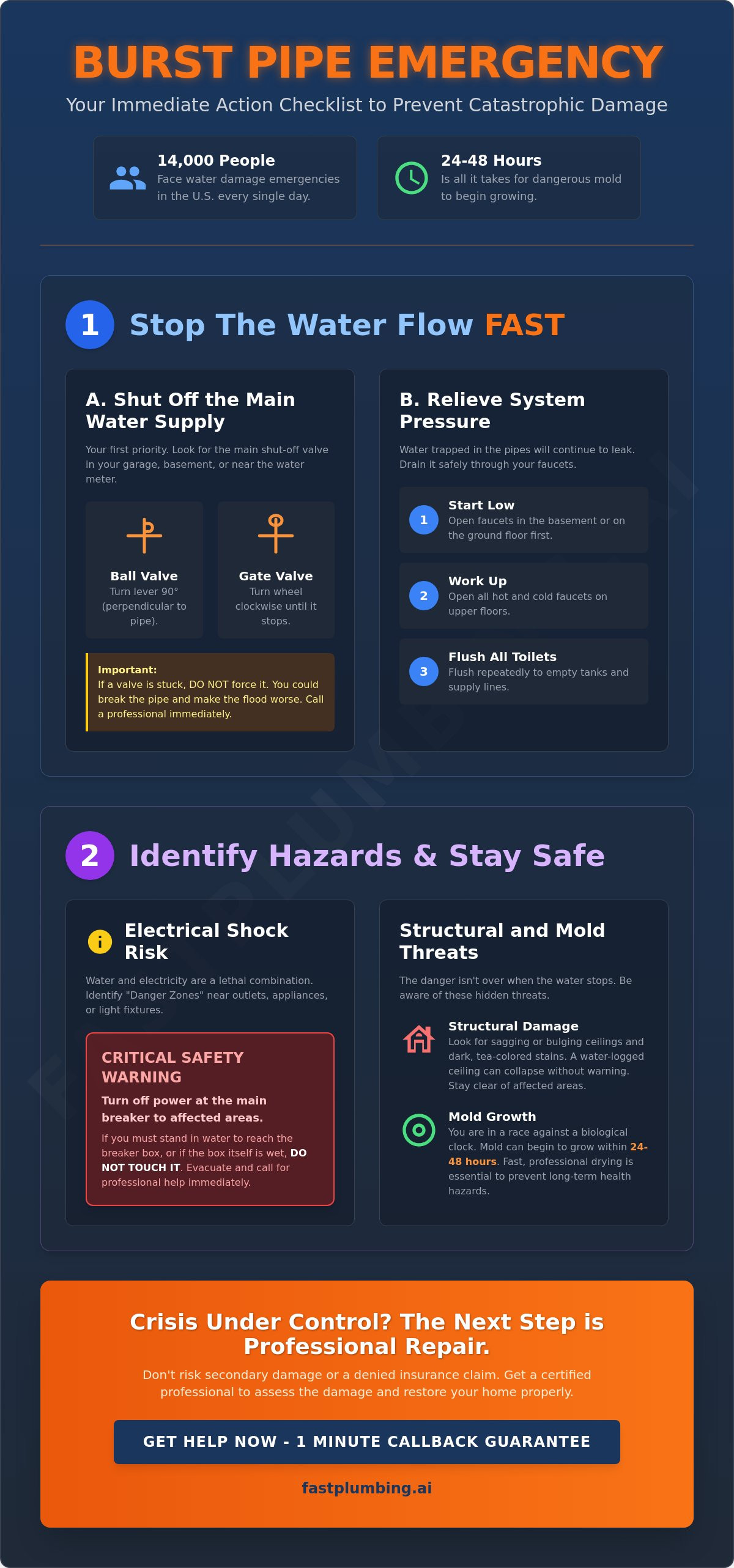
Your first mission is to find the main shut-off valve. It is usually located on the perimeter of your home, often in the garage, a basement, or near the water meter. Most modern plumbing systems use one of two types of valves. A ball valve has a straight lever handle; turn it 90 degrees so it is perpendicular to the pipe. A gate valve looks like a round wheel; turn it clockwise until it stops. Remember the rule: righty-tighty, lefty-loosey.
If the valve feels stuck or rusted, do not force it with a wrench. Applying too much torque can snap the handle or the pipe itself, which will turn a bad situation into a catastrophe. If it won't budge, call for professional help immediately. Once the valve is closed, the main flow of water to your home is officially dead.
Relieve System Pressure and Drain the Lines
Shutting the valve is only half the battle. There are still gallons of pressurized water sitting in your pipes, and it will continue to leak out of the burst until the lines are empty. To stop this siphoning effect, you must drain the system manually. Follow this order to get the water out ASAP:
- Start Low: Open the faucets in your basement or on the ground floor first.
- Work Your Way Up: Move to the top floor and open every single faucet, both hot and cold.
- Flush Toilets: Flush every toilet in the house multiple times. This empties the tanks and removes water from the supply lines.
By opening the faucets, you allow air into the system. This breaks the vacuum and lets the remaining water flow out of the taps rather than the break in your wall. It is a simple step that saves your drywall from absorbing even more moisture. Once the dripping stops, the immediate threat to your property is neutralized. Now you can focus on the cleanup and getting a professional repair scheduled.
Hazard Identification: Protecting Your Family and Property
Once you have killed the water supply, your focus must shift to safety. Water and electricity are a lethal combination. You need to identify "Danger Zones" where water is actively contacting outlets, power strips, or major appliances. If you see water dripping from a light fixture or running down a wall near a plug, do not enter that room. Knowing what to do for a burst pipe starts with keeping your family out of harm's way. You want a resolution that is fast and hassle-free, not a trip to the emergency room, right?
Eliminating Electrical Shock Risks
Locate your main breaker box and shut off the power to the flooded zones immediately. This is the only way to ensure the area is safe for cleanup. However, follow this critical instruction: if the breaker box itself is in a wet area or you have to stand in water to reach it, do not touch it. Call for professional help. Use the "wet-dry" rule. If the floor or the panel is wet, you stay dry by staying away. Hidden leaks can often pool near electrical wiring inside your walls. Even if the floor looks dry, the risk may still be there.
Recognizing Structural and Mold Threats
Structural integrity is another major concern when deciding what to do for a burst pipe that is hidden in a ceiling or crawlspace. Water is surprisingly heavy. If a pipe bursts on an upper floor, that weight collects on top of your ceiling drywall. Look for sagging areas or dark, tea-colored stains. If a ceiling looks like it is bulging, it could collapse at any moment. Move your valuables out of the way only if it is safe to do so. Otherwise, stay clear until the structure is stabilized.
You are also racing against a biological clock. Mold can begin growing within 24 to 48 hours of initial water contact. This is why professional leak detection is so important. It finds the moisture you cannot see before rot sets in. Most Insurance Coverage for Burst Pipes will cover these sudden structural repairs, but they often exclude mold if the cleanup is delayed. Acting ASAP is the best way to protect your home and your wallet. If you need help identifying the source of a mystery leak, a quick video camera inspection can provide the answers you need.
Professional Repair Options: What Happens After the Leak Stops?
Once the water is off and the hazards are cleared, you face a critical decision. Your home is currently without running water, which is not sustainable for more than a few hours. You need a permanent solution that restores your peace of mind and protects your property value. When homeowners ask what to do for a burst pipe after the initial crisis, the answer usually involves choosing between a targeted spot repair or a more comprehensive system upgrade. The goal is to get your home back to normal FAST, without leaving behind a "band-aid" fix that will fail again next week.
The cost of an emergency service call is the most common concern we hear. However, you must weigh that against the cost of delay. Water damage restoration can average nearly $3,900, but that number skyrockets if moisture sits in your walls while you wait for a "cheaper" non-emergency appointment. A professional repair ensures your system meets the latest plumbing codes, which is vital for both safety and future insurance eligibility. If you are worried about the bill, check out this guide on plumbing repair costs to understand how professional pricing works.
Sectional Replacement vs. Full Re-piping
A spot repair is often the fastest way to solve the problem. If a single pipe froze or suffered mechanical damage, a technician can cut out the damaged section and install a new coupling. This works well for copper or modern PEX systems. However, if you have galvanized steel pipes, a single burst is usually a warning sign of widespread internal corrosion. In these cases, a sectional fix is like plugging one hole in a sinking ship. We often recommend a full re-pipe for older homes to prevent a cycle of repeated flooding and expensive insurance claims. It is a bigger investment upfront, but it eliminates the stress of wondering which wall will leak next.
Why Temporary Patches Are a High-Risk Gamble
You might see "emergency repair tape" or "pipe clamps" at the local hardware store. These products are designed for 5-minute stops while you reach for the shut-off valve; they are never intended for overnight fixes. Standard household water pressure can exceed 60 PSI. That is enough force to blow a DIY patch off in minutes, often while you are sleeping or at work.
Relying on a patch also creates massive liability risks. If a DIY fix fails and causes a second flood, your insurance provider might deny the claim because the repair was not performed by a licensed professional. A temporary fix is a ticking time bomb for your foundation. It can lead to slow, hidden leaks that rot your subfloor and attract pests. When deciding what to do for a burst pipe, always choose a permanent, professional repair that comes with a guarantee of quality. We solve the problem correctly the first time, and we clean up like it's our own home, right?
The Claims Checklist: Water Leak Insurance Claim Help
Your next step is financial recovery. Contact your insurance provider ASAP to start the claim process. Water damage is the second most common home insurance claim, accounting for roughly 24% of all claims. According to industry data from May 2026, the average insurance payout for a water damage claim is between $12,514 and $13,954. You cannot afford to miss any details. When you are figuring out what to do for a burst pipe, documentation is just as important as the physical repair. If you don't prove the damage, you won't get paid.
Most policies include a "Mitigation of Loss" clause. This means the insurance company expects you to take reasonable steps to stop further damage. If you leave the water running for hours after discovering the leak, they might deny part of your claim. This is why the shut-off steps we covered earlier are so critical. You have a legal duty to protect your property. Once the water is off, keep a detailed log of every professional you speak with and save every receipt. Every dollar you spend on emergency services should be documented for reimbursement.
Documenting Damage for Maximum Payout
Grab your phone and start recording. Take wide-angle shots of the entire room to show the scale of the flooding. Then, take close-ups of the specific burst and any saturated materials like drywall or insulation. Do not throw anything away yet. The adjuster needs to see the "corpse" of the damaged items to verify their value. Keep the damaged section of the pipe as physical evidence. It proves the cause of the leak was sudden and accidental rather than a maintenance issue. Create a simple spreadsheet to track your losses:
- Physical Evidence: Save the burst pipe section and any failed fittings.
- Personal Property: List every piece of furniture, electronic device, or rug touched by water.
- Structural Impact: Note any warping in floorboards or bubbling in the paint.
Working with Public Adjusters vs. Plumbing Experts
An insurance adjuster looks at the damage, but a plumber looks at the cause. Your plumber’s report provides the technical evidence needed to push a claim through. This is especially true for complex issues like sewer line repair, where the damage is often hidden underground. Ask your plumber to speak directly with the adjuster. They can explain exactly why the pipe failed and why specific repairs are required by the 2024 International Plumbing Code. This professional communication often speeds up the approval process. You want the highest possible payout to cover your restoration costs, right? If you need a professional report to secure your claim, call us for an expert leak inspection today.
Fast Plumbing: 24/7 Professional Restoration and Repair
You have handled the immediate crisis. The water is off and your family is safe. Now, you need a permanent resolution that restores your home to its original condition. When searching for what to do for a burst pipe, the final step is always calling in the experts. We are here to take the weight off your shoulders. With over 29 years of experience, our Master Plumbers have seen every type of pipe failure imaginable. We don't just fix the leak; we restore your peace of mind with a level of speed and precision that is unmatched in the industry.
We respect your time and your emergency. That is why we provide a 1-minute callback guarantee. You won't be left wondering when help will arrive. Our team is trained to respond with a sense of urgency that matches the situation. We get to your door FAST because we know that every minute of delay increases the risk of mold and structural damage. You need a partner who is as committed to protecting your home as you are, right?
Our Emergency Response Protocol
We follow a streamlined, 3-step process to move you from crisis to completion without unnecessary friction. First, we arrive and secure the site. Second, we perform a rapid diagnosis to identify the exact cause of the burst. Third, we execute the repair immediately. Our trucks are mobile warehouses, fully stocked with the parts needed to solve most issues on the first visit. Whether it is a failed coupling or a corroded main line, we have the tools to handle it ASAP. For your absolute peace of mind, we are fully licensed and insured, ensuring that your property is in the most capable hands.
The "Hassle-Free" Guarantee
A plumbing emergency is stressful enough without worrying about hidden fees or messy technicians. We offer completely transparent pricing. You will know the cost before we start, so there are no surprises when the job is done. We treat your property with military-grade respect, following a strict "no-nonsense" approach to service. This includes our signature promise: we "Clean-Up Like It's Our Own." While other companies might leave behind drywall dust or muddy footprints, we ensure your home is spotless before we leave. It is part of our commitment to being the most reliable neighbor you have. Don't let a burst pipe ruin your week. Call Fast Plumbing NOW for 24/7 Emergency Service! We will get your home back to normal fast and hassle-free.
Restore Your Home and Your Peace of Mind FAST
You now have the exact blueprint for managing a household crisis. By shutting off the main valve and identifying electrical hazards, you have already saved your home from the worst-case scenario. Remember that documenting every detail is your best tool for securing a fair insurance payout. When you know exactly what to do for a burst pipe, the chaos of the situation starts to fade and a clear path forward emerges.
Now it's time to let the professionals handle the heavy lifting. We offer a 1-minute callback guarantee because we know every second counts when your floors are soaking. With over 29 years of Master Plumbing experience, our team handles repairs with military-grade precision and speed. We also promise to "Clean-Up Like It's Our Own," so you won't be left with a secondary mess to scrub once the leak is fixed.
Don't wait for mold to start growing or for structural damage to set in. Get a FAST Professional Repair – Call Us 24/7! We are ready to get your life back to normal to your door, fast and hassle-free. You have taken the right first steps; let us finish the job today.
Frequently Asked Questions
Does homeowners insurance cover a burst pipe?
Most homeowners insurance policies cover sudden and accidental water damage from a burst pipe. However, they usually exclude damage caused by gradual leaks or a lack of maintenance. According to industry data from May 2026, the average insurance payout for a water damage claim falls between $12,514 and $13,954. Always check your specific policy for "Mitigation of Loss" requirements to ensure your claim remains valid during a crisis.
How long does it take for a burst pipe to cause mold?
Mold can begin to grow within 24 to 48 hours after water makes contact with organic materials like drywall or wood. This is why you must act ASAP to dry out the area. Professional restoration equipment is often necessary to remove moisture trapped deep inside your walls. If you wait more than two days to address the humidity, you are likely looking at a much more expensive mold remediation project, right?
Can I fix a burst pipe myself with a repair kit?
You should not rely on a DIY repair kit for anything more than a five-minute temporary stop. Household water pressure often exceeds 60 PSI. That is enough force to blow off a patch or clamp in minutes while you are away. Using a kit also creates a liability risk. If your patch fails and causes a second flood, your insurance company might deny the claim because the repair wasn't performed by a professional.
How do I find a burst pipe hidden behind a wall?
Professionals use advanced leak detection technology like acoustic sensors and thermal imaging to find hidden breaks without tearing down your drywall. You can check for signs like warm spots on the floor, the sound of running water when taps are off, or a water meter that continues to spin. If you suspect a hidden leak, a professional video camera inspection is the fastest way to pinpoint the exact location of the damage.
What is the most common cause of a burst pipe in the winter?
The most common cause is water freezing inside the pipe, which creates immense pressure as the ice expands. This typically happens in uninsulated areas like crawlspaces, attics, or exterior walls during a deep freeze. When the ice block expands, it stretches the pipe material until it eventually splits. Keeping your thermostat at a consistent temperature and insulating vulnerable pipes are the best ways to prevent this winter nightmare from occurring.
Is a burst pipe considered a plumbing emergency?
Yes, a burst pipe is a top-tier plumbing emergency that requires an immediate response. Beyond the obvious flooding, it creates serious risks for electrical fires and structural collapse. When you are deciding what to do for a burst pipe, the first priority is always safety and stopping the flow. Waiting even a few hours can triple your restoration costs as water seeps into subfloors and cabinetry.
What should I do if my ceiling is sagging from a water leak?
Stay clear of the room and shut off your water supply immediately to prevent a total ceiling collapse. Water is incredibly heavy. Sagging drywall indicates that the material is saturated and losing its structural integrity. Do not attempt to poke a hole in the bulge or stand under the affected area. Move your valuables to a dry room only if you can do so without putting yourself at risk of being hit by falling debris.
How much does it typically cost to repair a burst pipe?
Industry data suggests the average cost to repair a burst pipe ranges from $400 to $2,000, depending on the location and severity. For major issues, costs can exceed $5,000. Labor typically accounts for about 80% of the total bill. While these are national averages, the final price depends on the pipe material and how much access is needed to reach the break. Investing in a professional fix now prevents much higher restoration bills later.
