Gas Line Repair: The Complete 2026 Homeowner’s Safety and Service Guide
Is that faint, rotten-egg smell just a pilot light flicker, or is your family's safety at risk right now? That sudden wave of anxiety is something no homeowner should have to handle alone. Whether you hear a hissing sound near an appliance or noticed dead patches in your lawn, needing a gas line repair is a high-stakes situation that demands an immediate, professional response. You want your home to be a safe haven, not a source of constant worry about fire or explosions.
We understand that the repair process can feel overwhelming. That's why we’ve created this complete 2026 guide to help you identify leaks early and understand the latest safety regulations, including the new 2026 requirements for yellow gas-rated Teflon tape and stricter CSST grounding. You’ll learn how to navigate the repair process with confidence and find a licensed expert who can arrive to your door FAST and hassle-free. Let's get your home back to being safe and secure, right?
Key Takeaways
- Recognize the physical warning signs like unexplained dizziness or fatigue that signal a hidden hazard in your home.
- Understand how environmental factors like soil pH and aging galvanized steel pipes can trigger a sudden gas line repair.
- Learn how professionals use specialized tools like manometers to pressure test your system and verify total safety.
- Identify the unique safety requirements for LPG versus natural gas systems to protect your family effectively.
- Discover the essential licensing credentials you must verify to ensure your service is handled FAST by a qualified expert.
Understanding Gas Line Repair: Safety, Urgency, and Basics
Gas line repair is the professional restoration of a fuel delivery system's integrity. It is not just about tightening a loose nut; it is about ensuring your home remains a safe zone for your family. When a technician performs a repair, they are sealing breaches that could lead to catastrophic fires or health crises. In Australia, most homes rely on either reticulated natural gas delivered through street mains or Liquid Petroleum Gas (LPG) stored in cylinders. While both provide efficient energy, they require different handling and pressure settings. Understanding these basics is the first step toward a safe resolution, right?
You should never treat gas work as a casual home improvement task. In fact, Australian law strictly mandates that only licensed gas fitters can perform any work on these systems. This isn't just red tape. It’s a vital safety measure designed to prevent amateur mistakes that lead to explosions. If you suspect a leak, urgency is your only appropriate response. There is no "waiting until morning" when it comes to the smell of gas. You need to act FAST to protect your property and everyone inside it.
The Immediate Safety Checklist: What to Do Now
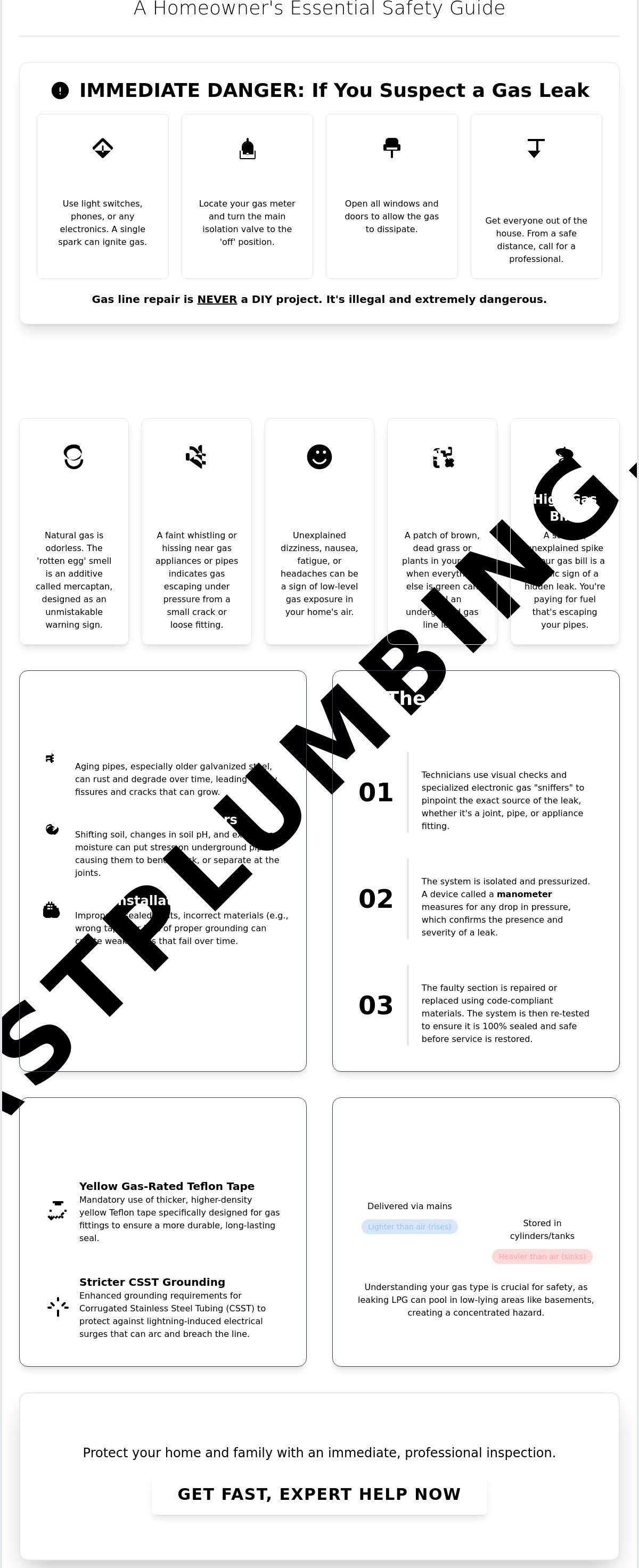
If you smell that distinct rotten-egg odor, follow these steps immediately. First, locate your gas meter and turn off the main isolation valve. Next, open every window and door to ventilate the space. Finally, get everyone out of the house and call for help from a safe distance. Do not stop to grab your laptop or turn off the television.
It’s critical to avoid using any electronic devices, including light switches or your mobile phone, while inside the home. A single tiny spark from a switch can ignite a concentrated gas cloud. Remember the "No-DIY" rule; gas lines are never a weekend project. Attempting to fix a leak yourself is illegal and incredibly dangerous. Leave the tools in the shed and let a professional handle the technical work.
Why Gas Line Integrity Matters for Your Property
The health of your home's piping systems determines more than just your safety. Beyond the obvious explosion risks, slow leaks can significantly degrade your indoor air quality. Constant exposure to trace amounts of gas can cause chronic fatigue and headaches for your family. Maintaining your lines also protects your expensive appliances. Stoves, heaters, and hot water systems run much more efficiently when they receive steady, clean fuel at the correct pressure.
Proactive maintenance is always better than an emergency. Utilizing professional leak detection allows experts to find tiny fissures in your lines before they escalate. This process identifies corrosion or joint failures early, saving you from a massive repair bill later. High-quality gas line health ensures your appliances last longer and your home stays secure. It is all about peace of mind, right?
5 Critical Signs Your Home Needs Urgent Gas Line Service
Do you smell something like rotten eggs? That is not a coincidence. Natural gas is naturally odorless, so providers add a chemical called mercaptan. This additive is designed to be unpleasant and impossible to ignore. If you catch even a whiff of it, you likely need a gas line repair immediately. Don't second-guess your nose. Your safety depends on a fast reaction. Every second counts when fuel is escaping into your living space, right?
Sometimes your body notices the problem before your nose does. Unexplained dizziness, fatigue, or nausea can signal a leak in a confined space. You might also hear a faint whistling or hissing sound near your stove or water heater. These are the sounds of fuel escaping under pressure through a tiny crack or loose fitting. If you notice these signs, it is time to act. Get everyone out and call for help ASAP.
Look outside your home too. Have you noticed a patch of dead, brown grass in an otherwise green lawn? Gas leaking underground displaces oxygen in the soil, effectively suffocating your plants. This often happens due to geotechnical factors in pipeline failure, such as soil shifting or moisture changes. Finally, watch your wallet. A sudden spike in your gas bill without a change in your cooking or heating habits is a classic sign of a hidden leak. If any of these signs sound familiar, it is best to contact a professional to inspect your system before the problem grows.
Identifying Subtle Leaks and Corrosion
Slow leaks are the silent threats. They don't always trigger the mercaptan smell right away, but they still pose a risk over time. Take a look at your exposed pipes. Do you see rust, scaling, or a strange white powder? This oxidation means the metal is thinning and failure is imminent. Some people suggest the "bubble test" with soapy water, but this is often a myth that leads to a false sense of security. Professional equipment is the only way to be 100% sure your home is safe.
Appliance Performance Red Flags
Your appliances are great communicators. Check your stove burners. A healthy gas flame should be a crisp, steady blue. If you see a lazy, flickering yellow or orange flame, your gas is not burning correctly. Look for soot or scorching marks around your water heater or wall furnace. These marks, along with a pilot light that constantly blows out, are major symptoms of pressure issues or line damage. We solve these issues FAST so you can get back to your routine without the stress.
Common Causes of Gas Line Failure: From Corrosion to Soil Shift
Why do gas lines fail? Most of the time, the damage happens deep underground or behind walls where you cannot see it. Understanding these hidden triggers helps you realize why a professional gas line repair is a necessity, not an option. From the chemistry of your soil to the age of your home, several factors work against your fuel system every day. When these systems fail, you need a solution that is both safe and permanent, right?
Environmental corrosion is a silent culprit. Your soil is chemically active. If the ground around your home has a high pH or stays consistently damp, it acts like an acid on metal pipes. Over time, this eats through the protective layers of the pipe. Shifting foundations or soil movement can also put immense pressure on rigid lines. This stress often leads to sudden snaps or disconnected fittings that require an ASAP response to keep your property safe. We handle these crises with a calm, professional approach that lowers your stress immediately.
Physical damage is another common headache for homeowners. You might be surprised by what can break a gas line. Consider these frequent issues:
- Tree root intrusion: Relentless roots seek moisture and can crush or even penetrate older pipes as they grow.
- Landscaping accidents: Installing a new fence or deck often leads to accidental "dig-ins" if lines aren't marked.
- Standard wear: Rubber seals and flexible connectors dry out and crack after years of heat and use.
The Problem with Galvanised Steel Pipes
Older homes often rely on galvanised steel. While strong, these pipes have a major flaw: they rust from the inside out. This internal oxidation creates a "scaling" effect that restricts gas flow over several decades. Eventually, this leads to pinhole leaks that are nearly impossible for a homeowner to detect without specialized tools. Because the rust is usually widespread throughout the line, these systems often need a full renewal rather than a simple patch. We replace these outdated systems FAST to ensure your home meets current safety standards.
Modern Solutions: Copper and Polyethylene (PE)
We use modern materials to solve these old problems for good. Copper is a favorite for its incredible durability and natural resistance to corrosion. It is flexible enough to handle slight ground movements without snapping. For underground mains, Polyethylene (PE) is the modern standard. It does not rust, it's cost-effective, and it handles moisture perfectly. These modern materials reduce the need for frequent sewer line repair and utility interference. Upgrading your lines means fewer emergencies and a much safer home for your family.
The Professional Gas Repair Process: What Homeowners Should Expect
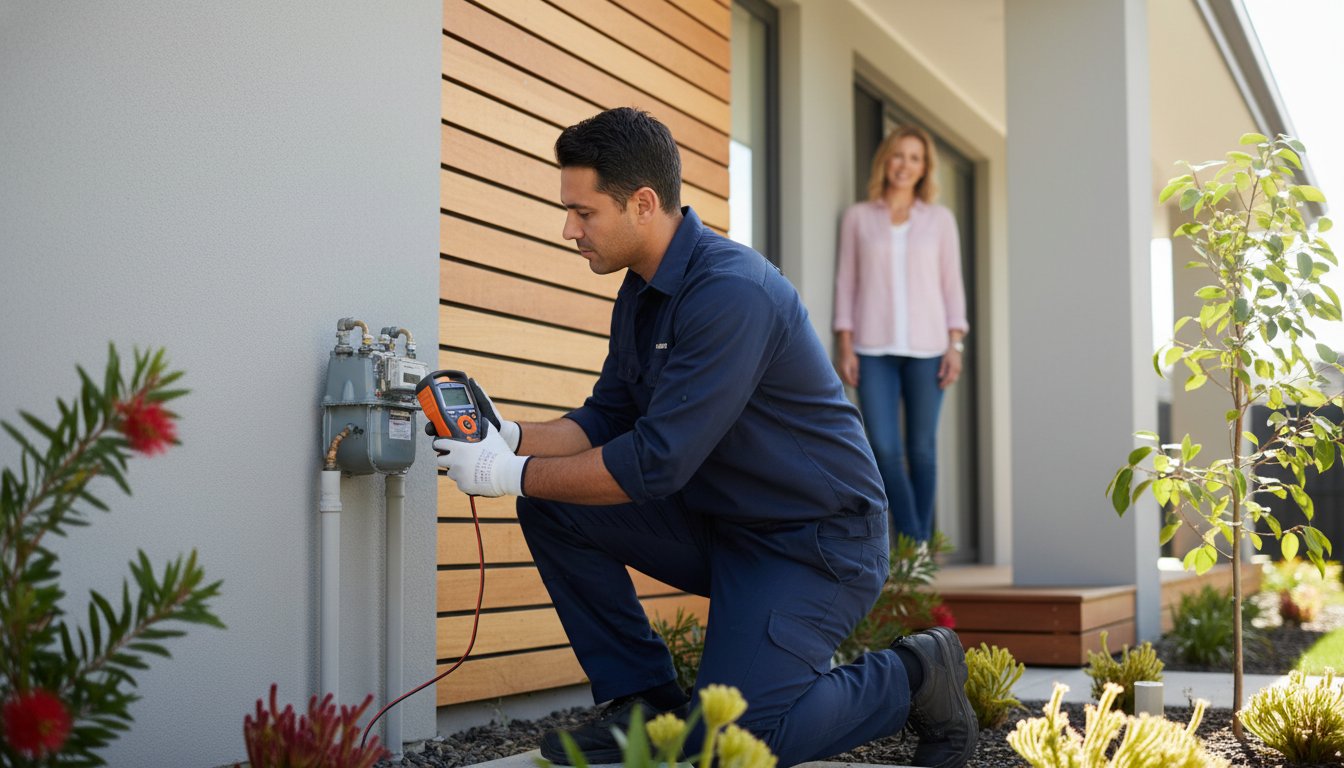
When our technician arrives at your property, the first goal is to lower the tension. We start by making the area safe immediately. This involves isolating the gas supply at the meter or the LPG cylinder to stop any further fuel escape. Once the immediate risk is gone, we move into the diagnostic phase. A professional gas line repair isn't about guesswork. It is a systematic process designed to restore total integrity to your fuel system. You deserve a solution that is permanent and verified, right?
After isolation, we perform a rigorous pressure test using digital manometers. These precision instruments detect even the smallest drop in pressure that indicates a breach. Once we locate the leak, the repair phase begins. This might involve cutting out corroded sections of pipe, re-threading steel lines, or replacing worn-out flexible connectors. We work quickly but with military-like precision. Before re-igniting any appliances, we purge the system. This ensures no air remains in the lines, which prevents dangerous "flame-outs" or damage to your stove and heater. We solve the problem and then clean up the workspace so it looks like we were never there.
Advanced Diagnostic Tools Used by Pros
We don't rely on outdated methods like the "soapy water" test for complex issues. Our team uses combustible gas detectors that sense fuel particles at parts-per-million levels. These tools find leaks that are completely invisible to the human eye. If the leak is hidden behind a wall or buried underground, we utilize ultrasonic leak detection. This technology listens for the specific sound frequency of gas escaping under pressure. It allows us to pinpoint the exact failure point without tearing up your entire property. If you suspect a hidden issue, book a professional diagnostic check to get answers ASAP.
Compliance and Certification: The Final Step
The job isn't finished just because the leak is stopped. In Australia, every gas line repair must meet the strict AS/NZS 5601 standards. Once the work is complete, we perform a final safety check on every connected appliance to ensure they are operating at the correct pressure. We then provide you with a Certificate of Compliance. This document is vital for your home insurance and maintains your property value. It is your proof that the work was done by a licensed expert and that your home is officially safe. We handle the paperwork and the technical work so the entire experience is hassle-free for you.
Choosing the Right Licensed Gas Fitter for Your Property
Who do you trust when your family's safety is on the line? Selecting a professional for a gas line repair is one of the most critical decisions you will make as a homeowner. You don't just need a technician; you need a partner who understands the high stakes involved. The right expert brings a sense of calm to the chaos while moving with extreme speed to secure your property. It is about finding that perfect balance between professional authority and genuine empathy for your situation, right?
First, you must verify their licensing. In Australia, gas fitting is a highly regulated trade for a reason. An unlicensed person performing a repair isn't just breaking the law; they are putting your life at risk. Always ask to see their practitioner’s credentials before any work begins. Next, consider their response time. When you smell gas, every second counts. Look for service providers who offer "FAST" guarantees and can prove they prioritize emergencies. You shouldn't be left waiting while a potential hazard grows inside your walls.
Transparency is another major factor. You deserve to understand plumbing repair costs before the tools come out. Whether a company uses flat-rate or hourly billing, the pricing should be clear and upfront. No one likes hidden fees during a crisis. Finally, pay attention to how they treat your home. A professional who respects your property will ensure the workspace is safe and tidy throughout the process. We believe a job isn't done until your home is as clean as it was when we arrived.
The Fast Plumbing, LLC Difference: Speed Meets Safety
We built our reputation on being there when you need us most. Our 1-minute callback guarantee means you aren't left wondering if help is on the way during a crisis. We provide 24/7 availability for both residential and commercial gas emergencies because we know leaks don't follow a schedule. Our "Clean-Up Like It’s Our Own" promise is a core value. We treat your property with the same respect we would show our own homes. You get expert results without the mess, every single time.
Next Steps: Securing Your Home Today
Don't wait for a small leak to become a major disaster. If you have any doubts about your system's health, schedule a preventative inspection today. We make the entire process hassle-free from the moment you contact us. Our team will perform a thorough assessment to ensure your lines meet the latest safety standards. Take action now to protect your family. Call us to get a licensed professional to your door FAST and solve your gas concerns for good.
Secure Your Home and Protect Your Family Today
You now have the knowledge to identify hidden hazards before they escalate into emergencies. Recognizing the physical warning signs and understanding the risks of aging infrastructure are your best defenses against a household crisis. A professional gas line repair is more than just a fix; it is a commitment to your family's ongoing safety and peace of mind. You deserve a home that feels secure and a fuel system that operates with total integrity.
Our team brings over 29 years of industry experience and a military-like focus on punctuality to every job. With our fully licensed and insured gas fitters, you get expert solutions without the stress. We respect your property and always clean up like it’s our own. Don't let a potential leak wait another minute. Experience the relief of a structured solution and our 1-minute callback guarantee today.
Get a Licensed Gas Expert to Your Door FAST. Call Us Now!
Take the first step toward a safer home and let us handle the technical details. You are making the right choice for your family's future, right?
Frequently Asked Questions
Is a gas leak an emergency that requires immediate repair?
Yes, any suspected gas leak is a high-priority emergency. You must evacuate the premises and call for a professional gas line repair ASAP. Even a small leak can lead to a fire or explosion if left ignored. Don't wait for the smell to get stronger. We prioritize these calls to keep your family safe and your property secure, right?
How can I tell the difference between a gas leak and a sewer smell?
Natural gas providers add mercaptan, which smells exactly like rotten eggs. Sewer smells are often more like sulfur or decaying organic matter. If the smell is coming from your drains, it is likely a sewer issue. If it is near an appliance or the meter, it is probably gas. When in doubt, treat it as a gas emergency to be safe.
Can I repair a gas line myself if I have the right tools?
No, you should never attempt to fix a gas line yourself. In Australia, it is illegal for anyone other than a licensed gas fitter to perform these repairs. DIY attempts can lead to fatal accidents and will void your home insurance. We handle the technical work and provide the necessary compliance certificates to keep you legally protected.
What is the average lifespan of a residential gas line?
Most residential gas lines last between 20 and 50 years depending on the material used. Galvanised steel pipes in older homes are prone to internal rust and scaling over time. Modern copper or polyethylene lines can last much longer. Regular inspections help identify when your system is nearing the end of its safe operational life.
Does home insurance typically cover the cost of gas line repair?
Home insurance usually covers repairs for sudden, accidental damage like a snapped line from a fallen tree. However, most policies do not cover "wear and tear" or corrosion in aging pipes. You should check your specific policy details. We provide clear documentation and compliance certificates that help with the claims process for covered incidents.
What happens if a gas leak is found under my concrete slab?
A leak under a concrete slab is a serious issue that requires specialized slab leak detection. We use ultrasonic tools to pinpoint the breach without destroying your entire floor. The solution usually involves rerouting the line or performing a targeted repair. We solve these complex problems FAST and ensure the integrity of your foundation is maintained.
How long does a typical gas line repair take to complete?
A standard repair for a visible leak usually takes two to four hours. This includes the initial pressure testing, the actual fix, and the final safety verification. More complex jobs, like replacing lines behind walls or underground, can take a full day or longer. We work efficiently to restore your gas service as quickly as possible.
Why do plumbers need to be specifically licensed for gas work?
Gas fitting requires specialized training because fuel is highly volatile and under pressure. A standard plumbing license doesn't automatically cover gas work. Technicians must be specifically certified to follow AS/NZS 5601 safety standards. This ensures every gas line repair is performed with the precision needed to prevent leaks and explosions.
