How to Prevent Pipes From Freezing and Bursting: The FAST Homeowner Guide
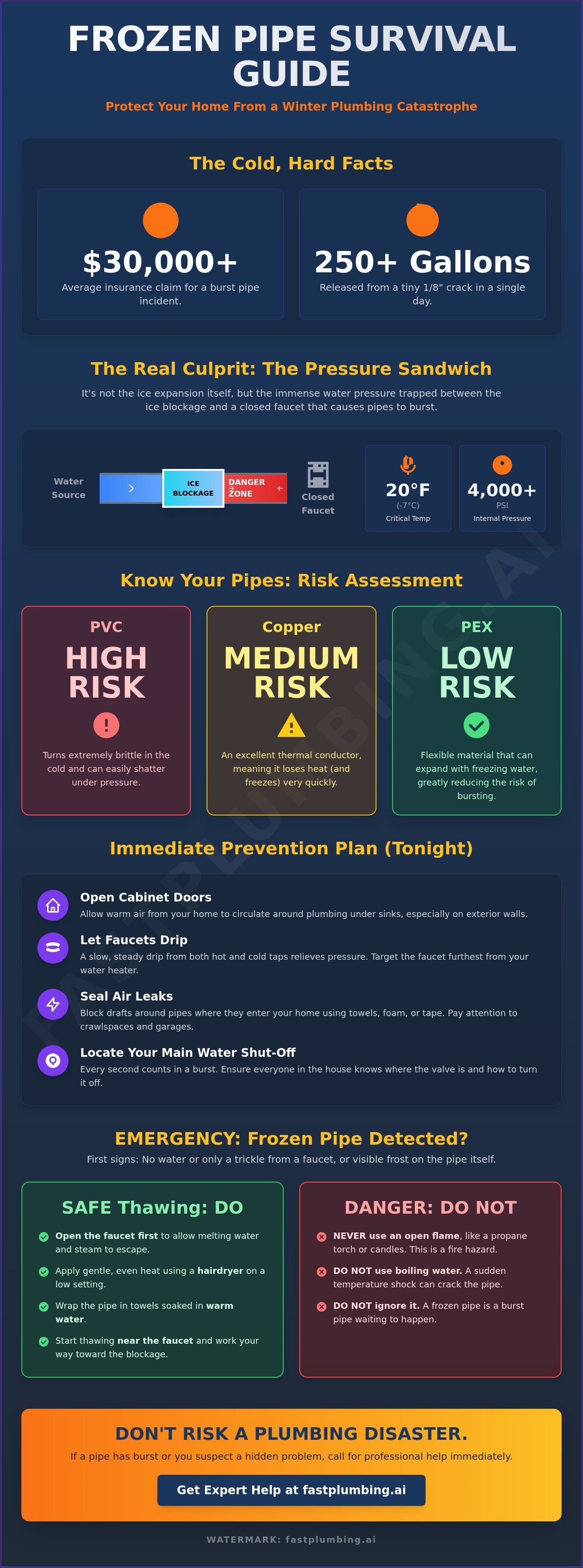
Did you know the average insurance claim for a frozen pipe incident is now over $30,000? It is a staggering figure that shows how quickly a winter chill can turn into a household catastrophe. A tiny 1/8-inch crack in a pipe can release over 250 gallons of water in a single day. You need to know how to prevent pipes from freezing and bursting before the next cold snap hits your neighborhood. We know the fear of catastrophic water damage is real. You might feel uncertain about which faucets to drip or how to safely thaw a line. It is stressful to feel unprepared when the temperature drops.
You deserve to feel confident in your home's winter readiness. This guide provides a FAST, no-nonsense plan to protect your plumbing and your property. We promise to give you a clear emergency strategy so you know exactly what to do the moment you suspect a freeze. You will learn the most effective ways to insulate your pipes and the specific steps to take to keep the water flowing safely. Let's get your home protected ASAP. You should focus on staying warm instead of worrying about a burst pipe.
Key Takeaways
- Understand why 20°F is the critical "danger zone" for your plumbing and how internal pressure causes catastrophic failures.
- Learn the immediate steps for how to prevent pipes from freezing and bursting tonight by using simple air circulation and water flow techniques.
- Compare fiberglass and foam insulation to find the most effective long-term shield for your home's vulnerable plumbing.
- Identify the silent warning signs of a frozen line and learn the safe thawing methods that avoid dangerous mistakes.
- Know exactly when to call a professional to catch hidden damage before it leads to a major flood.
The Science of the Freeze: Why Pipes Actually Burst
Think of your pipes like a ticking clock once the thermometer hits -7°C. This is the official "danger zone" for residential plumbing in colder Australian climates. To truly understand how to prevent pipes from freezing and bursting, you have to look beyond the ice itself. It is about the pressure. While ice expands by roughly 9 percent, the real catastrophe happens because of what we call a "pressure sandwich." This occurs when an ice blockage forms and traps water between the freeze and your closed faucet. It creates a volatile situation that can ruin your flooring in minutes.
Your pipe material dictates your risk level. PEX is the modern favorite because it is flexible and can often expand without snapping. Copper is a different story. It is a great conductor, which is bad news in winter because it loses heat FAST. PVC is perhaps the riskiest material in a deep freeze; it turns brittle and can shatter when the mercury drops. Understanding The science of pipe insulation is your first line of defense to keep these materials safe from thermal shock. Keeping these pipes wrapped ensures the cold air doesn't turn your plumbing into a liability.
Pressure vs. Expansion: The Real Culprit
The burst doesn't usually happen where the ice is located. Instead, the ice plug acts like a high-speed piston. It pushes against the standing water in your line as it grows. This causes the internal pressure to skyrocket to over 27,500 kPa. That is more than enough force to rip through metal or plastic joints. A single dripping faucet prevents this. It doesn't just keep water moving; it provides a constant escape route for that building pressure. It is a simple, effective fix that saves you from a massive headache.
Vulnerability Mapping in Your Home
Map out your home's vulnerabilities before the sun goes down. Focus on unheated areas like garages and crawlspaces. These are the prime targets for a freeze. Don't ignore the impact of wind chill. A small gap in your weatherboard can let a jet of freezing air hit a pipe directly, causing it to freeze even if the room feels warm. For those with slab foundations, be aware that extreme cold can lead to slab leaks deep underground. Identifying these zones now allows you to act FAST when the temperature crashes. Check your exterior walls and drafty cabinets ASAP to ensure your home is ready for the cold. Taking these steps now prevents a costly emergency later.
Immediate Action: How to Prevent Frozen Pipes Tonight
Don't wait for the sun to go down to secure your home. When a hard freeze is forecasted, you need to act FAST. Your immediate goal is to keep the internal pressure from reaching that 4,000 psi breaking point we discussed earlier. Start by identifying every faucet located on an exterior wall. These are your primary targets because they have the least protection against the elements. If you are unsure which ones are most at risk, walk through your home and feel the temperature inside your cabinets. Any area that feels significantly colder than the rest of the room needs your attention right now.
Open your kitchen and bathroom cabinet doors immediately. This simple move allows the warm air from your living space to circulate around the plumbing. It might look a bit cluttered for a night, but it is much more manageable than a flooded basement. If you feel a sharp draft coming from under a sink or near a pipe entry point, seal it ASAP. You can use old towels, rags, or even duct tape and foam to block the cold air. Every degree of warmth you keep inside those cabinets counts when you are learning how to prevent pipes from freezing and bursting during a cold snap.
Every person in your house must know where the main water shut-off valve is located. If a pipe does burst, you need to stop the flow in seconds, not minutes. This is a core part of any emergency frozen pipe protocol. If you cannot find your valve or if it is rusted shut, you should consider a professional leak detection inspection before the next storm hits. Being prepared is the only way to stay ahead of the freeze.
The Faucet Dripping Strategy
Target the faucets furthest from your water heater first. You don't need a heavy flow; a steady drip about the size of a pencil lead is enough. Make sure to crack both the hot and cold handles. Both lines are at risk, and both need that pressure relief. Yes, your water bill might go up by a few dollars. However, when you compare that to the average $30,000 insurance claim for water damage, the choice is easy. It is a small price to pay for total peace of mind.
Thermostat and Airflow Hacks
Keep your thermostat set to the same temperature day and night. Now is not the time to save on your heating bill by dropping the temperature to 60°F while you sleep. You need consistent warmth to reach the pipes hidden inside your walls. If you use a space heater in a garage or basement to protect a "warm zone," follow the 3-foot rule. Keep it at least three feet away from anything that can burn. Never leave these heaters unattended. Safety is your top priority while you work to prevent a disaster.
Long-Term Protection: Insulation and Smart Technology
Moving past tonight's emergency, you need a permanent shield for your home. Investing in high-quality materials is the smartest way to manage how to prevent pipes from freezing and bursting over the long haul. You have three main choices: fiberglass, polyethylene foam, and rubber. Fiberglass is excellent for heat retention but has seen an 18.49 percent price increase since early 2025. Polyethylene foam is the DIY favorite because it is easy to handle. However, for the best moisture protection, professional-grade rubber insulation is the gold standard. A complete winter weather preparedness plan should include these upgrades to meet the latest energy standards.
Don't forget your outdoor spigots. Disconnecting your garden hoses is the absolute first rule of winterization. If you leave a hose attached, water remains trapped in the spigot and the pipe behind it. When that water freezes, it expands back into the house and causes a burst. It is an avoidable disaster. If you suspect your home has hidden vulnerabilities, scheduling professional leak detection can identify weak points before they become $30,000 insurance claims. Identifying these threats early is the best way to keep your home dry and safe.
Heat tape is another powerful tool for extremely cold spots. This is a specialized cable that provides consistent warmth to the pipe surface. You should only use it on pipes that are easily accessible and never wrap it over insulation. Follow the manufacturer instructions to the letter to avoid fire risks. When installed correctly, heat tape acts as a reliable heater that kicks in exactly when the temperature crashes. It is a proactive solution for those stubborn pipes that always seem to freeze first.
Advanced Pipe Insulation Techniques
Measure twice and cut once. When you install foam sleeves, focus on the T-joints and valves where heat escapes most. These are the weak links in your system. Use a miter cut for 90-degree corners to ensure a snug fit. Don't just slide the foam on; seal every single joint with high-quality duct tape. This creates a 100 percent thermal barrier that keeps the cold air out. It is a simple step that makes a massive difference in performance, right?
Smart Water Tech for 2026
The future of home protection is digital. Smart leak detectors can now sense a drop in temperature or an unusual pressure spike and shut off your water automatically. You should also install Wi-Fi enabled temperature sensors in crawlspaces or attics. These devices send an alert to your phone the moment your pipes enter the "danger zone." These systems often pay for themselves by stopping a single burst before it starts. It is the ultimate insurance policy for a modern home.
Emergency Protocol: What to Do if Pipes Already Froze
You did your best to learn how to prevent pipes from freezing and bursting, but the temperature dropped too low. Now you turn the tap and nothing comes out. Or perhaps you hear a strange "clunk" sound echoing through the walls. These are clear signs that an ice blockage has formed. Don't panic. You need to act with professional calm to solve this problem before it turns into a $30,000 insurance claim. Your first move is to keep the faucet open. This acts as a relief valve as the ice begins to melt.
Check the area for any visible cracks before you start the thawing process. If you see a split in the pipe, stop immediately and shut off the main water valve. Thawing a broken pipe will only lead to an immediate flood. If the pipe looks intact, you can proceed with caution. Even if you know how to prevent pipes from freezing and bursting, extreme weather can sometimes win the battle. Once the water starts flowing again, stay vigilant. Check every inch of the exposed line for "sweating" or pinhole leaks. If you find a leak, you need a professional to solve your plumbing emergency FAST before the damage spreads.
How to Safely Thaw a Frozen Pipe
Open the faucet completely. Melting ice creates steam and water that needs an exit point. Start thawing from the faucet side and work your way toward the frozen area. This prevents pressure from building up behind the ice plug. Use a hairdryer on a low setting or wrap the pipe in towels soaked in hot water. These are gentle, safe methods. Never use a blowtorch or any open flame. You risk starting a house fire or causing the pipe to explode from rapid thermal expansion. It is about steady, controlled heat, right?
Managing a Burst Pipe in Real-Time
If the worst happens and a pipe bursts, you have about 30 seconds to minimize the damage. Sprint to your main shut-off valve and turn it clockwise until it stops. This kills the water supply to the entire house. Next, open every faucet in the home to drain the remaining water out of the lines. This stops the leak by removing the pressure source. It is a rapid, logical process that saves your floors and your sanity. Clear the area around the burst pipe immediately. Move furniture, rugs, and valuables out of the way. This ensures your plumber has hassle-free access the moment they arrive to your door.
When to Call an Emergency Plumber
Sometimes you can do everything right and still face a crisis. Even if you followed every step on how to prevent pipes from freezing and bursting, extreme weather is unpredictable. You might think you escaped the freeze without a scratch because your taps are flowing again. However, hidden bursts are a common and silent threat. These are small cracks in pipes tucked away behind drywall or under floorboards. They don't cause a massive flood immediately. Instead, they leak slowly, rotting your timber and encouraging mold growth. You need a professional eye to confirm your home is truly safe after the thaw.
A major freeze event is a traumatic experience for your plumbing system. The intense expansion and contraction of pipes create micro-stress fractures that the average homeowner cannot see. This is why a professional inspection is required after any significant cold snap. We don't just look for active leaks. We look for the subtle vulnerabilities that will cause a disaster during the next cold front. Protecting your home value starts with a solid plumbing maintenance plan that keeps you ahead of the weather year-round.
Post-Freeze Plumbing Audits
Our technicians perform a deep dive into your system to ensure total safety. We check for stress fractures in copper and PVC lines that often occur near joints or T-sections. We also verify that your water heater hasn't suffered thermal shock from the sudden intake of near-freezing water. Finally, we test every shut-off valve in the house. If a valve is stuck or rusted, it won't help you when you need it most. We ensure everything is fully functional before we consider the job done.
Fast Plumbing, LLC’s FAST Response Guarantee
When you face a crisis, every second counts toward saving your property. Fast Plumbing, LLC offers a 1-minute callback guarantee because we know your stress levels are high. Our team provides 24/7 emergency response to solve your problems ASAP. We also promise to "Clean-Up Like It's Our Own." You already have enough to deal with without a plumber leaving a mess behind. If you are still vetting pros in the middle of a storm, use our emergency plumber checklist to ensure you get the quality you deserve. We bring professional-grade expertise to your door, fast and hassle-free. Your home's winter readiness is our top priority, right?
Take Control of Your Home’s Winter Safety
Winter doesn't have to be a season of plumbing anxiety. You now have a complete strategy for how to prevent pipes from freezing and bursting. Start with immediate pressure relief through dripping faucets and open cabinets. Follow up with long-term insulation to harden your home against the cold. These simple steps turn a potential disaster into a managed situation. You have the tools to protect your property and your peace of mind through the coldest months.
If you suspect a hidden leak or want a professional audit after a freeze, act now. Our team brings over 29 years of industry experience to your door. We offer a 1-minute callback guarantee and have fully licensed and insured pros ready to help you 24/7. Call Fast Plumbing, LLC now for 24/7 Emergency Service! We solve your plumbing crises FAST and hassle-free. We treat your property as if it were our own and guarantee a professional clean-up every time. You've got this, and we've got your back. Stay warm and stay prepared.
Frequently Asked Questions
Will my pipes freeze if I keep the heat at 60 degrees?
Yes, your pipes can still freeze even if your thermostat is set to 60 degrees. While the center of the room feels warm, the temperature inside your exterior walls or uninsulated crawlspaces can be much lower. We recommend keeping your heat at 68 degrees or higher during extreme cold. This ensures enough warmth reaches the hidden plumbing that is most at risk of a freeze.
How many faucets should I leave dripping to prevent a burst?
You should drip at least one faucet for every major branch of your plumbing system that runs through a cold area. Focus on faucets located on exterior walls or those furthest from your water heater. Drip both the hot and cold lines to ensure pressure relief across the entire system. This simple step is a powerful way to manage the internal pressure that causes pipes to fail.
Is it better to leave hot or cold water dripping?
It is best to leave both the hot and cold water dripping. Both lines are equally susceptible to freezing and the resulting pressure spikes. By opening both handles slightly, you ensure that neither line becomes a "pressure sandwich" that could lead to a burst. A steady drip about the size of a pencil lead is all you need to protect your home.
Can pipes freeze in the slab foundation of my home?
Yes, pipes can freeze within a slab foundation during prolonged periods of extreme cold. This often results in "slab leaks" that are difficult to see until the ice thaws and water begins to pool. Learning how to prevent pipes from freezing and bursting in slab homes requires maintaining consistent indoor temperatures and sealing any drafts around the perimeter of your foundation.
What is the fastest way to thaw a frozen pipe under a sink?
The fastest and safest way to thaw a pipe under a sink is using a hairdryer on a low setting. Direct the heat toward the pipe, starting from the faucet side and moving toward the frozen area. Keep the cabinet doors open to let the room’s warmth help the process. Never use a blowtorch or open flame; these are major fire risks and can cause the pipe to burst.
How do I know if my pipe has already burst while it is still frozen?
Look for visible cracks, bulging, or ice protruding from the pipe surface to spot a burst while it is still frozen. Sometimes you might hear a faint hissing or dripping sound as the ice begins to melt. If you suspect a break, shut off your main water valve immediately. This prevents a massive flood the moment the ice plug thaws and the water pressure returns.
Does homeowners insurance cover damage from frozen and burst pipes?
Most standard homeowners insurance policies cover water damage from burst pipes, provided you maintained heat in the property. However, they may deny your claim if they determine the home was neglected during the freeze. Considering the average claim for these incidents is over $30,000, staying proactive with maintenance is your best financial defense. Keep a record of your winterization steps to show you took proper care.
At what exact temperature do pipes usually start to freeze?
Pipes typically start to freeze when the outside temperature falls to 20 degrees Fahrenheit or lower for several hours. This is the critical "danger zone" where uninsulated pipes in attics, garages, and exterior walls are most vulnerable. Understanding how to prevent pipes from freezing and bursting before the mercury hits this mark is essential. Act FAST when the forecast predicts temperatures in the low twenties to keep your plumbing safe.
