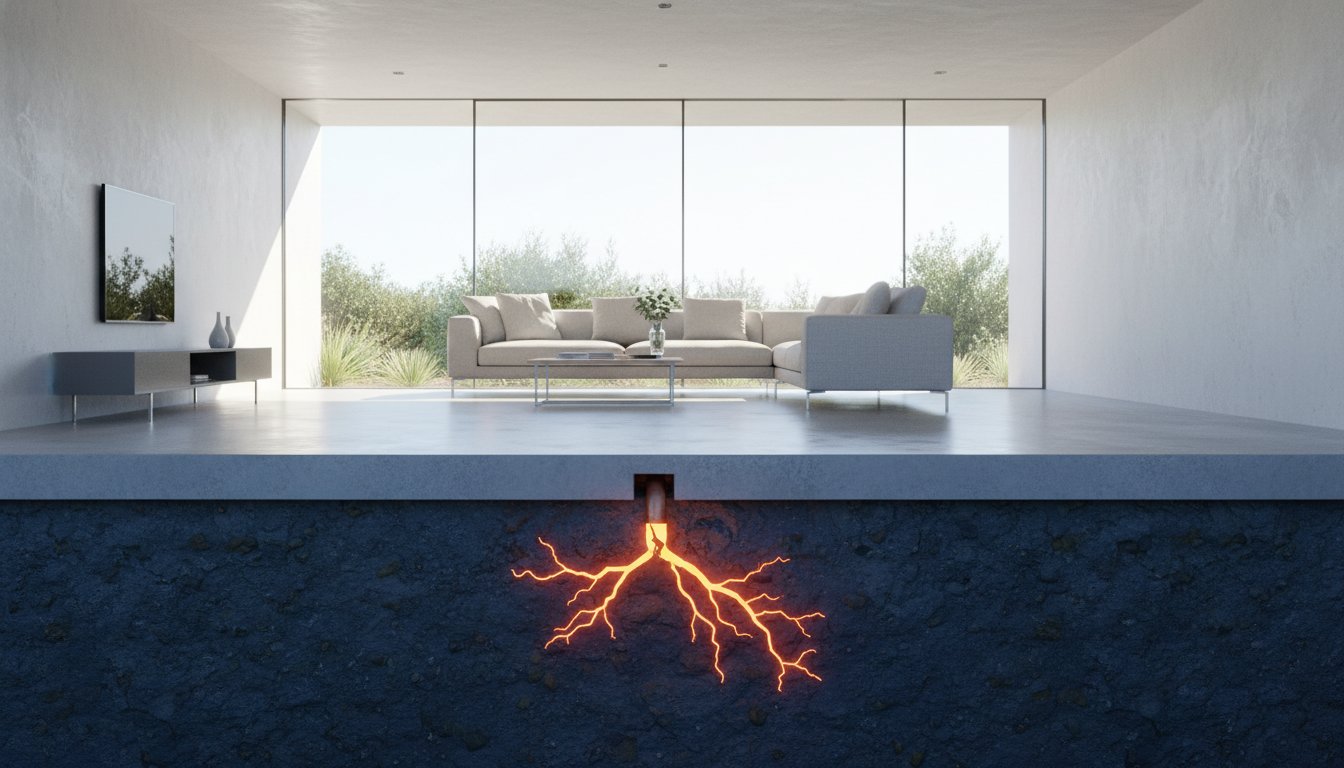
How to Tell If You Have a Slab Leak: 7 Warning Signs to Watch For
You wake up, step onto your kitchen tile, and feel a strange, warm wet spot where there shouldn't be one. Your mind immediately races toward the worst case scenario. Learning how to tell if you have a slab leak is the only way to stop a silent foundation killer before it destroys your home's value and your peace of mind.
We know the anxiety of opening a water bill that has doubled for no reason. It's stressful to hear water running when every faucet is off, especially when you fear a messy repair that tears up your floors, right? You want answers, and you need them FAST. Our goal is to lower your blood pressure and provide a clear, professional path forward that protects your property.
This guide will teach you how to identify hidden foundation leaks before they lead to permanent structural damage. We will walk through the seven critical warning signs you must watch for starting today. You will also discover how modern, non-invasive detection technology can pinpoint the problem without the unnecessary destruction of your property. Let's get your home back to normal, hassle-free.
Key Takeaways
- Act FAST to stop foundation erosion caused by pressurized water line breaks hidden deep beneath your home's concrete.
- Discover how to tell if you have a slab leak by identifying seven critical warning signs, including unexplained bill spikes and damp flooring.
- Use a simple 5-minute water meter test to confirm if your plumbing system is losing water while your appliances are off.
- Protect your property from costly structural damage by learning the difference between simple pinhole leaks and complex foundation issues.
- Learn why non-invasive acoustic tools and thermal imaging are the best ways to solve the problem without a messy, invasive search.
What is a Slab Leak and Why is Speed Critical?
A slab leak isn't just a plumbing problem; it's a direct threat to the structural integrity of your home. To understand What is a Leak? in this context, think of a pressurized water line that has ruptured directly beneath your concrete foundation. Because these lines are buried under inches of concrete and soil, the water has nowhere to go but out. This creates a high-pressure jet that begins carving out the very earth supporting your house. Learning how to tell if you have a slab leak early is the difference between a simple pipe fix and a total foundation rebuild.
Speed is your best defense against catastrophic structural repair bills. Left alone, these leaks erode soil and cause the foundation to crack, shift, or sink. You don't want to wait until you see cracks in your drywall or your doors stop closing properly, right? Our goal is to arrive at your door, find the source, and solve the issue before the damage becomes permanent. Modern technology allows us to pinpoint these breaks with extreme precision, meaning we don't have to tear up your entire floor just to find a single pinhole.
Pressure vs. Drainage: The Two Types of Slab Leaks
Not every leak under your house is the same. Pressure side leaks happen in the lines bringing fresh water into your home. These are usually easier to detect because the water is under constant pressure, meaning it flows fast and doesn't stop until the line is repaired. Drainage side leaks occur in your sewer lines. These are often slower and more insidious because they might only leak when you flush a toilet or run a sink. Knowing the difference changes the entire repair strategy, but both require an ASAP response to protect your property.
The Structural Impact of Hidden Water
What happens if you ignore the warning signs? Water is incredibly powerful. As it escapes the pipe, it washes away the soil under your slab, creating "voids" or empty pockets. Without soil to rest on, your heavy concrete foundation can crack or sink into these holes. In other cases, the water causes certain types of soil to expand, leading to "heaving" where your floor actually lifts up. This ruins expensive flooring and compromises your home's stability. Waiting and seeing is the most expensive decision you can make. We use professional leak detection to identify the problem and stop the erosion immediately.
We believe in a no-nonsense approach to your home's safety. We use non-invasive acoustic tools and thermal imaging to find the leak without the mess. This disciplined process ensures we treat your home with respect and get your plumbing back to normal fast and hassle-free.
7 Warning Signs You Have a Slab Leak Under Your Foundation
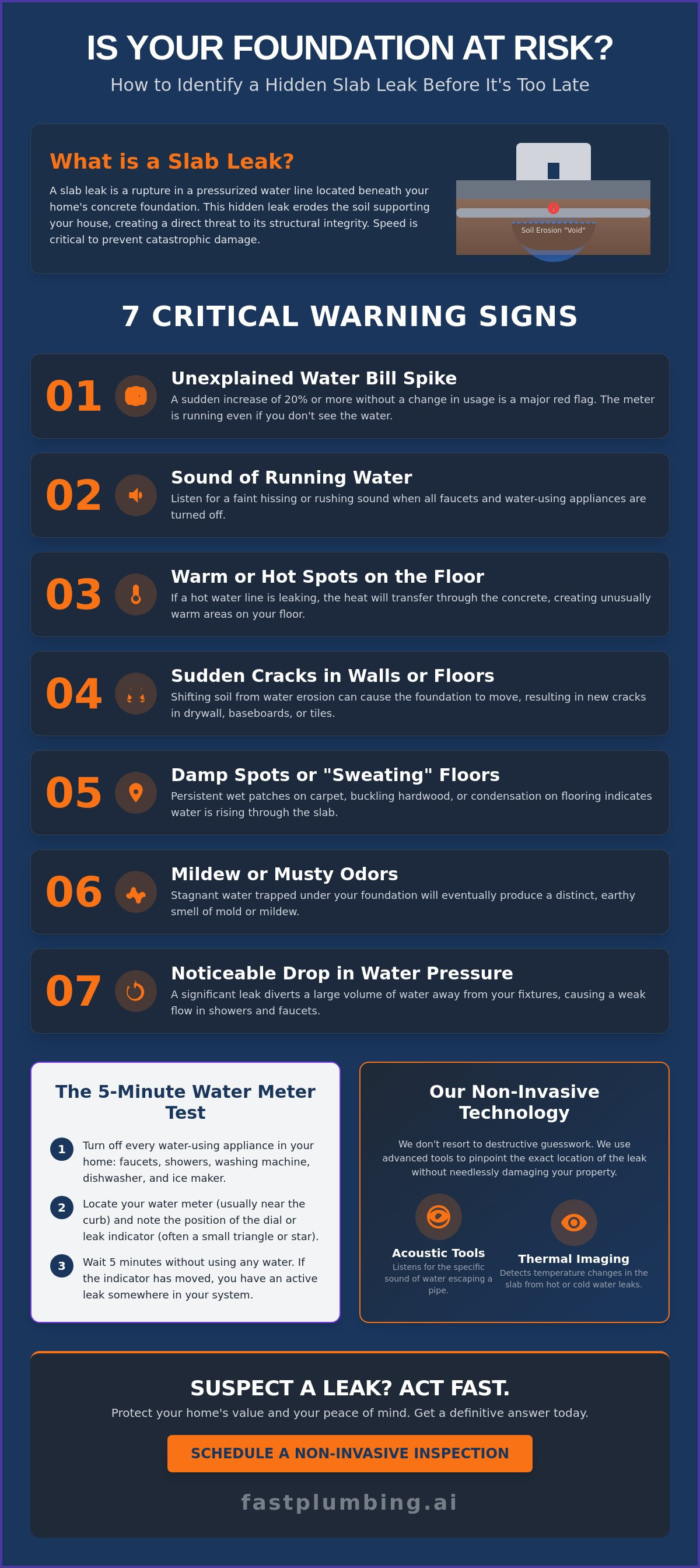
Have you noticed a sudden jump in your monthly water bill even though your habits haven't changed? This is often the first clue in how to tell if you have a slab leak. Because the rupture is hidden beneath layers of concrete, you won't see a visible puddle, but your water meter will keep spinning. If you suspect a problem, walk through your home and look for these seven critical red flags. You need to act before the water compromises your home's safety, right?
- Unexplained spikes in your water bill: A sudden increase of 20% or more without a change in usage is a major warning.
- The sound of running water: Listen for a faint hissing or rushing sound when every faucet and appliance is turned off.
- Warm or hot spots: If a hot water line breaks, the heat transfers through the concrete to your tile or linoleum.
- Sudden cracks: Watch for new cracks in your drywall, baseboards, or floor tiles that appear overnight.
- Persistent damp spots: Wet patches on your carpet or "sweating" on your hardwood floors indicate water rising through the slab.
- Mildew smells: Stagnant water trapped under your flooring will eventually produce a musty, earthy odor.
- Low water pressure: A significant leak diverts water away from your faucets, leaving you with a weak flow in the shower.
If you spot these symptoms, our team can perform professional leak detection to find the source fast and prevent further damage. We believe in getting to the root of the problem without the guesswork.
Physical Clues on Your Floors and Walls
Water damage doesn't always look like a flood. Sometimes it looks like buckling hardwood or damp carpets with no clear source. Pay close attention to your baseboards. If you see dark staining or mold growth along the bottom of a wall, it's a red flag that moisture is wicking up from the foundation. You should also distinguish between normal settling cracks and foundation cracks. Settling cracks are usually vertical and thin. Foundation cracks caused by a leak are often horizontal or follow a stair-step pattern, indicating the ground is shifting beneath you.
Auditory and Sensory Red Flags
You can use simple household items to gather more evidence. If you suspect a leak, place a cup or a stethoscope against the floor in a quiet room. This helps amplify the sound of water traveling through the earth. Another trick is to check your water heater. Is it running constantly even when no one is bathing? A hot water slab leak forces the heater to work overtime to replace the lost water. Finally, trust your nose. Stagnant water under a slab has a very specific, damp smell that lingers in the center of a room even if the air is clear. We can help you solve this mystery fast and hassle-free.
The 5-Minute Water Meter Test: Confirm a Leak FAST
You have seen the warning signs. Now you need a definitive answer. The most reliable way to confirm a hidden plumbing issue is by checking your water meter. This device is the heartbeat of your home's plumbing. It tracks every drop of water that enters your property. If your meter is moving when no one is using water, you have a problem that requires an ASAP response. This is the most practical step in how to tell if you have a slab leak without calling in a professional first.
Start by locating your main water meter. You can usually find it near the street in a concrete box or mounted on the side of your house. Once you find it, follow these steps with precision:
- Clear the house: Ensure every faucet, shower, and water-using appliance is completely turned off. This includes your dishwasher, washing machine, and even your ice maker.
- Check the leak indicator: Open the meter lid. Look for a small, sensitive dial. This is usually a small red or white triangle or a star wheel. If this tiny wheel is spinning, water is flowing somewhere.
- Perform the 30-minute test: If the indicator isn't moving visibly, record the main numbers on the dial. Leave the water off and wait exactly 30 minutes.
- Verify the change: Check the numbers again. If the dial has moved at all, you have a pressurized leak that is active right now.
Isolating the Leak to the Slab
A spinning meter confirms a leak, but is it under your house or in your yard? You can find out by closing the main shut-off valve to your home. If the meter stops moving once the house valve is closed, the leak is inside your home's footprint. This usually points to a break under the concrete slab. If the meter keeps spinning, the issue is likely in the service line buried in your yard. Knowing this distinction helps us arrive prepared to solve the problem fast and hassle-free.
What to Do if the Meter is Spinning
If the test confirms a leak, do not panic. High-pressure leaks can cause damage quickly, but a disciplined response will save your foundation. Start by turning off your water heater. If a hot water line is leaking, the heater will run continuously to keep up, which can lead to a total unit burnout. Your next step is to secure professional leak detection. We use advanced technology to pinpoint the exact location of the break. This prevents unnecessary digging and protects your home from a messy, invasive repair process. We treat your property with the same respect we would our own, right?
Slab Leak vs. Pinhole Pipe Leak: Identifying the Difference
You might think a leak is just a leak, right? In reality, the location of the break changes everything for your home's safety. Pinhole leaks usually happen inside your walls or ceilings. They are messy and cause drywall damage, but they don't typically threaten your home's skeleton. Slab leaks are different. These involve the main pressurized lines that feed your entire plumbing system from deep beneath the floor. A slab leak is a sub-foundation failure caused by electrolysis or shifting soil. Determining the location is a critical part of how to tell if you have a slab leak versus a standard plumbing issue.
Both problems require an ASAP response to prevent mold and water waste. However, a break under your foundation is a structural emergency. While a pinhole leak in a wall is a localized headache, a sub-foundation break can compromise the very ground your house sits on. Understanding how to tell if you have a slab leak helps you decide whether you need a simple patch or a comprehensive foundation protection plan.
Common Causes of Sub-Foundation Pipe Failure
Why do pipes fail under several inches of reinforced concrete? It usually comes down to three specific factors:
- Electrolysis: This is a chemical reaction between copper pipes and certain soil types that creates a small electrical current. Over time, it eats through the metal.
- Shifting soil: Ground movement puts immense pressure on rigid plumbing lines. If the earth moves too much, the pipe eventually snaps.
- Poor installation: If a pipe was kinked during construction or left unprotected from the abrasive nature of concrete, it will eventually fail.
When to Suspect a Sewer Line Issue Instead
Sometimes the water isn't coming from your fresh water supply. If you notice slow drains throughout the house combined with new foundation cracks, you might be facing a drainage issue. This is where sewer line repair differs from water line repair. Sewer leaks aren't pressurized, so they don't spin your water meter. Instead, they slowly rot the soil under your home. We use professional video camera inspections to see exactly what is happening inside your lines. This takes the guesswork out of the process and ensures a hassle-free solution.
Don't let a hidden leak compromise your foundation. If you see the signs, call us for expert leak detection to solve the problem FAST.
Professional Slab Leak Detection and Your Next Steps
Once you've used our guide on how to tell if you have a slab leak, the next step is confirmation without destruction. The old, expensive way to find a leak involved "searching and digging." Plumbers would jackhammer random sections of your floor based on a guess. This created a massive mess and cost a fortune in floor repairs. We don't do that. Modern technology allows us to find the exact source of the problem through the concrete, keeping your home intact and your stress levels low.
The water stops here. We use a disciplined, three-step process to move you from crisis to resolution. Our technicians arrive on time, identify the leak with precision, and provide a clear plan for the repair. We believe in total transparency, so you'll know exactly what needs to happen before any work begins. Best of all, we promise to "Clean-Up Like It's Our Own" after every diagnostic visit. You shouldn't have to deal with a plumbing mess on top of a foundation issue, right?
The Modern Detection Process
Our experts use high-tech tools to see and hear through your foundation. Ultrasonic equipment allows us to "listen" for the specific frequency of a pressurized leak through six inches of reinforced concrete. This eliminates the guesswork. We also utilize thermal imaging cameras to spot the heat signature of hot water line breaks. These non-invasive methods find the leak without the mess. Professional detection saves you thousands of dollars by preventing unnecessary demolition of your expensive flooring and slab.
Choosing the Right Repair Strategy
Every home is different, and we offer several ways to solve the problem. After we find the leak, we will recommend the most efficient and cost-effective path forward. You have options, and we'll help you pick the best one for your property:
- Pipe Rerouting: This is the "hassle-free" choice. We abandon the leaky pipe under the slab and run a new, modern line through your walls or attic.
- Spot Repair: If the leak is easy to reach, we open a small, precise section of the slab to fix the specific break.
- Epoxy Pipe Lining: For certain situations, we can use a trenchless epoxy coating to seal the leak from the inside without any digging at all.
Don't let anxiety over foundation stability keep you up at night. Now that you know how to tell if you have a slab leak, take the final step to secure your home. Call us now for a FAST, professional evaluation of your foundation health. We will get your plumbing back in top shape ASAP.
Protect Your Foundation and Your Peace of Mind
A slab leak doesn't have to be a disaster. By acting fast and watching for the red flags we've discussed, you can stop structural damage before it starts. Remember that unexplained water bills and warm floor spots are your home's way of asking for help. Now that you know how to tell if you have a slab leak, you have the power to protect your property from costly repairs. You want a solution that is reliable and hassle-free, right?
Don't wait for a small leak to become a foundation failure. We bring 29+ years of professional experience to every job, and we are ready to solve your problem ASAP. With our 1-minute callback guarantee and 24/7 emergency service available, you are never alone in a crisis. Contact Fast Plumbing for FAST, Non-Invasive Leak Detection! We will handle the diagnostic process with precision and leave your home cleaner than we found it. Let's get your plumbing back to normal today.
Frequently Asked Questions
Does homeowners insurance cover slab leak repairs?
Standard homeowners insurance policies typically cover the cost to access the leak and the repair of any resulting damage to your flooring or walls. However, the actual pipe repair itself is often excluded if the cause is determined to be routine wear and tear or corrosion. You should check your policy for specific endorsements, such as service line coverage, which can help cover the pipe fix. We recommend reviewing your coverage details with your agent ASAP to understand your benefits.
How much does it cost to detect a slab leak?
The cost of professional detection depends on the complexity of your home's layout and the technology required to pinpoint the break. Using advanced tools like acoustic sensors and thermal imaging is a smart investment that prevents unnecessary destruction of your property. This disciplined approach saves you money in the long run by avoiding the "search and dig" method that ruins expensive flooring. We focus on finding the source fast and hassle-free.
Can I live in my house while a slab leak is being repaired?
Yes, you can typically stay in your home during the repair process. Our team works with a high sense of urgency to minimize disruption to your daily routine. If we use non-invasive methods like pipe rerouting, the impact on your living space is very low. Even if a spot repair is necessary, we maintain a clean workspace and promise to clean up like it's our own, right?
How long does it take to fix a leak under a concrete slab?
Most slab leak repairs are completed within one to three days. The detection phase usually takes less than two hours, providing you with immediate answers. The duration of the actual repair depends on whether we are performing a precise spot repair or rerouting a new line through your attic. We prioritize getting your water service back to normal ASAP to protect your home's stability.
What happens if I ignore a slab leak for too long?
Ignoring the problem leads to foundation heaving, severe structural cracks, and potential mold growth. Pressurized water constantly erodes the soil beneath your home, creating large voids that cause the foundation to sink or shift. Learning how to tell if you have a slab leak early is the best way to avoid a household crisis. Waiting only increases the risk of permanent damage and more expensive, invasive repairs later.
Are slab leaks common in newer homes or only older ones?
Slab leaks can happen in homes of any age. While older properties often face issues due to pipe corrosion and electrolysis, newer homes are vulnerable to shifting soil and poor initial installation. If a pipe was kinked or left unprotected during construction, it can fail regardless of how recently the house was built. We treat every home with professional-grade expertise to identify these hidden threats fast.
Will a slab leak cause my floor to collapse?
A total floor collapse is rare, but significant sinking and "doming" are common when a leak is left unaddressed. As the escaping water washes away the supporting earth, your concrete slab loses its foundation and can drop or crack under the weight of the house. This creates uneven floors and tripping hazards. Our goal is to solve the issue before these structural failures occur, keeping your property safe and reliable.
Can trees cause slab leaks under my house?
Yes, invasive tree roots are a frequent cause of sub-foundation pipe failure. Roots naturally grow toward moisture and can exert incredible pressure on your plumbing lines as they expand. This pressure can snap rigid pipes or cause them to shift and leak. If you have large trees near your foundation, it's a good idea to watch for the warning signs of how to tell if you have a slab leak to catch root-related damage early.
