Is My Garbage Disposal Broken? 7 Signs It Is Time for a Professional Fix
Is that low humming sound coming from your sink a minor annoyance or the expensive death rattle of a dying appliance? It's a question every homeowner asks when the water stops draining and the kitchen starts to smell. You're likely sitting there wondering, "is my garbage disposal broken," or can I fix this right now without spending a fortune? It's stressful to deal with a backed-up sink, especially when you're worried about the safety of those sharp blades or the high cost of a new unit.
We understand that you need answers and you need them FAST. You shouldn't have to guess whether a simple reset button will solve the problem or if it's time for a professional replacement. This guide helps you identify exactly what's wrong with your unit and teaches you how to attempt a safe DIY fix before calling for help. We will preview the seven critical signs that your motor has reached the end of its functional lifespan. If it's time for a change, we provide a hassle-free process to get a new disposal to your door. We promise a clean-up like it's our own, leaving your kitchen spotless and your sink draining perfectly again.
Key Takeaways
- Identify the clear difference between a minor mechanical jam and a complete motor failure to determine once and for all, "is my garbage disposal broken?"
- Spot the critical warning signs of structural failure, such as persistent leaks, that require an immediate fix to avoid expensive water damage to your cabinets.
- Use the "10-year rule" to evaluate whether a repair is a cost-effective solution or if it's time for a FAST, reliable replacement.
- Learn the safe way to use the 30-second red reset button and which household items are secretly destroying your disposal's motor.
- Understand why a professional installation from Fast Plumbing, LLC is vital to ensure a watertight seal and get your kitchen back to normal without the mess.
Recognizing the Warning Signs of a Failing Garbage Disposal
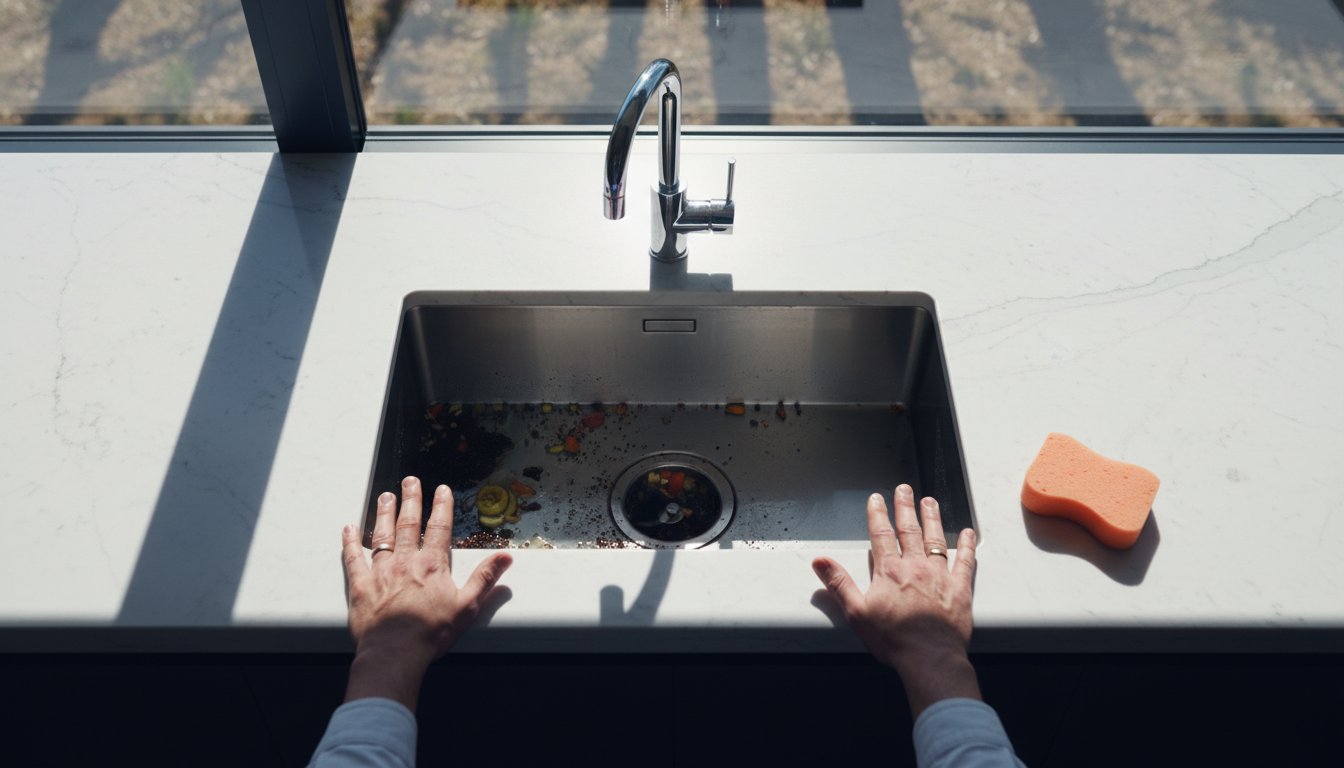
Does your sink look like a swamp? It's a common kitchen crisis that stops your day in its tracks. You might be staring at the standing water and asking, "is my garbage disposal broken," or is it just a temporary glitch? Knowing the difference saves you money and prevents a massive, smelly mess. A mechanical jam happens when a foreign object, like a bone or a fruit pit, stops the blades. A motor burnout is much worse. It means the internal engine is dead. Identifying these signs early prevents water damage and keeps your kitchen sanitary.
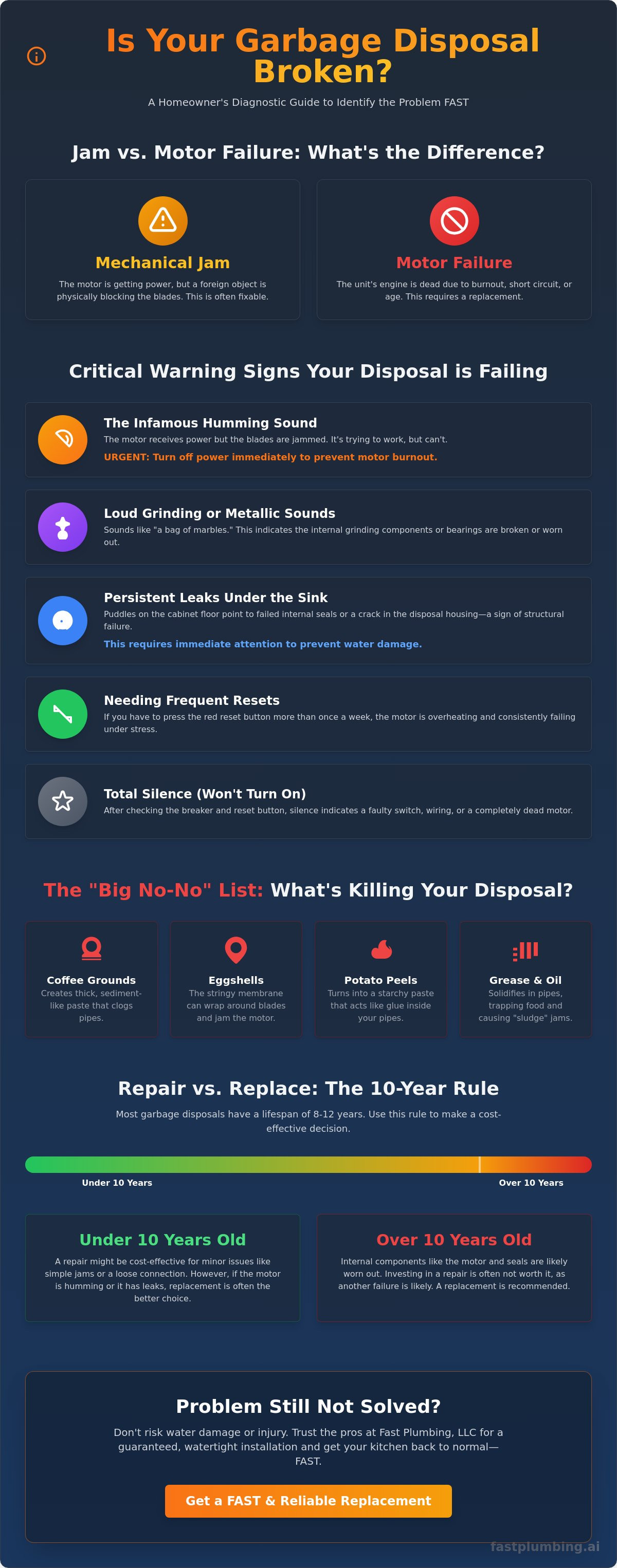
The modern Garbage disposal unit is a workhorse, but it isn't invincible. Watch for persistent leaks under your sink. If you see puddles on the cabinet floor, the internal seals are likely shot. This is a structural failure, not a loose pipe. You can't patch a cracked housing with sealant. Also, listen to the machine. If it sounds like a bag of metal marbles is spinning around, your bearings or blades are worn out. This grinding noise means the unit is working too hard. Finally, pay attention to that red reset button. If you find yourself crawling under the sink to press it more than once a week, your motor is reaching its limit. It's failing under the stress of daily use, and a total breakdown is coming.
The Infamous Humming Sound
That low hum is a serious warning. It tells you the motor is getting electricity, but the flywheel can't move. Something like a stray coin or a thick vegetable stalk is wedged inside. Don't keep the switch flipped on while it hums. If you do, the motor will overheat and burn out in seconds. Turn it off immediately. Always unplug the unit or flip the breaker before you even think about looking inside. A humming motor that isn't cleared quickly will turn into a dead motor FAST.
Total Silence: When the Unit Won't Turn On
What if you flip the switch and nothing happens? Total silence is eerie and frustrating. First, check your breaker panel. A simple power surge can trip the circuit. Next, look at the bottom of the unit for that red reset button. If it's popped out, press it back in and try again. However, if the breaker is fine and the button is set, the internal wiring might have shorted. Moisture often leaks into the electrical housing as the unit ages. This ruins the internal components. At this point, the motor is likely shot and needs a professional fix to get your kitchen back to normal.
Understanding Why Your Disposal Stopped Working
Why did your disposal quit today? Usually, it's a mix of age and what you're tossing down the drain. If you're asking "is my garbage disposal broken," start by checking the calendar. Most units have a lifespan of 8 to 12 years. Once you hit that decade mark, the internal components simply wear out. The motor loses its punch, and the seals become brittle. You want a kitchen that works without the constant worry of a breakdown, right?
Mechanical stress is the most common silent killer. When the internal "teeth" or impellers lose their edge, they stop grinding and start pushing. This forces the motor to work twice as hard to process the same amount of waste. Over time, this constant overloading wears down the motor’s start capacitor. It's like trying to start a car with a dying battery every single time you flip the switch. Eventually, the motor simply gives up.
The Role of Improper Use and Clogs
Many people treat their disposal like a trash can, which leads to immediate trouble. Certain items are "Big No-No" culprits that cause clogs and motor strain:
- Coffee Grounds: They don't dissolve and instead create a thick, sediment-like paste.
- Eggshells: The stringy membrane can wrap around the blades and jam the flywheel.
- Potato Peels: These turn into a starchy paste that acts like glue inside your pipes.
- Grease and Oil: Liquid fat solidifies into a mechanical sludge that traps other food particles.
When grease hits cold pipes, it creates a "sludge" jam that stops the blades cold. Regular plumbing maintenance prevents this build-up from destroying your appliance. If your pipes are already sluggish, professional drain cleaning can clear the path and reduce the back-pressure on your disposal's motor.
Electrical Issues and Motor Fatigue
Don't reach for liquid drain cleaners when things slow down. These harsh chemicals are designed to sit in pipes, not in a disposal. They eat through the rubber seals and plastic components inside the unit. This leads to the internal leaks that eventually ruin the electrical housing. If those chemicals reach the wiring, they can cause a short circuit that trips your home's main circuit breaker. This is a clear sign of a structural failure that requires a FAST solution. If you're tired of the clogs and the noise, consider a professional garbage disposal inspection to see if your unit is worth saving or if it's time for an upgrade.
The Repair vs. Replace Dilemma: Evaluating Your Options
You are standing over a clogged sink, wondering "is my garbage disposal broken" for good. It is a stressful moment. Do you pay for a repair or just replace the whole thing? The answer usually depends on the age of your unit and the type of failure you are facing. If your disposal is over 10 years old, a repair is often just a temporary band-aid. You want a kitchen that works without constant drama, right? In many cases, a FAST replacement is the most cost-effective way to get your home back to normal.
Analyzing the source of a leak is the fastest way to make your decision. Is the water dripping from the sink flange at the very top? That is usually a simple gasket issue. This can be fixed quickly by replacing the seal. However, if the water is dripping from the bottom of the motor housing, the internal seals have failed. This is a non-repairable structural failure. Similarly, you must determine if the motor is seized or just stuck. A stuck motor hums because of a physical jam. A seized motor has internal bearings that have fused together from rust or wear. A seized motor cannot be saved and requires a professional swap.
When a Simple Fix Is the Answer
Sometimes the solution is a 30-second fix that saves you a service call. Most disposals have a hex hole at the very bottom of the unit. You can use an Allen wrench to manually turn the blades and break a minor jam. This is the "Allen wrench trick" every homeowner should try first. You should also check the internal thermal overload protector. If the motor gets too hot, it shuts itself off to prevent a fire. Simply wait for it to cool down and press the red reset button. If your splash guard is torn or slimy, replacing that small rubber part can make the unit quiet and clean again without replacing the whole motor.
Signs It Is Time for a New Garbage Disposal
When should you stop trying to fix an old unit? If you smell a persistent foul odor that won't go away with lemons or vinegar, the internal plastic housing might be cracked. Bacteria grows in those deep cracks, and it is impossible to clean. This is a sanitation risk for your kitchen. Also, if you clear a jam with a wrench but the motor still just hums without spinning, the start capacitor has failed. Replacing a capacitor on an old unit is often more expensive than buying a new, modern model. We provide a hassle-free replacement process to get a high-quality unit installed properly. This ensures a watertight seal and a quiet, powerful grind for years to come.
Essential Troubleshooting Steps Before You Call a Plumber
Don't panic if your sink is full of water and the kitchen is starting to smell. Before you decide that a full replacement is your only option, try these professional troubleshooting steps to see if the unit can be salvaged. You might be sitting there asking, "is my garbage disposal broken," when the solution is actually a simple power reset or a minor manual adjustment. Safety is the absolute priority during this process. Never put your hands or any utensils near the drain opening while the unit is plugged in. Start by unplugging the disposal from the wall outlet or flipping the dedicated breaker in your electrical panel to ensure there is zero chance of the motor starting while you work.
The first thing to check is the thermal overload protector, which is a safety feature designed to prevent fires. This is the small red reset button located on the very bottom of the disposal housing. If the motor gets too hot or hits a particularly tough obstruction, this button pops out to cut power instantly. If you find the button sticking out, wait at least five minutes for the motor to cool down before pressing it back in until it clicks. Restore the power and test the wall switch with a quick flick. If the unit starts up, you have solved the problem. If the button pops again immediately, you have a deeper mechanical issue that requires a FAST professional intervention from Fast Plumbing, LLC.
The Manual Flywheel Rotation Technique
If the motor hums but won't spin, the internal flywheel is likely physically jammed by a foreign object. Most modern disposals feature a small hex-shaped hole in the center of the bottom plate for this exact reason. You can solve this without sticking anything down the drain. Insert a 1/4-inch Allen wrench into this hole and firmly move it back and forth. This manual leverage allows you to break through tough clogs that the motor's own torque couldn't handle. The wrench should move freely for several full rotations before you attempt to restore power. Once the jam is cleared, turn the water on high and flip the switch to flush out the debris.
Testing the Electrical Path
Sometimes the problem isn't the disposal at all; it's the power supply. Start by checking the wall switch to see if it feels "mushy" or doesn't click firmly. Next, look at the electrical panel or the outlet under the sink. In Australia, your kitchen circuits are protected by a Safety Switch or RCD (Residual Current Device). If this has tripped, it will cut power to the outlet to prevent an electrical hazard. Press the "Reset" button on the RCD until it clicks. You can verify the outlet is working by plugging in a small lamp. If the RCD has power but the disposal remains silent, the internal wiring has likely failed. If these DIY steps don't get the blades spinning, it is time for a professional garbage disposal repair to get your kitchen back in order ASAP.
Getting Your Kitchen Back to Normal—FAST
A non-functional kitchen sink is more than a nuisance. It's a sanitation emergency that stops your household from running smoothly. If you've gone through the troubleshooting steps and are still asking "is my garbage disposal broken," it's time to stop the guesswork. You deserve a kitchen that works without leaks, smells, or loud grinding noises. Transitioning from a failed unit to a high-performance upgrade is the fastest way to restore your peace of mind. We help you move from a kitchen crisis to a fully functional home in record time. Our team understands the frustration of a backed-up sink, which is why we prioritize speed and responsiveness above all else.
Choosing a professional fix isn't just about the motor. It's about protecting the structural integrity of your home. A single loose connection can lead to hidden mold growth under your sink. We take the stress out of the process by providing a clear answer on your disposal's status. If the unit is shot, we offer a range of high-performance models that run quieter and grind faster than older technology. You'll notice the difference the very first time you flip the switch. It's about getting your kitchen back to a better state than it was before the breakdown, right? We ensure the transition is seamless so you can get back to your daily routine without another thought about your plumbing.
The Professional Installation Advantage
Why choose a professional over a DIY weekend project? The answer is simple: reliability. A common "DIY leak" can slowly rot your cabinets for months before you notice the damage. Our technicians ensure a perfect, watertight seal at the sink flange. We also focus on proper grounding and vibration-free mounting. This prevents the unit from shaking loose over time and reduces the noise levels in your kitchen. While we're in your home, we can also inspect other vital systems, such as your water heater repair needs or faucet connections, to ensure your whole home is in peak condition. We value your time as much as our own, which is why we work efficiently to get the job done right the first time.
Fast Plumbing, LLC: Your 24/7 Reliable Neighbor
We treat your home with the respect it deserves. The Fast Plumbing, LLC "Clean-Up Like It's Their Own" guarantee means we never leave a mess behind. You won't find old parts or oily rags in your cabinets when we finish. We also eliminate the anxiety of "sticker shock" through our transparent, flat-rate pricing. You'll know the cost before we start the work. We pride ourselves on being the fastest responders in the business. Our 1-minute callback guarantee ensures you aren't left waiting for answers while your sink overflows. Fast Plumbing, LLC is ready to handle kitchen disasters at any hour. We follow a strict three-step process to move you from initial contact to a completed job with minimal friction. Get your disposal fixed FAST—contact us now!
Get Your Kitchen Back on Track Today
Don't let a clogged sink or a smelly drain ruin your day. You now have the tools to answer the question, "is my garbage disposal broken," and the knowledge to try a few safe DIY fixes first. Whether you cleared a jam with a wrench or discovered a structural leak that signals the end of your unit's life, you don't have to face a plumbing crisis alone. Most units only last about a decade. Upgrading to a quieter, more powerful model is often the smartest long-term move for your home and your peace of mind.
We are here to make the transition hassle-free. Our team provides a 1-Minute Callback Guarantee and a Clean-Up Like It's Their Own Promise to ensure your kitchen stays spotless. We offer 24/7 Emergency Plumbing Service because we know kitchen disasters don't wait for business hours. Schedule your FAST garbage disposal repair or replacement today! You can trust us to handle the job with speed and professional care. Your fully functional, clean kitchen is just one click away.
Frequently Asked Questions
Why is my garbage disposal making a humming noise but not spinning?
A humming noise usually indicates that the motor is receiving power but the internal flywheel is physically jammed. This happens when a hard object like a fruit pit or a small bone gets wedged between the impeller arm and the grind ring. Turn off the power immediately to prevent the motor from burning out while you clear the obstruction. If the hum continues after clearing the jam, the motor may be seized.
How do I know if my garbage disposal motor is burned out?
You know the motor is burned out if the unit is completely silent and does not respond to the red reset button or a checked circuit breaker. If you smell a metallic, electrical burning scent coming from under the sink, the internal windings have likely melted. This is a clear sign that it's time to stop wondering "is my garbage disposal broken" and call for a FAST replacement.
Can I fix a garbage disposal that is leaking from the bottom?
No, a disposal leaking from the bottom of the motor housing usually cannot be repaired and must be replaced. This type of leak indicates that the internal seals have failed, allowing water to enter the electrical compartment. Attempting to patch the exterior with sealant won't solve the structural failure happening inside the unit. A bottom leak is a definitive sign that the unit's lifespan has ended.
Is it worth it to repair a 10-year-old garbage disposal?
Generally, it is not cost-effective to perform major repairs on a unit that has reached the 10-year mark. Most disposals have a functional lifespan of 8 to 12 years. Since a professional replacement provides a new warranty and higher grinding efficiency, investing in a new unit is a more reliable choice. You'll avoid the frustration of frequent breakdowns and potential water damage from aging seals.
What do I do if my garbage disposal won't turn on even after hitting the reset button?
Check your home's main electrical panel and the GFC outlet under the sink if the reset button doesn't work. If the breaker hasn't tripped and the outlet has power, the internal wiring or the motor itself has likely failed. At this point, you need a professional to diagnose whether the start capacitor is shot or if the entire unit has reached the end of its life. We can solve this quickly.
Why does my garbage disposal keep tripping the circuit breaker?
A disposal that repeatedly trips the breaker usually has a short circuit caused by an internal water leak. If water bypasses the seals and touches the electrical components, it creates an immediate surge that shuts down the circuit for safety. This is a serious issue that requires a professional inspection to prevent potential electrical hazards in your kitchen. It often means the internal housing is no longer watertight.
How much does it typically cost to replace a garbage disposal?
The total cost depends on the horsepower of the motor and the complexity of the installation. While basic aluminum models are more affordable, high-end stainless steel units offer significantly longer lifespans and quieter operation. We provide flat-rate pricing to ensure you know exactly what you will pay before we start the work. This eliminates any unexpected sticker shock and ensures a professional, hassle-free installation process.
Can a clogged drain actually break my garbage disposal?
Yes, a severe drain clog can cause standing water to back up into the disposal, eventually corroding the internal seals. When water sits inside the grinding chamber for long periods, it accelerates rust on the blades and bearings. This extra moisture often leads to the internal electrical shorts that permanently kill the motor. Keeping your drains clear is essential for the health of your kitchen appliances.
