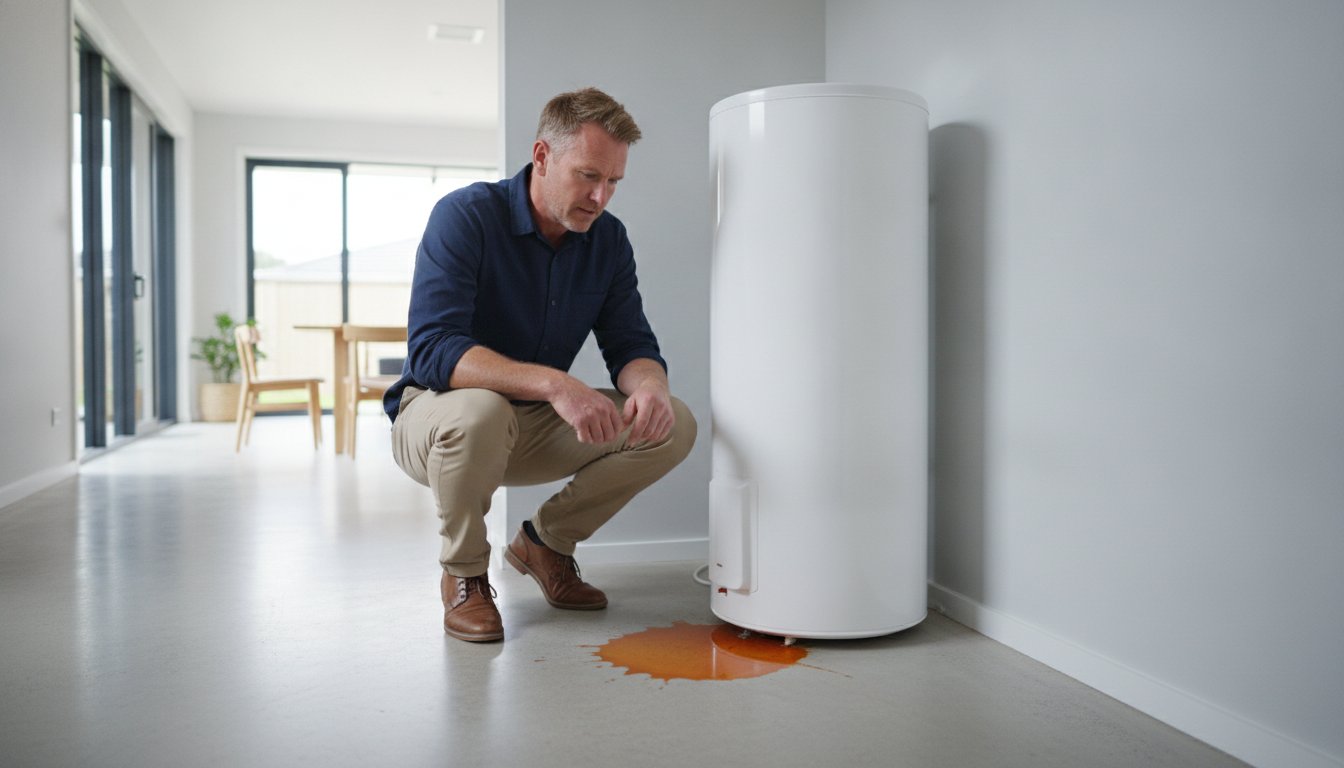
Is My Water Heater About to Fail? 7 Warning Signs You Can't Ignore in 2026
Imagine stepping into the shower on a cold morning only to be greeted by a freezing blast of water. Or worse, you discover a growing puddle of rusty water spreading across your garage floor. It's a stressful situation that leaves every homeowner asking the same thing: is my water heater about to fail? You shouldn't have to deal with the anxiety of a flooded home or the frustration of sudden, expensive repairs.
We at Fast Plumbing, LLC agree that a reliable hot water system is essential for a stress-free home. This guide promises to teach you how to spot the silent signals of a failing unit before a major flood disrupts your life. We will preview a clear triage for your heater's health, explain how 2026 Australian efficiency standards impact your choices, and help you understand the real cost of repair versus replacement. Let’s get your hot water back on track fast and hassle-free.
Key Takeaways
- Determine if your tank is a ticking time bomb by decoding the hidden manufacturing date in your serial number.
- Use our "Red Light" triage system to answer the question, is my water heater about to fail, before you face a flooded basement.
- Understand the role of the anode rod and sediment buildup in preventing or causing sudden, irreversible tank corrosion.
- Use the 50% Rule to calculate whether a repair is a smart investment or if a full replacement is the only way to avoid a crisis.
- Learn the 1-minute TPR valve test and locate your emergency shut-off valves to keep your home safe and dry.
The Water Heater Lifespan: Is Your Tank a Ticking Time Bomb?
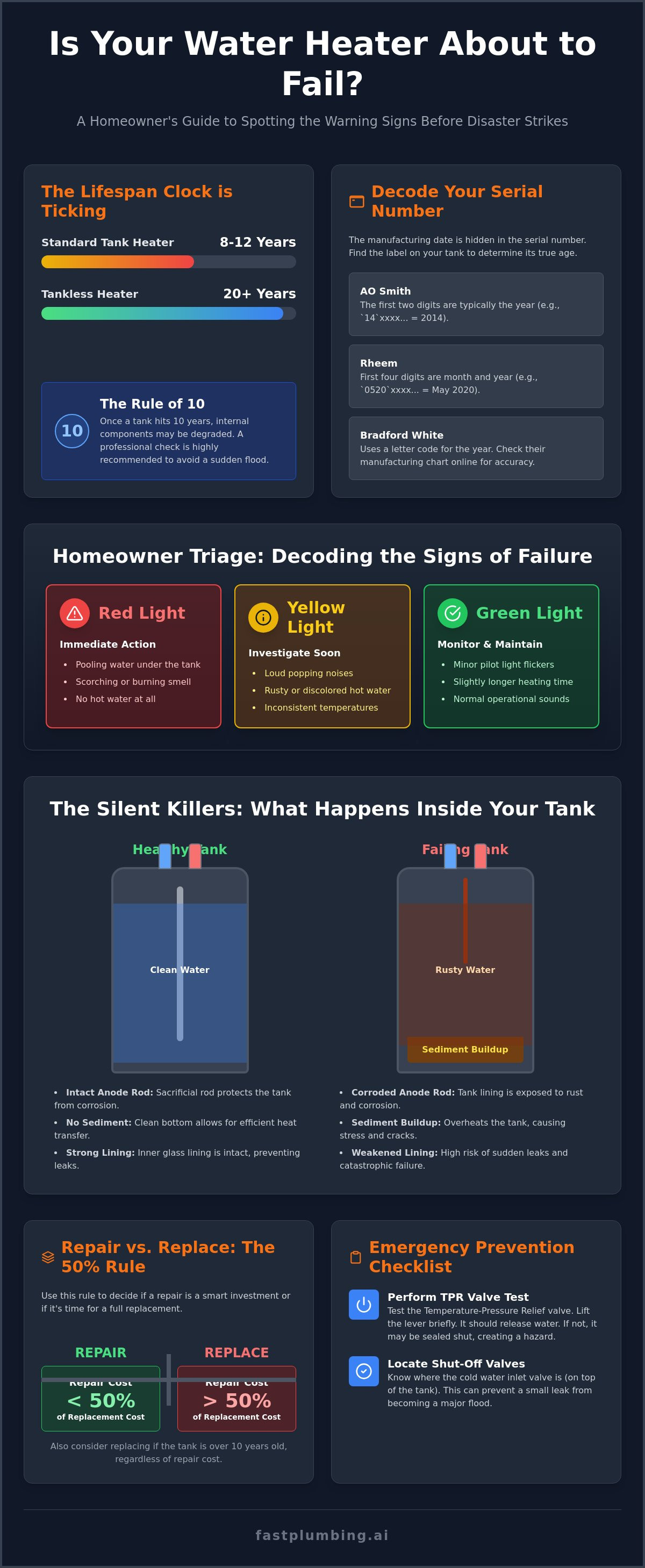
Most homeowners don't think about their water heater until the shower goes cold. By then, you're usually facing a mess and a bill. Understanding how storage water heaters work is the first step in realizing that these units are under constant stress from heat and pressure. A standard tank style water heater typically has a lifespan of 8 to 12 years. If you've invested in a tankless model, you can expect it to last 20 years or more with proper care. However, if your unit is creeping toward that double-digit mark, you need to ask yourself: is my water heater about to fail?
We use the "Rule of 10" to help our neighbors stay ahead of disasters. Once a tank hits ten years of age, the internal components have likely begun to degrade. Even if it looks fine on the outside, the inner lining could be paper-thin. You don't want to wait for a flood to find out your time is up. Getting a professional health check at the ten-year mark can save you from a midnight emergency. We can get to your door FAST to tell you exactly how much life is left in your system.
How to Read Your Water Heater's Serial Number
The manufacturing date is the most important piece of data you own. You can find it hidden within the serial number on the manufacturer's label near the top of the tank. If that label is peeled, burnt, or unreadable, your unit is likely very old and needs immediate attention. Here is how to decode the big brands:
- AO Smith: Usually, the first two digits of the serial number are the year of manufacture.
- Rheem: These often use a four-digit code at the start, representing the month and year (MMYY).
- Bradford White: This brand uses a letter-based coding system for the year and month. You'll need to check their specific year-letter chart to be certain.
Find this number today. Write it on a piece of tape and stick it to the front of the tank. Knowing this date before an emergency happens allows you to plan a replacement on your terms rather than reacting to a crisis.
The Impact of Water Quality on Tank Longevity
Water quality is the great equalizer. A 10-year-old tank in a home with soft water is often in better shape than a 6-year-old tank in a hard water area. Hard water contains high levels of calcium and magnesium. These minerals settle at the bottom of the tank and form a rock-hard layer of sediment. This sediment acts as an insulator, forcing the burner to run longer and hotter to heat the water. This extra heat causes the metal to expand and contract violently, leading to cracks in the glass lining.
Local water chemistry can also lead to tank wall thinning. If your water is slightly acidic, it will eat away at the metal faster than neutral water. This is why maintenance matters more than the brand name on the tank. Regular flushing and anode rod inspections can double the life of your heater, regardless of the water quality in your neighborhood. Is my water heater about to fail? If it hasn't been flushed in three years and you have hard water, the answer is likely yes. Don't wait for the leak. Call us to solve the problem before it starts.
Homeowner Triage: Decoding the Signs of Imminent Failure
Waiting for your water heater to burst is a gamble you won't win. Most homeowners realize too late that their unit was trying to tell them something for weeks. To help you decide if you're in immediate danger, we use a simple triage system. This framework helps you answer the question: is my water heater about to fail? Ignoring these signals is often the most expensive mistake you can make. A small repair today is always cheaper than a midnight emergency restoration tomorrow.
- Red Light (Immediate Action): If you see pooling water under the tank, smell something scorching, or have zero hot water, call us ASAP. These are signs of total system failure or a fire hazard.
- Yellow Light (Investigate Soon): Popping noises, rusty-colored water, or temperatures that bounce from hot to cold mean the end is near. You should schedule an inspection before the "Red Light" appears.
- Green Light (Monitor): Minor pilot light flickers or a slight increase in how long it takes to get hot water are usually maintenance issues. A quick flush might solve the problem.
Visual Clues: Rust, Corrosion, and Moisture
Check the floor around your tank. Don't mistake simple pipe condensation for a tank leak. Condensation usually happens on the cold water inlet pipe during humid months. However, if you see moisture seeping from the base of the tank, the internal lining has likely cracked. Rust on top of the tank often indicates a leaking fitting or valve that we can easily replace. Rust at the bottom usually means the tank itself is corroding from the inside out. You can learn more about these 7 warning signs of water heater failure to help identify specific trouble spots. Also, look for "scorching" or soot marks near the burner. This suggests your heater is backdrafting, which is a serious safety risk for your family.
Auditory Clues: Why Your Water Heater is 'Talking' to You
Your water heater should be quiet. If it starts making noise, it's struggling. A popping or rumbling sound is the most common complaint. This happens when sediment builds up at the bottom, trapping water underneath a layer of scale. That water boils and "pops" through the sediment like a tea kettle. We call this kettling, and it's a major reason why people ask, is my water heater about to fail? Other sounds are equally dangerous. A high-pitched screeching or whistling often points to a pressure build-up or a restricted valve. Tapping and knocking sounds usually indicate thermal expansion issues that put immense stress on your tank's welded seams. If you hear these sounds, it's better to get a professional inspection fast before a small noise becomes a big flood. We'll get to your door and solve the mystery hassle-free.
The Silent Killers: Corrosion, Sediment, and the Anode Rod
Most water heater failures happen from the inside out. You can't see the rust forming on the inner lining or the minerals piling up at the base. This is why many homeowners are caught off guard and end up asking, is my water heater about to fail, only when the floor is already wet. Understanding the mechanics of corrosion and sediment can help you stop a disaster before it starts. We want to help you solve these hidden problems FAST, before they turn into a major flood.
Internal corrosion is invisible until the day the tank bursts. There is no warning light on the outside of the tank to tell you the steel is thinning. By the time you see rust on the exterior, the structural integrity is already gone. Your best defense is knowing what is happening in the dark, pressurized environment inside your unit.
Sediment Buildup: The Invisible Efficiency Killer
Minerals like calcium and magnesium are present in almost all water supplies. Over time, these minerals settle at the bottom of the tank and harden into a layer that looks and feels like concrete. This layer acts as a thick insulator between the burner and the water. To get the water hot, the burner has to stay on longer and run much hotter than intended. This causes the bottom of the tank to overheat, leading to metal fatigue and eventual cracks. The same professional drain cleaning principles we use to restore your pipes apply here. You must clear the gunk to keep the system running smoothly. If you hear that "kettling" noise we mentioned earlier, your sediment layer is already thick enough to cause damage.
The Anode Rod: Your First Line of Defense
The anode rod is the "sacrificial lamb" of your plumbing system. It is a long metal rod that hangs inside the tank with one job: to rust so your tank doesn't have to. The rod is made of a more reactive metal than the steel tank, so the corrosive elements in the water attack it first. If you don't replace this rod every 3 to 5 years, it will eventually dissolve completely. Once it's gone, the water begins eating your tank walls.
- Aluminum Rods: Best for homes with hard water or high pH levels.
- Magnesium Rods: The standard choice for most homes with healthy water quality.
- Powered Anode Rods: A permanent solution that uses electricity to prevent rust without needing replacement.
If you notice a "rotten egg" smell when you run hot water, it's a major red flag. This often means sulfur-reducing bacteria are reacting with a degraded anode rod. It is a clear sign that your defense system is failing. Don't let a small, cheap part lead to a total system failure. If your water smells like sulfur or you haven't checked your rod in years, call us ASAP. We'll get to your door and handle the inspection hassle-free, saving you from a costly replacement down the road.
Repair vs. Replace: Calculating the Real Cost of Failure
Deciding whether to fix your current unit or buy a new one is a high-stakes math problem. You are likely asking, is my water heater about to fail, because you want to avoid the massive bill that comes with a flooded garage. We use a simple 50% Rule to help our neighbors make this choice. If the cost of the repair is more than half the price of a brand-new unit, don't throw your money away. Replace it. This is especially true if your tank is over eight years old. Fixing a dying machine often leads to "cascading failure," where one new part puts too much stress on old, brittle components.
Energy efficiency is another huge factor. A 2026 model is lightyears ahead of a unit manufactured in 2014. New federal standards mean modern heaters use significantly less gas or electricity to do the same job. You might pay more upfront for a replacement, but the monthly savings on your utility bills will start paying you back immediately. Plus, you can't put a price on peace of mind. Knowing you won't wake up to a cold shower or a lake in your basement is worth the investment. We can help you weigh these costs and get a new system installed FAST.
When a Repair Makes Sense
Not every problem requires a trip to the scrap yard. If your tank is relatively young, a few small fixes can keep it running for years. Replacing a burnt-out heating element or a glitchy thermostat is a routine job that we can solve quickly. We also frequently swap out leaky TPR (Temperature and Pressure Relief) valves. These are safety devices, and a small drip there doesn't always mean the tank is dead. Before you decide, check our guide on plumbing repair costs to see if a fix fits your budget. We keep our pricing transparent and hassle-free.
When Replacement is Non-Negotiable
Some signs are the end of the road. If your tank is leaking, there is no such thing as a permanent patch. A leak means the structural integrity of the steel has failed. Extreme internal corrosion or a cracked glass liner also means the unit is a total loss. In these cases, we often recommend upgrading to a tankless water heater. These units provide endless hot water and take up much less space. If you are tired of wondering, is my water heater about to fail, a tankless system is the ultimate long-term solution. Contact us today for a free estimate and let us get your hot water back on track ASAP. We guarantee a clean-up that makes it look like we were never there.
Emergency Prevention: What to Do Before Your Water Heater Floods
Knowing the signs is only half the battle. If you've spent the last few minutes wondering, is my water heater about to fail, you need a plan for when the "Red Light" signals we discussed earlier turn into a real crisis. Prevention isn't just about regular maintenance. It's about being prepared to act FAST to protect your home from thousands of dollars in water damage. We've seen too many basements and garages ruined because a homeowner didn't know where their shut-off valves were located. Don't let that be you.
Start with the 1-minute TPR valve test. This valve is designed to release pressure if the tank gets too hot. Briefly lift the lever and let it snap back. If water flows and then stops, it's working. If it's stuck or won't stop dripping, call us ASAP. Another smart move is buying a leak alarm. These small devices sit on the floor and scream if they touch water. It is the best investment you can make for your peace of mind. If the worst happens, the 24/7 service from Fast Plumbing, LLC ensures you aren't left underwater in the middle of the night. We've been solving these emergencies for over 29 years, so we know exactly how to handle the pressure.
The Emergency Shutdown Procedure
If you find a puddle or hear a loud crack from the tank, don't panic. Follow these three steps to stop the damage immediately:
- Step 1: Kill the power or gas. For electric units, find the breaker in your main panel. For gas units, turn the dial on the thermostat to "Off" or close the valve on the gas line.
- Step 2: Close the water supply. Locate the cold water pipe entering the top of the tank. Turn the handle clockwise until it stops. This stops the pressure from pushing more water out of the leak.
- Step 3: Call a pro. Contact an emergency plumber immediately to handle the repair or replacement.
Why Professional Installation Matters
When it's time for a new unit, DIY is a dangerous game. Modern Australian efficiency standards require precise venting to prevent carbon monoxide from leaking into your living space. We also ensure your system has a properly sized expansion tank. These tanks are critical in modern "closed" plumbing systems to absorb pressure spikes and prevent your new heater from failing prematurely. Fast Plumbing, LLC promises a "Clean-Up Like It's Their Own" experience every time. We get to your door, handle the heavy lifting, and leave your home spotless. It is fast and hassle-free, right? Don't wait for the flood. Let us solve your hot water problems today.
Secure Your Home Against Sudden Water Heater Failure
You now have the triage tools to decode your tank’s signals and stop a disaster before it starts. Remember that the "Rule of 10" and the condition of your anode rod are your best predictors of a crisis. If you are still sitting there asking, is my water heater about to fail, don't wait for the puddle to find the answer. A proactive health check today prevents a flooded basement tomorrow. You've learned how sediment acts as a silent killer and why the 50% rule is your best financial guide for replacements. Now is the time to act on that knowledge.
We offer 24/7 emergency service and same-day installation to keep your life moving without interruption. Our licensed and insured master plumbers are ready to solve your problem ASAP with a level of respect for your property that is second to none. We guarantee a clean-up that makes it look like we were never there. Need a water heater expert FAST? Call Fast Plumbing 24/7 for a hassle-free solution! You deserve a home that works. We are here to make sure it stays that way with a reliable, professional touch.
Frequently Asked Questions
Can a water heater explode if it's about to fail?
Yes, but it is extremely rare thanks to modern safety features. The Temperature and Pressure Relief (TPR) valve is designed to vent excess pressure before it becomes dangerous. If this valve is blocked or fails while the thermostat is stuck on, the tank can over-pressurize. If you see your TPR valve leaking constantly or hear a high-pitched whistling sound, call us FAST to solve the safety risk.
How much water will a failing water heater actually leak?
A failing unit can leak anywhere from a few drips to hundreds of gallons. A standard tank holds 40 to 80 gallons of water under constant pressure. If the tank bottom drops out or a seam bursts, it will dump the entire contents immediately. After that, the cold water supply will continue to flow into your home until someone manually turns the shut-off valve. This can cause massive flooding in minutes.
Is it worth repairing a 10-year-old water heater?
Usually, a repair is not a smart investment for a unit that is a decade old. Most tank-style heaters have a lifespan of 8 to 12 years. Spending money on a 10-year-old machine often leads to cascading failures where one new part puts too much stress on other aging components. If you are asking is my water heater about to fail, a unit this age is likely ready for a full replacement.
Why is my hot water suddenly coming out rusty or brown?
Rusty water is a definitive sign of internal tank corrosion. When the protective glass lining of your tank cracks, the water begins to eat the steel walls. If the discoloration only appears when you run the hot water, the tank is almost certainly the source. This is a major warning sign that your unit is reaching the end of its life. You should schedule an inspection ASAP to avoid a sudden burst.
How can I tell if the leak is from the tank or just a pipe connection?
Dry the area thoroughly and watch the top of the unit first. If water is pooling around the inlet pipes or the valves, it is likely a simple fitting issue that we can repair quickly. However, if water is seeping from the bottom of the tank jacket or through the insulation, the inner tank has failed. Tank leaks cannot be patched and require a full system replacement to keep your home dry.
What happens if I don't replace my sacrificial anode rod?
Your water heater will rust out and fail prematurely. The anode rod is the only thing standing between the water and your steel tank. Once the rod is completely dissolved, the corrosive elements in your water supply will attack the tank walls directly. This leads to pinhole leaks and structural failure. Replacing this rod every 3 to 5 years is the most effective way to extend your heater's life.
Will a failing water heater increase my energy bill?
Yes, your utility costs will climb as the unit struggles to maintain temperature. If you are asking is my water heater about to fail, check your recent energy statements. Sediment buildup at the bottom of the tank acts as an insulator, forcing the burner to stay on much longer to heat the water. This wasted energy shows up directly on your bill. A professional flush can sometimes restore this lost efficiency.
How fast can I get a new water heater installed in an emergency?
We provide same-day installation to ensure you aren't left without hot water. Our team is available 24/7 for emergencies, and we pride ourselves on getting to your door FAST. We handle the entire process from the initial delivery to a "Clean-Up Like It's Their Own" finish. We make the transition to a new, high-efficiency unit completely hassle-free, so you can get back to your normal routine without the stress, right?
