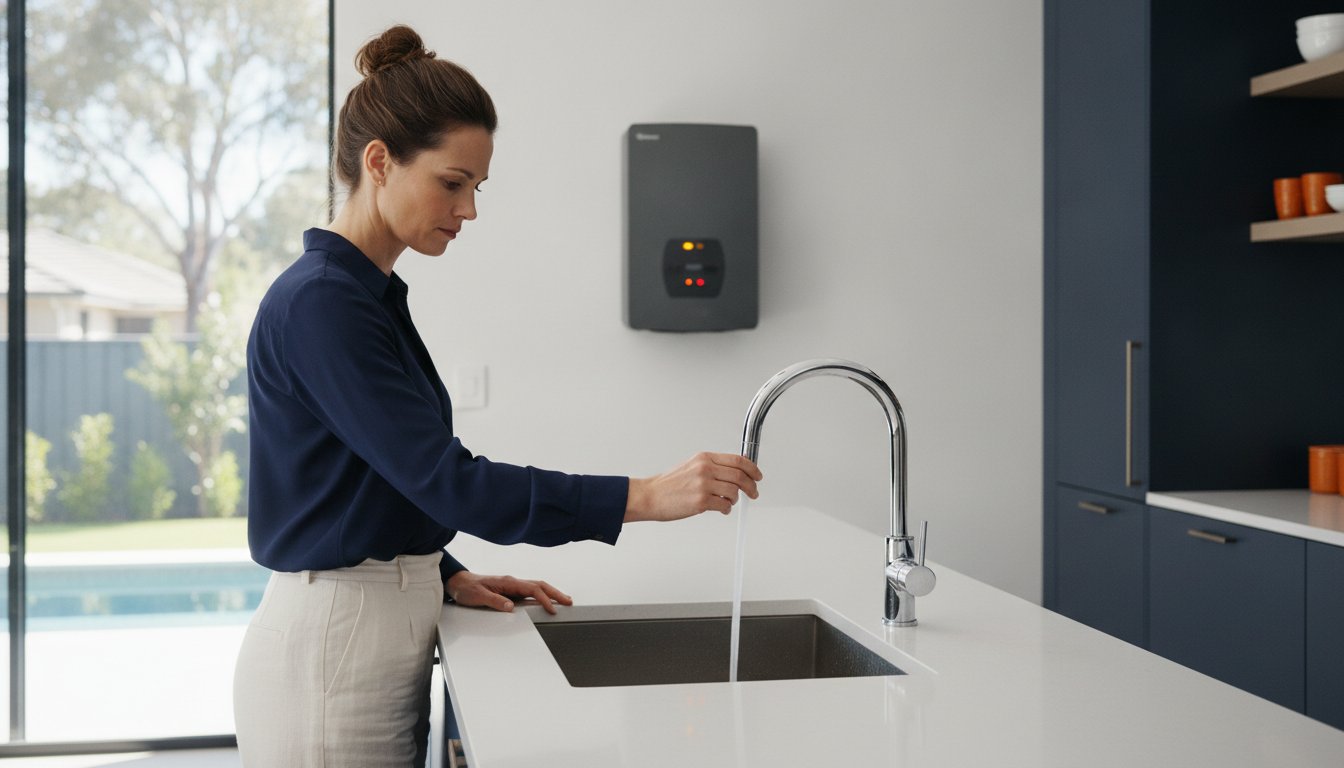
No Hot Water? Fast Troubleshooting Guide for 2026
You turned on the tap this morning expecting hot water and got a cold shock instead. If you're dealing with no hot water from your water heater right now, take a breath. You're not alone, and this is very likely something you can sort out fast.
Cold showers are miserable. The worry about a hefty repair bill is real. And if you've got a family waiting, every minute without hot water feels like ten. We get it. The good news? Most water heater faults come down to just a handful of common causes, and a surprising number of them can be fixed in minutes without calling anyone.
This guide cuts straight to the point. You'll learn exactly why your water heater stopped working, which quick checks you can safely run right now, and which warning signs mean it's time to call in a professional before a small fault turns into serious home damage. No jargon, no filler. Just a clear, step-by-step path back to hot water, fast.
Key Takeaways
- Most cases of no hot water from water heater come down to just a few common culprits — and this guide walks you through a fast, logical process to pinpoint the exact cause in minutes.
- Before you touch anything, there are two safety checks that must come first — skipping them can turn a minor fault into a serious hazard.
- Gas, electric, and tankless water heaters each fail in different ways, and knowing your heater type means you can skip straight to the fix that actually applies to you.
- Several of the most common water heater failures have a simple reset or adjustment you can do yourself — no tools, no experience, and no call-out fee required.
- Some warning signs mean DIY stops and a professional starts — learn exactly which red flags to watch for so you can act FAST before a small fault becomes costly damage.
Immediate Triage: Why You Have No Hot Water Right Now
Before you start poking around the unit, stop. Two things matter more than any troubleshooting step: your safety and narrowing down the problem fast. Most guides jump straight to "check the breaker." That's fine advice, but it skips the part where a missed warning sign turns a frustrating morning into a genuine emergency. Don't skip it.
Here's the fastest way to think about this. Every case of no hot water from a water heater comes down to three possible failures: no power or fuel reaching the unit, a thermostat that's set wrong or malfunctioning, or a mechanical fault inside the heater itself. That's it. Work through those three in order and you'll have your answer in minutes. But first, run the 60-second safety scan below.
The 60-Second Safety Scan
Do this before anything else. Walk to your water heater and check for these three things:
- A rotten egg or sulphur smell. This is the distinctive odour added to natural gas so you can detect leaks. If you smell it, don't touch any switches or appliances. Leave the house immediately, leave the door open behind you, and call your gas provider from outside. This is not a DIY situation.
- A burning or scorching smell near the unit. This signals an electrical fault, potentially a failed heating element or damaged wiring. Turn off the circuit breaker for the water heater before doing anything else.
- Standing water on the floor. A small puddle could be condensation. A large pool means a leak, possibly from a failed pressure relief valve or a cracked tank. Shut off the main water valve immediately and don't use the unit until the source is identified.
If none of those apply, you're clear to move forward. Understanding the basics of water heating systems — whether gas, electric, or tankless — helps you work through the next steps with confidence, because each type fails differently.
Verifying the Thermostat Settings
This is the most overlooked fix in existence. Someone bumps the dial. A well-meaning family member switches the heater to "Vacation Mode" before a trip and forgets to switch it back. The unit sits in low-power standby, producing barely warm water or none at all.
Check the thermostat dial on your unit. The recommended safe setting for most households in 2026 is 120°F (49°C), as advised by the U.S. Department of Energy. That's hot enough for everyday use while reducing scalding risk and energy waste. If your dial is below that, turn it up and wait 30 to 60 minutes before testing again.
Also check for a dedicated "Vacation" or "Pilot" mode setting. If the indicator is pointing there, that's your culprit. Reset it to normal operation and you may have hot water again without a single tool.
One more quick check: run a hot tap in a different room. If only one faucet is affected, the problem is likely a local valve or fixture issue, not the heater itself. If every tap runs cold, the no hot water from water heater problem is confirmed and it's time to dig deeper.
Troubleshooting Gas Water Heater Failures
Gas water heaters are reliable workhorses, but when they fail, the cause is almost always one of three things: a dead pilot light, a faulty thermocouple, or a gas supply problem. Work through these in order and you'll pinpoint the no hot water from water heater issue fast.
Relighting the Pilot Light Safely
First, locate the gas control valve on your unit. It'll have three positions: "On," "Off," and "Pilot." Before you do anything else, turn it to "Off" and wait a full five minutes. This is non-negotiable. That pause lets any residual gas in the chamber dissipate before you introduce a flame. Skipping this step is how accidents happen.
Once the five minutes are up, follow the "Press and Hold" method:
- Turn the control knob to "Pilot."
- Press and hold the knob down to open the pilot gas line.
- While holding, use a long lighter or igniter to light the pilot flame at the burner assembly.
- Keep the knob held down for 30 to 60 seconds after the flame catches. This heats the thermocouple and signals the system to stay open.
- Slowly release the knob. If the flame stays lit, turn the knob to "On" and set your temperature.
If the pilot won't stay lit after two or three attempts, stop. Repeated failed attempts aren't a technique problem. They're a symptom, and the thermocouple is almost certainly to blame.
One other sign to watch for: a pilot assembly caked in dust or debris produces a weak, yellowish flame instead of a steady blue one. A dirty assembly needs professional cleaning, not just relighting.
The Role of the Thermocouple
The thermocouple is a small copper sensor that sits directly in the pilot flame. Its job is simple: detect heat, send a signal, keep the gas valve open. When it works, you don't know it exists. When it fails, the pilot light refuses to stay lit no matter how long you hold that knob down.
Thermocouples fail in two ways. A dirty sensor can be carefully cleaned with fine steel wool, which sometimes restores function. A broken one produces no signal at all, and the gas valve will shut off every time you release the knob. There's no workaround for a dead thermocouple. Replacement is required, and it's one of the most common water heater repair jobs a technician handles.
Also check your gas supply before calling anyone. Confirm the shutoff valve on the gas line running to the heater is fully open (handle parallel to the pipe, not perpendicular). Check whether other gas appliances in the home are working. If your stove or furnace is also out, the issue is upstream with your gas supply, not the heater itself.
Modern high-efficiency gas units skip the standing pilot entirely, using electronic ignition instead. If yours clicks repeatedly without firing, the igniter module or control board may have failed. That's a job for a professional. If you're not getting anywhere fast, the licensed team at Fast Plumbing can diagnose and fix the fault without the guesswork.
Electric Water Heater Issues: Power and Elements
Electric water heaters fail differently from gas units. There's no pilot light to relight, no thermocouple to blame. Instead, the culprits are almost always electrical: a tripped breaker, a triggered safety switch, or a burnt-out heating element. Work through these in order and you'll isolate the no hot water from water heater problem fast.
Start at your electrical panel. Find the breaker labelled for the water heater and check whether it's tripped to the middle position. If it is, switch it fully off and then back on. A breaker trips for a reason, though. A one-time trip after a power surge is normal. If it trips again within minutes of resetting, stop there. That's a sign of a short circuit or a failed element drawing too much current, and it needs a licensed plumber or electrician, not another reset attempt.
The High-Limit Reset Switch
This is the fix most guides miss entirely. On the unit itself, behind the upper access panel, there's a small red button. That's the high-limit reset switch, sometimes called the ECO (energy cut-off). It trips automatically when the water inside the tank gets dangerously hot, usually above 180°F. Press it firmly until you feel a click, replace the panel, and wait an hour before testing your taps.
The one-reset rule matters here. If the button trips again after you reset it, the thermostat is likely stuck in a heating loop or a wiring fault is causing runaway heat. A second trip is a signal to call a professional, not to press the button again.
Heating Element Failure Symptoms
Most electric water heaters have two heating elements: an upper and a lower. They fail in distinct ways, which makes diagnosis straightforward.
- Upper element failure: You get no hot water at all. The upper element heats the water first, so when it goes, nothing downstream gets warm.
- Lower element failure: You get a short burst of hot water that runs out quickly. The upper element heats a small volume, but the larger lower portion of the tank stays cold.
Confident DIYers with a multimeter can test for continuity by switching off the breaker, removing the access panel, disconnecting the element wires, and touching the probes to the element terminals. No continuity means the element is dead and needs replacing.
Sediment is the silent cause behind most element burnout. Minerals from hard water settle at the tank bottom and bury the lower element, forcing it to overheat. Flushing the tank annually is the best prevention. If your unit hasn't been serviced in years and you're now dealing with no hot water from your water heater, sediment buildup is a strong suspect.
If you've reset the breaker, pressed the red button, and the problem persists, the element itself needs swapping. That's a quick job for an experienced technician. The team at Fast Plumbing carries the parts and the experience to get it done right, without the guesswork.

Tankless Water Heater Specifics and Modern Failures
Tankless units work on a fundamentally different principle than tank-based heaters. Water only heats when it flows through the unit. No flow, no heat. That single fact explains a surprising number of no hot water from water heater complaints that get misdiagnosed as mechanical failures when the real cause is far simpler.
Before anything else, check the combustion air intake. This is the vent pipe that feeds fresh air into the burner. Leaves, bird nests, insect debris, and even spider webs can partially block it. The unit detects insufficient airflow, refuses to fire, and displays an error. It's one of the most common "no heat" culprits in tankless systems and one of the easiest to overlook.
Hard water is the other silent killer. Tankless heat exchangers have narrow internal passages. Mineral scale from hard water builds up in those passages over time, restricting flow and forcing the unit to work harder. Left unchecked, it causes overheating, error codes, and eventually full failure. Annual descaling isn't optional maintenance. It's what keeps the unit alive.
Decoding Tankless Error Codes
Most modern tankless units display a numeric or alphanumeric error code when something goes wrong. These codes vary by brand, but common patterns include:
- Ignition failure codes (often "10," "11," or "E1" depending on brand): The burner attempted to fire but couldn't establish a flame. Check gas supply and air intake first.
- Venting or exhaust codes (often "12," "14," or "E3"): The unit detected a blockage or pressure issue in the exhaust vent. Don't ignore these. A blocked exhaust is a carbon monoxide risk.
- Overheating or scale codes (often "E5," "E6," or "LC"): The heat exchanger is running too hot, typically from scale buildup.
A hard reset clears temporary faults. Turn the unit off at the power switch, wait 30 seconds, and power it back on. If the same code returns immediately, the underlying fault hasn't cleared and a reset won't fix it.
Flow Rate and Ignition Issues
Every tankless heater has a minimum flow rate required to trigger ignition, typically around 0.5 to 0.75 gallons per minute. Open a single low-flow bathroom faucet and you might not hit that threshold. The unit simply won't fire. Try opening a second tap simultaneously to increase total flow and see if the burner kicks in.
Also pull the inlet water filter, the small screen where the cold water supply enters the unit. Debris and sediment collect there and restrict flow enough to prevent ignition. Rinse it under a tap and reinsert it.
The "cold water sandwich" is another quirk worth knowing. It's the brief burst of cold water that arrives between hot bursts when you turn a tap on and off repeatedly. Residual hot water in the pipes clears first, then cold water arrives before the heater fires again. It's normal behaviour, not a fault, but it catches people off guard.
If error codes keep returning after a reset, or if descaling hasn't been done in over a year, it's time to call in a professional. Book a tankless water heater service with Fast Plumbing and get a licensed technician on-site fast, with the experience to diagnose the exact fault without the guesswork.
When to Call a Professional for FAST Restoration
You've run through the checks. You've reset the breaker, pressed the red button, and tried relighting the pilot. Still no hot water from your water heater. At some point, continuing to troubleshoot stops being productive and starts being risky. Knowing exactly where that line is will protect both your safety and your wallet.
Signs of Internal Tank Failure
These symptoms aren't inconveniences. They're the heater telling you it's done.
- Rusty or discoloured water at the hot tap. This points to a failing anode rod, the sacrificial metal rod inside the tank that prevents corrosion. Once it's depleted, the tank walls start to rust from the inside out. Replacement can extend the unit's life, but if rust is already flowing through your taps, the tank may be too far gone.
- Popping, rumbling, or cracking noises. These sounds mean sediment has hardened at the tank bottom and the heating element is literally boiling water trapped beneath it. Left alone, it accelerates element burnout and can stress the tank walls. If you're hearing this regularly, read more about what sediment buildup actually does to your unit before deciding whether repair or replacement makes more sense.
- Leaks from the base of the tank. A puddle at the bottom of the unit almost always means an internal crack or a failed tank seam. This is a no-repair zone. A cracked tank cannot be patched. It needs replacing, and the longer you wait, the greater the flood risk to your home.
The repair-versus-replace decision comes down to two things: the unit's age and the cost of the fix. Most tank water heaters last 8 to 12 years. If yours is approaching or past that window and facing a major component failure, putting significant money into it rarely makes financial sense. A professional diagnostic gives you a clear answer without spending on parts that won't solve the underlying problem.
Choosing the Right Service Partner
A hot water crisis doesn't schedule itself for business hours. That's why 24/7 availability isn't a nice-to-have. It's the difference between a cold night and a resolved problem. Always verify that your plumber is fully licensed and insured before anyone touches your unit. That protects you if something goes wrong during the repair.
Fast Plumbing brings 29+ years of experience to every water heater job, arriving fully equipped to diagnose the exact fault on the first visit. No guesswork. No ordering parts and coming back later. Their technicians treat your property like their own, which means no mess left behind when the job's done.
Call now and you'll hear back within one minute. That's the Fast Plumbing guarantee. Contact Fast Plumbing and get a licensed technician to your door, fast and hassle-free.
Get Your Hot Water Back Today
No hot water from your water heater is almost always fixable fast. You now know the most common culprits: a tripped breaker, a dead pilot light, a triggered reset switch, or a failing heating element. You know which checks are safe to run yourself, and you know exactly which warning signs mean it's time to stop and call a professional.
Here's the bottom line. If the quick fixes haven't worked, don't keep guessing. Every hour without hot water is an hour your family goes without, and some faults get worse the longer they sit.
Fast Plumbing has 29+ years of experience diagnosing and resolving water heater faults on the first visit. Their technicians arrive fully equipped, treat your home like their own, and leave no mess behind. Call now and you'll hear back within one minute. That's a guarantee.
Get Your Hot Water Back FAST – Call Our 24/7 Emergency Line Now!
Hot water is closer than you think. You've got this.
Frequently Asked Questions
Why is my water heater pilot light out and won't stay lit?
A pilot light that won't stay lit almost always points to a failing thermocouple. This small copper sensor sits in the pilot flame and signals the gas valve to stay open. When it's worn out or coated in residue, it can't hold that signal and the gas valve shuts off the moment you release the control knob. Repeated failed relighting attempts confirm the thermocouple, not your technique, is the problem.
A dirty pilot assembly is the other common cause. Dust and debris produce a weak, yellowish flame that doesn't generate enough heat to satisfy the thermocouple. If cleaning doesn't restore a steady blue flame, thermocouple replacement is the next step. That's a quick, inexpensive fix for a licensed technician.
Can a tripped breaker cause no hot water from an electric heater?
Yes, absolutely. A tripped breaker cuts all power to the unit, so no heating happens at all. Find the breaker labelled for your water heater in the electrical panel, flip it fully off, then back on. If it holds, wait an hour and test your taps. A breaker that trips once after a power surge is usually nothing to worry about.
If the breaker trips again within minutes of resetting, stop there. That pattern signals a short circuit or a heating element drawing excessive current, not a fluke. Repeated resets won't fix it and can create a safety risk. Call a licensed plumber to diagnose the underlying fault before touching the panel again.
How do I know if my water heater heating element is burnt out?
The symptom pattern tells you a lot. If you get no hot water at all, the upper element has likely failed. If you get a short burst of hot water that runs out fast, the lower element is the culprit since the upper element heats a small volume while the rest of the tank stays cold. Both patterns are consistent and reliable diagnostic signals.
Confirming the fault requires a multimeter. Switch off the breaker, remove the access panel, disconnect the element wires, and test for continuity across the terminals. No continuity means the element is dead. Sediment buildup is the most common cause of element burnout, particularly in the lower position where minerals settle first.
What does it mean if my water heater is making a popping noise?
Popping or rumbling sounds mean sediment has hardened at the bottom of the tank. As the heating element tries to warm the water, it's essentially boiling water trapped beneath a layer of mineral scale. That trapped steam produces the popping you hear. It's not dangerous in the short term, but it accelerates element wear and puts unnecessary stress on the tank walls over time.
Flushing the tank can help if the buildup is caught early. If the sounds are loud and persistent, and the unit is several years old, the damage to the element and tank lining may already be significant. A professional inspection will tell you whether a flush and element swap makes sense or whether replacement is the smarter financial call.
How long does it take for a water heater to get hot again after a fix?
Recovery time depends on your heater type and tank size. A standard 40 to 50-gallon electric tank typically takes 60 to 90 minutes to fully reheat from cold. Gas units recover faster, usually 30 to 40 minutes for a similar tank size, because gas burners deliver heat more quickly than electric elements. Tankless units produce hot water almost immediately once the fault is resolved.
If you've just reset a breaker, pressed the high-limit button, or relit the pilot, give the unit at least an hour before testing your taps. Testing too early and finding lukewarm water doesn't mean the fix failed. It just means the tank hasn't finished heating yet.
Is it safe to relight a water heater pilot light myself?
Yes, for most homeowners it's safe, provided you follow the correct sequence without shortcuts. The critical step is turning the gas control valve to "Off" and waiting a full five minutes before introducing any flame. That pause lets residual gas disperse. Use a long lighter or the built-in igniter, never a match held close to the burner assembly.
Two situations make DIY relighting the wrong call. If you smell gas at any point, stop immediately, leave the house, and call your gas provider from outside. And if the pilot won't stay lit after two or three careful attempts, don't keep trying. That's a thermocouple issue, not a technique issue, and a professional needs to take over from there.
Why does my tankless water heater keep shutting off during showers?
The most common cause is the unit overheating and triggering its built-in safety shutoff. Scale buildup inside the heat exchanger restricts water flow, forcing the unit to work harder and run hotter until it cuts out. If descaling hasn't been done in over a year, that's almost certainly what's happening. An error code on the display will usually confirm it.
A blocked air intake or exhaust vent can also cause mid-shower shutoffs. The unit detects inadequate airflow and refuses to keep firing. Check both vents for debris. If the unit shuts off consistently at the same point in a shower and error codes keep returning after a reset, a professional service is the fastest path back to reliable hot water.
Should I repair or replace my 10-year-old water heater?
At 10 years old, a tank water heater is approaching the end of its typical lifespan of 8 to 12 years. If the fault is minor, like a thermostat or a single heating element, repair often still makes sense. If you're looking at a cracked tank, persistent rust in the hot water, or a major component failure, the maths usually favour replacement. Putting significant money into an ageing unit often just delays the next breakdown.
The smartest move is a professional diagnostic before committing to either option. A licensed technician can assess the tank's internal condition and give you a straight answer on whether repair buys meaningful time or whether a new unit is the better investment. Fast Plumbing's technicians arrive fully equipped to make that call on the first visit, with no guesswork and no mess left behind.
