Tankless Water Heater Pros and Cons: The 2026 Homeowner’s Performance Guide
You’re lathered up in the shower when the water suddenly turns ice cold because the kids finished the tank again. It’s a frustrating way to start the day, and it’s a clear sign that your old, bulky heater can’t keep up with your family’s morning rush. If you’re tired of high utility bills and a lack of square footage, a professional tankless water heater installation homeowners trust can change everything. These on-demand systems provide a continuous flow of hot water while freeing up space, right?
We know you want a reliable solution that works FAST without the hassle of a messy installation. Our team prioritizes a clean-up like it's our own home, so you can enjoy your new system immediately and without stress. You might be wondering if the long-term savings justify the investment now that certain financial incentives for these units may have changed or expired at the end of 2025. This guide will help you weigh the real-world benefits against technical requirements, like gas line upgrades and the latest plumbing codes. We’ll preview how to achieve 20% to 30% energy savings and help you determine if an on-demand system is the best path toward a reliable, 20-year solution for your home.
Key Takeaways
- Stop running out of hot water during the morning rush with an on-demand system that lasts up to 20 years.
- Find out if your home is ready for the tankless water heater installation Austin residents use to slash energy bills by up to 30%.
- Learn how to calculate your peak demand to avoid the "cold water sandwich" and other common sizing mistakes.
- Use our "If/Then" framework to see if you will stay in your home long enough to see a full return on your investment.
What is a Tankless Water Heater? Understanding On-Demand Hot Water
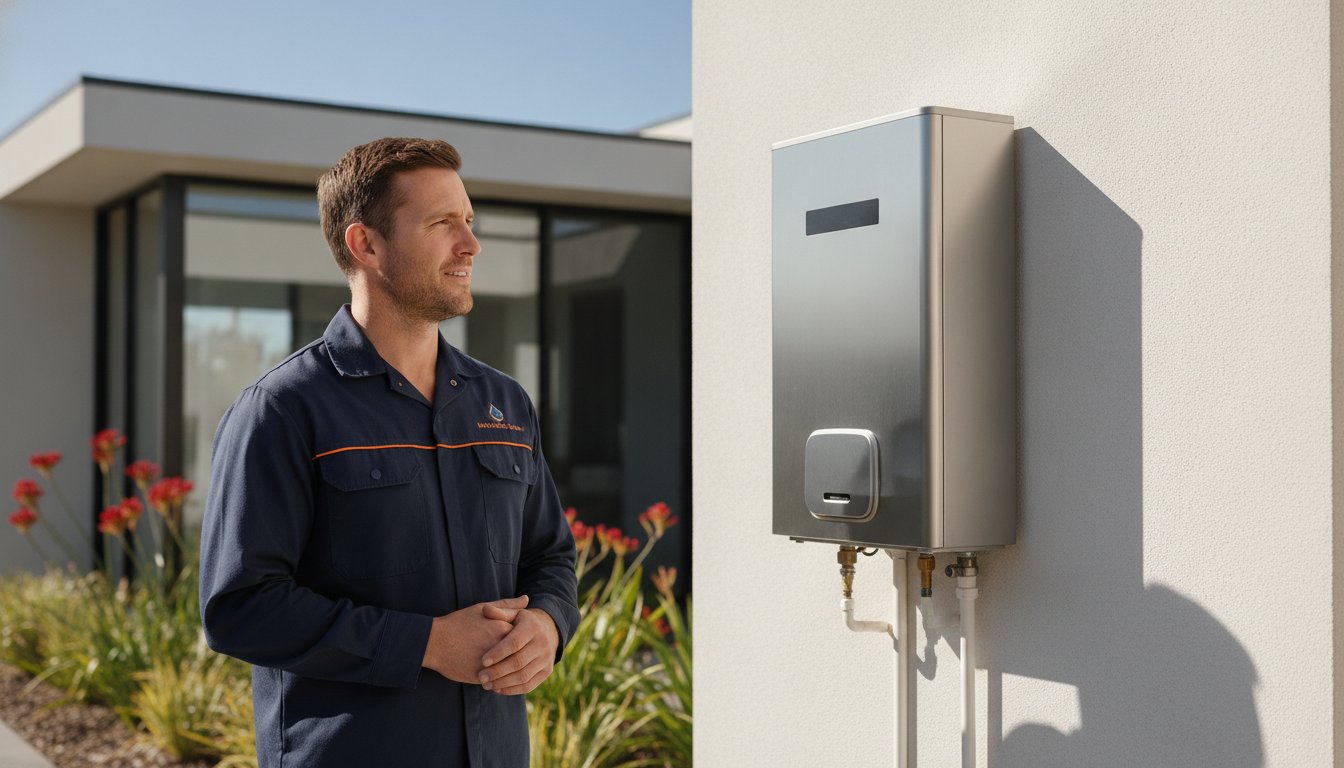
Imagine a water heating system that only works when you actually need it. That is the fundamental difference of a tankless water heater. Instead of keeping a massive 189 litre drum of water hot all day and night, these units heat water directly without a storage tank. When you turn on a hot water tap, cold water travels through a pipe and into the unit. A high powered gas burner or an electric element triggers immediately, heating the water as it flows through a heat exchanger. You get hot water delivered to your fixture in seconds, and it stays hot for as long as the tap is open.
If you are planning a tankless water heater installation Austin homeowners often find that the transition from a traditional tank is the best way to modernise their plumbing. A tankless water heater is a high-efficiency alternative that eliminates standby energy loss by only heating water when a tap is turned on. This means you aren't paying to heat water while you are sleeping or at work. It is a smarter, more disciplined approach to home energy use that fits perfectly with a FAST, modern lifestyle.
The "on-demand" label is a total game-changer for residential plumbing in 2026. Traditional tanks are limited by their size, but a tankless system provides a continuous flow. As long as the unit is sized correctly for your home, you will never run out of hot water mid-shower again. It provides peace of mind for large families who deal with the morning rush, right? You get reliability and efficiency without the bulky footprint of a rusted metal tank taking up your floor space.
How On-Demand Systems Differ from Traditional Tanks
Traditional water heaters rely on storage capacity, meaning they can only give you what is already in the tank. Once those 50 gallons are gone, you have to wait for the system to recover. Tankless systems operate based on flow rate, which is measured in gallons per minute (GPM). By removing the tank, you eliminate standby loss, which is the energy wasted keeping water hot 24/7. Beyond energy savings, the physical footprint is much smaller. Most tankless units are about the size of a small suitcase and mount directly to the wall. This clears up valuable square footage in your garage or utility room for other uses.
Gas vs. Electric Tankless Models: A Quick Overview
When choosing a system, you have to decide between gas and electric power. Gas models are generally the preferred choice for whole-home use because they have a higher energy output. They can handle the demand of multiple showers and appliances running at the same time. Electric models are often more flexible for installation in tight spaces, but they are usually best for point-of-use needs or very small apartments. It is worth noting that water heater repair requirements vary significantly between these two types. Gas units require specific venting and gas line sizing, while electric units need dedicated, high-voltage circuits to operate effectively.
The Major Pros: Why Homeowners Are Making the Switch
You deserve a morning routine that doesn't involve a cold shower. Switching to an on-demand system means you finally get unlimited hot water. It doesn't matter if three people showered before you or if the dishwasher is running. The water stays hot. When we perform a tankless water heater installation Austin families can finally stop arguing about shower schedules. It's about total reliability and comfort, right?
Performance is only half the story. These units are built to last. A traditional tank usually starts failing after 10 years, but a well-maintained tankless unit typically lasts 20 years or more. You are essentially doubling the lifespan of your investment. You also reclaim your home's square footage. These units are small and wall-mounted. You can finally use that closet or garage corner for storage instead of a bulky, rusted metal drum. Because these systems have a much higher Energy Factor (EF) rating, they only pull power when you turn on the tap. This leads to lower monthly utility bills that stay low for decades.
Our team understands that a water heater failure is a crisis. We respond FAST to ensure you aren't left in the cold. If you are ready to upgrade your home's performance, you can schedule a professional consultation with our master plumbers today.
Energy Efficiency and Long-Term ROI
Tankless systems are incredibly efficient. According to industry data, they can reduce energy consumption by 24% to 34% for homes that use moderate amounts of hot water. While the initial purchase price is higher than a standard tank, the math works in your favor. Even though the federal 25C tax credit expired at the end of 2025, the pure energy savings still slash your monthly expenses. In Austin, local rebates like the $1,000 Austin Energy incentive currently focus on hybrid electric heat pumps, but the long-term durability of gas tankless units often provides a better ROI for high-demand households over a 20-year period.
Durability and Reduced Flood Risk
No one wants to wake up to a flooded garage. A traditional 50-gallon tank is a ticking time bomb; when it rusts through, it dumps every gallon onto your floor. Tankless units don't store water, which virtually eliminates the risk of a catastrophic flood. These systems are also easier to service. Most internal components are replaceable, meaning you can swap a single part instead of replacing the entire heater. Following a consistent plumbing maintenance schedule keeps your heat exchanger clean and ensures your system runs at peak performance for its entire 20-plus year lifespan.
The Cons and Critical Considerations: Is Tankless Right for You?
While the benefits are impressive, a tankless system is not a universal fix for every household. You need to understand the trade-offs before committing. First, the upfront cost is significantly higher. You can expect the equipment and labor for a tankless water heater installation Austin project to be two to three times more expensive than a traditional tank. It is a long-term play for performance and efficiency, not a quick budget fix.
One specific quirk is the "cold water sandwich." This happens when you turn the hot water off and then back on a moment later. A small pocket of unheated water gets trapped in the pipes between the two hot cycles. You might feel a brief burst of cold water in the middle of your shower. It is a minor technical reality of how the heat exchanger cycles. It is a small annoyance, but it surprises many new owners who expect perfection.
Maintenance is also non-negotiable. Because these units use high heat in a small space, scale buildup happens quickly, especially in areas with hard water. You must flush the system with a descaling solution annually to prevent damage. If you ignore this, the heat exchanger will fail prematurely. You want a system that lasts 20 years, and that requires consistent care, right?
Installation Complexity and Hidden Costs
Moving to tankless often requires infrastructure upgrades. Most older homes have 1/2-inch gas lines. A high-output tankless unit usually needs a 3/4-inch line to pull enough fuel during peak demand. Without this upgrade, the unit will not fire correctly. You also need specialized venting. You cannot simply use your old chimney. Modern units require stainless steel or specific PVC venting to handle acidic condensation. Before you start, it is smart to get a detailed plumbing repair cost estimate to avoid surprises during the install.
The Reality of Instant Hot Water
There is a big difference between "instant" at the unit and "instant" at your tap. The unit heats water immediately, but that water still has to travel through your pipes. If your bathroom is 15 metres away from the heater, you will still wait for the cold water to clear the line. This lag time can be frustrating in large floor plans. We often recommend installing a recirculating pump to solve this. These pumps keep hot water moving through the pipes so it is ready the moment you turn the handle. It eliminates the wait and saves water.
Sizing and Installation: Avoiding the Most Common Tankless Mistakes
Buying the wrong size unit is the fastest way to ruin your investment. If the unit is too small, you will get lukewarm water the moment someone else in the house turns on a tap. Professional sizing ensures your system handles your home's peak demand without breaking a sweat. For a successful tankless water heater installation Austin homeowners must look past the price tag and focus on the flow rate. It is about matching the machine to your family's actual lifestyle, right?
Groundwater temperature plays a massive role in how much hot water you actually get. In warmer climates like Texas, the unit doesn't have to work as hard to heat incoming water compared to the freezing North. However, you still have to account for the "temperature rise" required to reach your desired heat. If your groundwater starts at a lower temperature in the winter, the unit has to work harder to reach your set point. You also need to navigate the latest building codes. As of April 2025, Austin has adopted the 2024 Uniform Plumbing Code, which introduces stricter standards for how these high-performance engines are integrated into your home's infrastructure.
The GPM Calculation: A Homeowner’s Framework
To find the right size, you need to add up the Gallons Per Minute (GPM) of every fixture you might use at the same time. It is a simple sum of your peak demand. Use these standard flow rates as a guide for your calculation:
- Standard Showers: 2.0 GPM
- Kitchen or Bathroom Faucets: 1.0 GPM
- Dishwashers: 1.5 GPM
If you want to run two showers and the dishwasher simultaneously, you need a unit that delivers at least 5.5 GPM. If you have installed high-flow rain showerheads, that demand jumps significantly. Don't guess on these numbers. A unit rated for 5.0 GPM might work for a small apartment, but a busy family home in Austin usually requires 7.0 to 9.0 GPM to ensure no one gets left in the cold during the morning rush. Choosing between condensing and non-condensing units also impacts your budget, as condensing models are more efficient but involve different internal technology.
Why Professional Installation is Non-Negotiable
This is not a weekend DIY project you can tackle alone. Improper venting creates a lethal risk of carbon monoxide buildup. Local building codes in Austin specifically require stainless steel venting for gas models to handle the heat and pressure safely. Our master plumbers also calibrate your gas pressure. This ensures the unit doesn't shut down or "starve" for fuel when your furnace or stove kicks on. Most Austin homes built before 2000 will likely require gas line upgrades to accommodate this higher demand. We handle the technical heavy lifting so your system runs safely and your manufacturer warranty remains valid. If you want the job done right the first time, you can start by completing our service form for a professional sizing assessment.
Making the Decision: Is the Investment Worth the ROI?
Choosing between a traditional tank and a modern on-demand system is a major decision for any property owner. It really comes down to how you use your home and how long you plan to stay there. You shouldn't view a tankless water heater installation Austin project as a simple appliance swap. It is an infrastructure upgrade that changes your daily experience. To help you decide, we use a simple "If/Then" framework to cut through the noise.
- If you have a family of four or more and plan to stay in your home for at least five years, then tankless is the superior choice for comfort and long-term savings.
- If you are looking for the lowest possible upfront cost and don't mind the occasional cold shower, then a traditional high-efficiency tank might be your best bet.
- If you are tired of bulky equipment taking up your garage or closet space, then the wall-mounted design of a tankless unit is a clear winner.
Residency is the most critical factor in your ROI calculation. Most experts agree that five years is the magic number. Since these units last 20 years or more, the energy savings and reduced repair costs eventually pay for the higher initial investment. You also get the "Hassle-Free" factor. You don't have to worry about a 189-litre tank rusting out and flooding your home while you are on holiday. That peace of mind is hard to put a price on, right? We recommend a site evaluation by a master plumber to see if your gas lines are ready for the switch.
The Verdict for High-Demand Households
For large families, the "endless hot water" promise isn't just a luxury. It is a massive lifestyle upgrade that ends morning arguments and scheduling headaches. You get a system that works as hard as you do. Before you hire anyone, make sure you are working with a master plumber who understands the 2024 building codes and local Austin regulations. Check our emergency plumber checklist to ensure you are hiring a pro who can handle the technical sizing and gas line requirements safely.
Getting Started with Fast Plumbing
We know that a water heater failure is a crisis that needs to be solved ASAP. Our team is committed to speed, and we offer a 1-minute callback guarantee to get your project moving immediately. We don't just work fast; we work clean. Our "Clean-Up Like It's Their Own" promise means you won't be left with a mess once the job is done. Call us now to schedule a professional diagnostic visit. We will evaluate your current gas lines, venting, and electrical setup to give you a clear path forward. Let's get your hot water back online FAST and hassle-free.
Take Control of Your Home’s Performance Today
An on-demand system is a serious upgrade for any Austin household. You now understand how these high-efficiency engines provide endless hot water and last twice as long as traditional tanks. While the infrastructure requirements are technical, the long-term ROI and peace of mind are worth the investment. A professional tankless water heater installation Austin homeowners can rely on ensures your system meets the latest 2024 codes and operates at peak safety, right?
Our licensed and insured master plumbers are standing by to solve your water heater failures ASAP. We offer 24/7 emergency assistance and a 1-minute callback guarantee to lower your stress immediately. We treat your property with respect and promise a clean-up like it's our own. Upgrade to endless hot water FAST; schedule your tankless evaluation today!
You deserve a home that runs smoothly and efficiently. We are ready to make that happen with a reliable, hassle-free installation that protects your family for the next 20 years or more.
Frequently Asked Questions
How much more does a tankless water heater cost compared to a tank?
A tankless system generally costs two to three times more than a traditional tank when you factor in both the equipment and the specialized labor. While a standard tank is a straightforward swap, a tankless water heater installation Austin homeowners choose often requires new gas lines and specialized venting. You are paying for a high-performance engine that lasts twice as long, so the higher initial price is an investment in your property's long-term reliability.
Can a tankless water heater provide enough hot water for two showers at once?
Yes, a correctly sized tankless unit can easily handle two showers running simultaneously without any drop in temperature. The key is the Gallons Per Minute (GPM) rating. For example, a unit delivering 7.0 to 9.0 GPM can support multiple fixtures at once. If you have high-flow rain showerheads, you simply need a more powerful model to ensure everyone enjoys endless hot water during the morning rush, right?
Do I need to upgrade my electrical panel for a tankless water heater?
You will likely need an electrical panel upgrade if you choose a whole-home electric tankless model, as these units require significant amperage. Gas models are different; they only need a standard 120-volt outlet to power the digital display and ignition system. Our master plumbers evaluate your existing panel during the diagnostic visit to ensure your home's infrastructure can safely handle the new load without causing tripped breakers.
How often does a tankless water heater need to be serviced?
A tankless water heater needs to be professionally serviced at least once a year to maintain peak efficiency. This service involves flushing the heat exchanger with a descaling solution to remove mineral buildup, especially in areas with hard water. Skipping this annual maintenance can lead to reduced flow and premature system failure. Regular care is the only way to ensure your system reaches its full 20-plus year lifespan.
What is the cold water sandwich and can it be fixed?
The cold water sandwich is a brief burst of cold water that occurs when you turn a tap off and back on quickly, and it can be fixed with a recirculating pump. This pump keeps hot water moving through your pipes so it is ready the moment you need it. Some high-end models also include a small internal buffer tank specifically designed to eliminate this temperature fluctuation and provide a seamless experience.
How long does it take to install a tankless water heater?
A professional installation typically takes one to two days depending on the complexity of the required infrastructure upgrades. If we need to resize gas lines or install new stainless steel venting to meet the 2024 plumbing codes, the process takes a bit longer than a simple tank swap. Our team works FAST to minimize downtime so your household can get back to its normal routine with minimal disruption.
Will a tankless water heater work during a power outage?
A tankless water heater will not work during a power outage because the electronic control board and ignition system require electricity to function. This applies to both gas and electric models. If you live in an area prone to outages, you can install a battery backup or a small uninterruptible power supply (UPS) to keep the unit firing when the grid goes down. It is a simple way to ensure your comfort isn't interrupted.
Do tankless water heaters save money on gas or electricity bills?
Tankless water heaters save significant money on utility bills by reducing energy consumption by 20% to 30% compared to traditional tanks. Because they eliminate standby heat loss, you only pay for the energy you actually use to heat water at that moment. Over the 20-year life of the unit, these monthly savings help offset the higher upfront cost of the system while providing a more reliable hot water supply.
