Water Heater Anode Rod Replacement Guide: Save Your Tank FAST (2026)
Your $1,500 water heater is currently being protected by a single $30 piece of metal that is literally designed to rot away. It sounds backwards, right? If you have noticed a foul rotten egg smell or rust colored water, your tank is sending out an SOS. Most homeowners do not realize that following a professional water heater anode rod replacement guide is the FAST way to prevent a flooded basement. We understand the frustration of confusing technical jargon and the fear of a major plumbing disaster. You need a solution that is quick, clean, and reliable.
We are here to help you stop the corrosion and eliminate those odors immediately. Our expert guide will teach you how to replace your anode rod to double your tank’s lifespan and keep your home safe. We have stripped away the fluff to give you clear, FAST instructions you can use today. You will learn which material is best for your water type and how to finish the job without a mess. Let's get your hot water back to normal so you can stop worrying about your tank and get back to your day.
Key Takeaways
- Stop your tank from rusting from the inside out by understanding why the anode rod is your water heater's first line of defense.
- Identify the critical warning signs, like "rotten egg" odors or rusty water, that mean your rod has already failed.
- Select the perfect replacement material, Magnesium, Aluminum, or Zinc, to match your home's specific water chemistry.
- Follow our water heater anode rod replacement guide to swap the rod FAST and avoid a $1,500 tank replacement.
- Recognize the "red flag" situations where high torque or hidden rods make calling a professional the safest, most hassle-free choice.
What is a Water Heater Anode Rod and Why is it the "Sacrificial Lamb"?
Think of your water heater as a giant steel drum filled with hot, pressurized water. Steel and water are natural enemies. Left alone, the water would eat through that steel in just a few years. This is where the anode rod comes in. It is a long metal bar, usually made of magnesium or aluminum, that hangs inside your tank. Its only job is to be the primary defense against corrosion. It is a simple tool, but it is the most critical part of any water heater anode rod replacement guide. It stands between your home and a flooded basement.
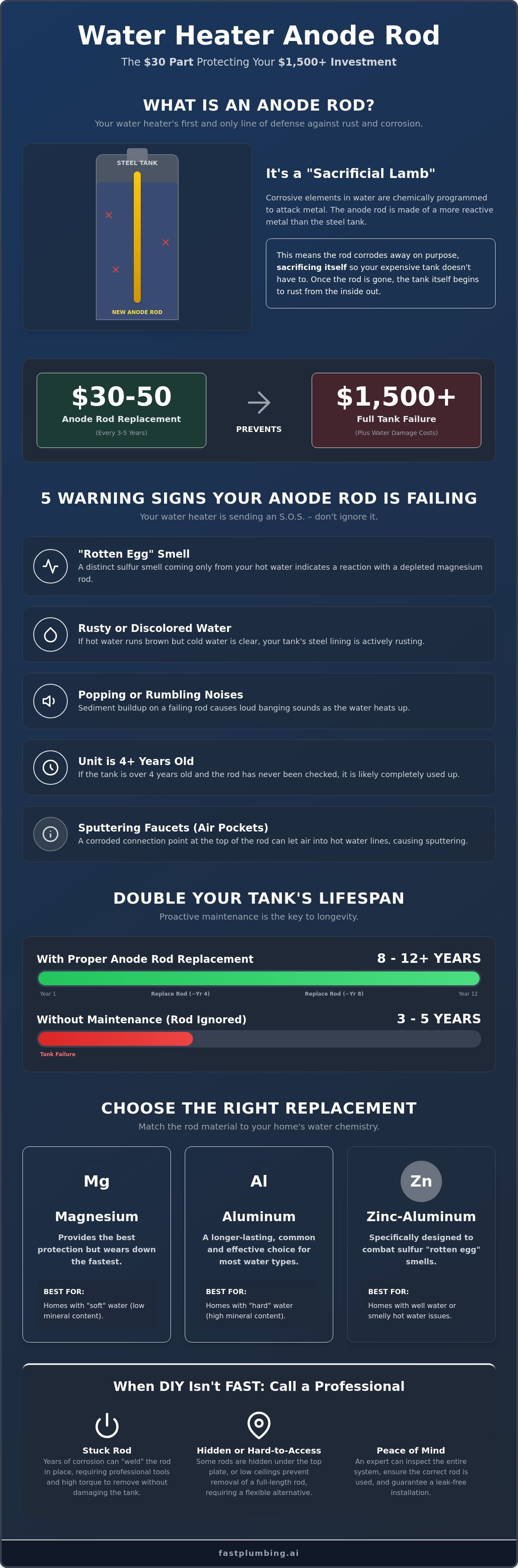
Why do we call it a sacrificial lamb? Because it literally gives its life to save your tank. Through a chemical process, the corrosive elements in your water attack the anode rod instead of the steel walls of the heater. The rod rusts so the tank does not. However, this protection is not permanent. Most rods have a typical lifespan of 3 to 5 years. Compare that to a high-quality tank which should last 8 to 12 years with proper care. If you ignore the rod, you are essentially letting the clock run out on your entire system. Spending roughly $50 on a new rod today prevents you from needing a full water heater repair or a $1,500 replacement later. It is a race against time, and the rod is your only shield.
The Chemistry of Corrosion: How Your Tank Dies
Corrosion happens because of a tiny electrical current created by the interaction of water and metal. This is known as electrolysis. In this environment, the most reactive metal is the first to decay. Since magnesium and aluminum are more reactive than steel, the water focuses its destructive energy there first. Once that rod is completely depleted, the water turns its attention to the steel tank. This is when the real damage starts. A sacrificial anode rod is a metal rod that attracts corrosive elements to itself. Without it, your tank is defenseless against the inevitable rust that leads to cracks and leaks.
Anode Rod Replacement vs. Full Tank Failure
If you wait until you see a puddle on the floor, it is already too late. Proactive maintenance is always faster and cheaper than an emergency. Once a tank starts leaking from the bottom, it cannot be repaired. The structural integrity of the steel is gone. You are then looking at an emergency installation, potential water damage to your floors, and significantly higher plumbing repair costs. It is a stressful, expensive situation that you can avoid with one simple check every few years. You want to solve the problem before it becomes a crisis, right?
5 Warning Signs Your Anode Rod is Failing Right Now
Your water heater usually stays out of sight; until it starts making its presence known in the worst ways possible. If you wait for a leak, you have waited too long. Recognizing the early warning signs of a failing rod is the only way to save your tank. These symptoms are your system's way of telling you that the internal steel is no longer protected. If you notice any of the following, it is time to consult a water heater anode rod replacement guide and take action FAST.
- The "Rotten Egg" Smell: A foul, sulfur-like odor coming only from your hot water is the most common red flag.
- Rusty or Discolored Water: If your hot water looks brown or tea-colored while the cold water stays clear, your tank is actively rusting.
- Popping or Rumbling Noises: Sediment buildup often coats the rod; this accelerates decay and creates loud banging sounds during heating cycles.
- Age of the Unit: If your water heater is more than 4 years old and you have never checked the rod, it is likely a "ghost" consisting of nothing but a thin wire.
- Frequent Air Pockets: Small leaks at the rod’s connection point can allow air into the lines, causing your faucets to sputter when you turn on the hot water.
Ignoring these signs leads to a catastrophic tank failure that no repair can fix. You want to solve this before you are standing in two inches of water, right? If you're unsure about the state of your system, you can always schedule a quick inspection to get an expert opinion before the damage spreads.
The Rotten Egg Test: Is it the Rod or the Well?
Does your water smell like sulfur? You need to determine if the problem is your plumbing or your water source. Run the cold water for a minute. If it smells fine, but the hot water reeks, your magnesium anode rod is the culprit. Magnesium reacts with sulfate-reducing bacteria in the tank to create hydrogen sulfide gas. Some homeowners temporarily turn their heater up to 160°F to kill the bacteria, but you must be extremely careful. This temperature causes instant scalding; never leave it this high for more than a few hours. A better long-term fix is following a Step-by-Step Anode Rod Replacement Guide to swap for a zinc-aluminum rod that stops the smell for good.
Visual Inspection: What a "Dead" Rod Looks Like
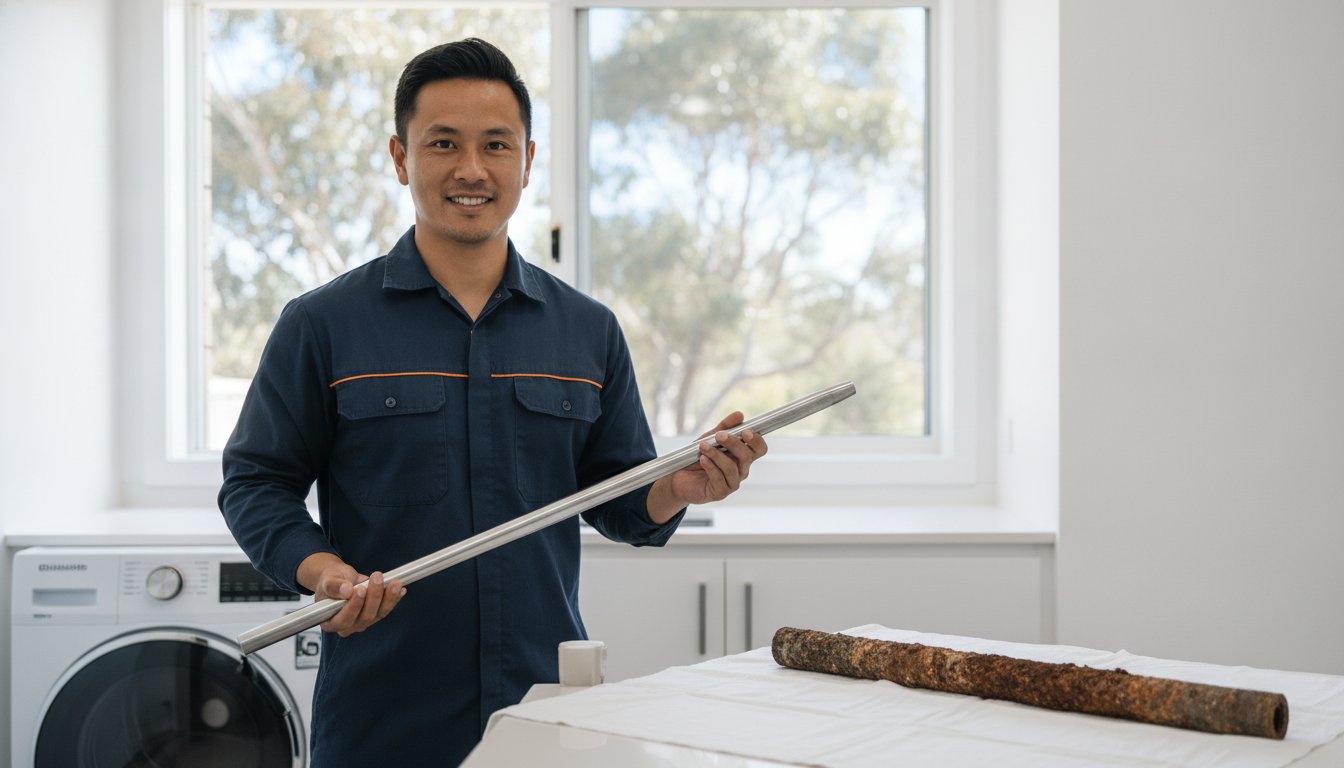
The only way to be 100% sure is to pull the rod out and look at it. A healthy rod looks like a smooth, solid cylinder. A depleted rod will appear "pitted," looking like a chewed-up piece of corn on the cob. If you see the thin steel wire core peeking through, the protection is gone. Interestingly, if your rod looks brand new after five years, that is actually a bad sign. It means the rod is not "sacrificing" itself at all, and your tank is likely the one taking the hit. Professional plumbers look for this lack of reaction to ensure your system’s chemistry is actually working to protect your investment.
Choosing the Right Replacement: Magnesium, Aluminum, or Zinc?
Picking the right metal for your tank is just as important as the installation itself. If you choose the wrong material, you might end up with water that smells like a swamp or a rod that dissolves in six months. This water heater anode rod replacement guide breaks down the four main options to ensure you get the best protection FAST. You want a solution that matches your local water chemistry perfectly, right? Selecting the correct rod now prevents a headache later.
- Magnesium Rods: These are the gold standard for most residential homes. Magnesium is highly reactive, which means it does an incredible job of drawing corrosive elements away from your tank's steel lining.
- Aluminum Rods: If you live in an area with high-sediment or very hard water, aluminum is often the better choice. It is less reactive than magnesium, meaning it lasts longer in harsh conditions, though it provides slightly less aggressive protection.
- Zinc/Aluminum Hybrids: These are specifically designed to combat the "rotten egg" smell. The addition of zinc helps kill the bacteria that produce sulfur gases, making this the go-to for homes with smelly hot water.
- Powered Anodes: These are electronic alternatives that use a small electrical current to protect the tank. While they cost more upfront, they are a "set it and forget it" solution that never needs to be replaced.
Hard Water vs. Soft Water: Which Material Wins?
Your water quality dictates how fast your rod will die. Many homeowners don't realize that water softeners actually accelerate anode rod decay. Water softeners swap minerals for salt, which increases the water's conductivity and causes the rod to dissolve much faster than usual. If you have a softener, you must check your rod every 2 years instead of 5. Magnesium is generally better for soft water systems, while Aluminum handles the high-mineral content of hard water without clogging up your tank with excessive sediment.
Collapsible and Flexible Rods for Low-Clearance Spaces
What happens if your water heater is in a cramped basement with only a foot of space above it? You cannot fit a solid 4-foot rod into that gap. This is where "segmented" or flexible rods save the day. These rods are linked together like a chain, allowing you to feed them into the tank piece by piece. You can easily install a 48-inch rod even if you only have 12 inches of clearance from your ceiling. Never cut a solid rod to fit; this reduces your tank's protection and voids your warranty. Using a flexible rod is the FAST, hassle-free way to handle tight installs without moving the entire unit.
Step-by-Step Anode Rod Replacement Guide (The FAST Method)
Ready to save your tank? Now that you have selected the right material for your water chemistry, it is time to get to work. This water heater anode rod replacement guide focuses on speed and precision so you can get your hot water back to normal without a massive bill. Before you start, gather your tools. You will need a 1-1/16" socket, a heavy-duty breaker bar, Teflon tape, and a standard garden hose. Having everything ready ensures the process stays hassle-free from start to finish.
Follow these steps to complete the job FAST:
- Step 1: Cut the Power and Water. Turn off the electricity at the breaker or set your gas valve to the "Pilot" position. Close the cold water supply valve leading into the tank.
- Step 2: Lower the Pressure. Attach your garden hose to the drain valve at the bottom. Drain 2 to 5 gallons of water into a bucket or floor drain. This creates an air gap so water does not geyser out when you remove the rod.
- Step 3: Loosen the Hex Bolt. Fits your 1-1/16" socket onto the rod's head on top of the tank. Use your breaker bar to crack the seal. If it does not budge, do not force it to the point of bending your pipes.
- Step 4: Swap the Rods. Pull the old, corroded rod straight up and out. Wrap the threads of your new rod with three layers of Teflon tape to ensure a watertight seal.
- Step 5: Tighten and Refill. Drop the new rod in and tighten it securely. Open the cold water valve and a hot water faucet elsewhere in the house to bleed out the air. Once the water flows steadily, turn the power or gas back on.
The "Stuck Bolt" Problem: Professional Secrets
Anode rods are notoriously difficult to unscrew because of years of corrosion at the threads. If your breaker bar is not doing the trick, we recommend using a 1/2-inch drive impact wrench. The rapid vibrations break the mineral seal much better than steady pressure, and it reduces the risk of "spinning the tank," which can snap your copper water lines. If you are using a manual bar, use the "Two-Person" method. Have one person hold the tank steady while the other pulls the bar. If the rod still feels welded in place, it is time to call in a professional plumber to prevent permanent damage to your unit.
Clean-Up Like It’s Your Own: Avoiding the Mess
We believe in leaving every home better than we found it. To keep your utility room dry, use a "bucket drop" technique. Hold a small bucket or a thick towel around the rod as you pull it out to catch the initial splash of hot water. Once the new rod is in, check the dielectric unions and the rod head for tiny leaks as the pressure returns. For more tips on keeping your system in peak condition, check out our plumbing maintenance checklist. A little bit of care today prevents a 24/7 emergency tomorrow, right?
When DIY Isn’t FAST Enough: Calling in the Pros
While a water heater anode rod replacement guide helps you navigate the basic steps, it cannot provide the specialized tools required for a seized rod. The biggest danger for a DIYer is "spinning the tank." This happens when you apply massive torque to a rusted hex bolt, and instead of the bolt turning, the entire water heater rotates on its base. This movement can snap your gas lines or copper water pipes in seconds, turning a simple maintenance task into a high-stakes flood. Modern high-efficiency tanks also tend to hide the rod under thick foam insulation, requiring surgical precision to access without ruining the unit's shell.
A professional eye catches details that a standard guide might skip. During a visit, we don't just swap the rod; we inspect the temperature and pressure relief valves and check for early sediment buildup. You want the peace of mind that your system is truly safe, right? Fast Plumbing, LLC’s 24/7 commitment to water heater health means we are always ready to handle these technical hurdles so you don't have to risk your home's safety.
Emergency Situations: When the Rod is the Least of Your Worries
Sometimes, the signs of a failing rod are actually symptoms of a dead tank. If you see water pooling around the base of the unit, a new rod will not save you. This usually points to a cracked inner lining or a rusted-out bottom that has finally given way. In these moments, you need a pro who can diagnose the failure and provide a solution ASAP. We provide a same-day response for anyone needing an emergency plumber to handle these high-pressure situations before they cause permanent damage to your floors.
The Fast Plumbing, LLC Advantage: Speed, Skill, and Cleanliness
We understand that your time is the most valuable asset you have. Our "1-minute callback guarantee" is our promise that you won't be left in the dark during a plumbing crisis. When we arrive, we bring the heavy-duty impact tools and professional-grade expertise to handle even the most stubborn, corroded rods. We take care of the heavy lifting and the messy disposal of your old, rusty parts so you don't have to worry about the cleanup.
Our team treats your property with a military-like focus on punctuality and respect. We "Clean-Up Like It's Their Own," leaving your utility room spotless and your water heater running perfectly. Don’t let a stuck rod or a confusing technical manual ruin your day. Call Fast Plumbing, LLC today for a solution that is to your door, FAST and hassle-free.
Secure Your Home's Hot Water Today
You have seen how a small investment in a rod prevents a total tank collapse. Whether you are swapping a magnesium rod for a zinc-aluminum hybrid to stop odors or just performing your biennial check, the water heater anode rod replacement guide provides the clarity you need to stay in control. Taking proactive steps now is the only way to double your tank's life before rust takes over.
If you hit a snag or simply value your weekend time, Fast Plumbing, LLC is here to bridge the gap. With 29+ years of master plumber expertise, we offer 24/7 emergency support backed by our 1-minute callback guarantee. We handle the heavy lifting and the mess, ensuring we "Clean-Up Like It’s Our Own" every single time so your home remains spotless.
Get your water heater fixed FAST—schedule your expert service now!
Don't wait for a flood to take action. Secure your home’s comfort today and enjoy the peace of mind that comes with a perfectly maintained system. You deserve a solution that is to your door, fast and hassle-free.
Frequently Asked Questions
How often should I really replace my water heater anode rod?
You should inspect your rod every 2 years and plan for a replacement every 3 to 5 years. If you use a water softener, the added salt increases conductivity and speeds up the corrosion process. In those cases, your rod might only last 1 to 2 years. Regular checks are the only way to ensure the rod is still protecting your tank. You want to solve this before the rust starts, right?
Can I still use hot water if I remove the anode rod temporarily?
Yes, you can still use hot water, but your tank is completely defenseless while the rod is missing. Without that sacrificial metal, the water will immediately begin attacking the steel lining of your tank. Leaving it out for even a week can cause permanent damage. Always have your new part ready so you can complete the water heater anode rod replacement guide steps in one quick session.
Why does my hot water still smell like rotten eggs after replacing the rod?
If the smell persists, you likely installed a standard magnesium rod in water with high sulfate levels. Magnesium reacts with certain bacteria to create hydrogen sulfide gas. To solve this, you must swap the magnesium for a zinc-aluminum hybrid rod. This specific metal combination kills the bacteria and eliminates the odor ASAP. It is the fastest way to get your clean-smelling water back to your faucets.
Is a magnesium or aluminum anode rod better for my health?
Magnesium is generally the preferred choice for health-conscious homeowners. It is an essential mineral that your body actually needs. While the amount of metal dissolving into your water is very small, some people prefer to avoid aluminum due to ongoing health debates. Magnesium also provides more aggressive corrosion protection for your tank. If you don't have a sulfur smell problem, stick with magnesium for the best results.
What tools do I need to change an anode rod in a tight space?
You will need a 1-1/16 inch socket and a flexible or "segmented" anode rod. These specialized rods are linked like a chain, which allows you to feed them into the tank even if you only have 12 inches of ceiling clearance. This tool makes a difficult job FAST and hassle-free. Do not try to bend a solid rod to fit; you will only damage the part and the tank.
Will replacing the anode rod fix a leaking water heater?
No, a new rod cannot repair a tank that is already leaking. Once water is pooling at the base of your unit, the steel has already rusted through. The anode rod is a preventative maintenance tool designed to stop leaks before they happen. If you see water on the floor, you need an emergency replacement rather than a new rod. Solve the problem now before it floods your home.
How do I find the anode rod on a Bradford White or Rheem heater?
On most Rheem models, the rod is under a plastic cap on the top of the tank. For Bradford White heaters, the rod is often "hidden" because it is integrated into the hot water outlet nipple. If you do not see a hex bolt on top, look for the pipe where the hot water exits the tank. You may need a professional to help with these integrated models to avoid breaking the plumbing connections.
Can I use an impact wrench on my water heater without damaging it?
Yes, a 1/2-inch drive impact wrench is actually safer than a long breaker bar in many cases. The rapid vibrations break the rusted seal of the bolt without putting steady, heavy torque on the tank. This prevents the entire unit from spinning and snapping your copper lines. Just ensure you are using the correct 1-1/16 inch socket to avoid stripping the bolt. It makes the removal process incredibly FAST.
