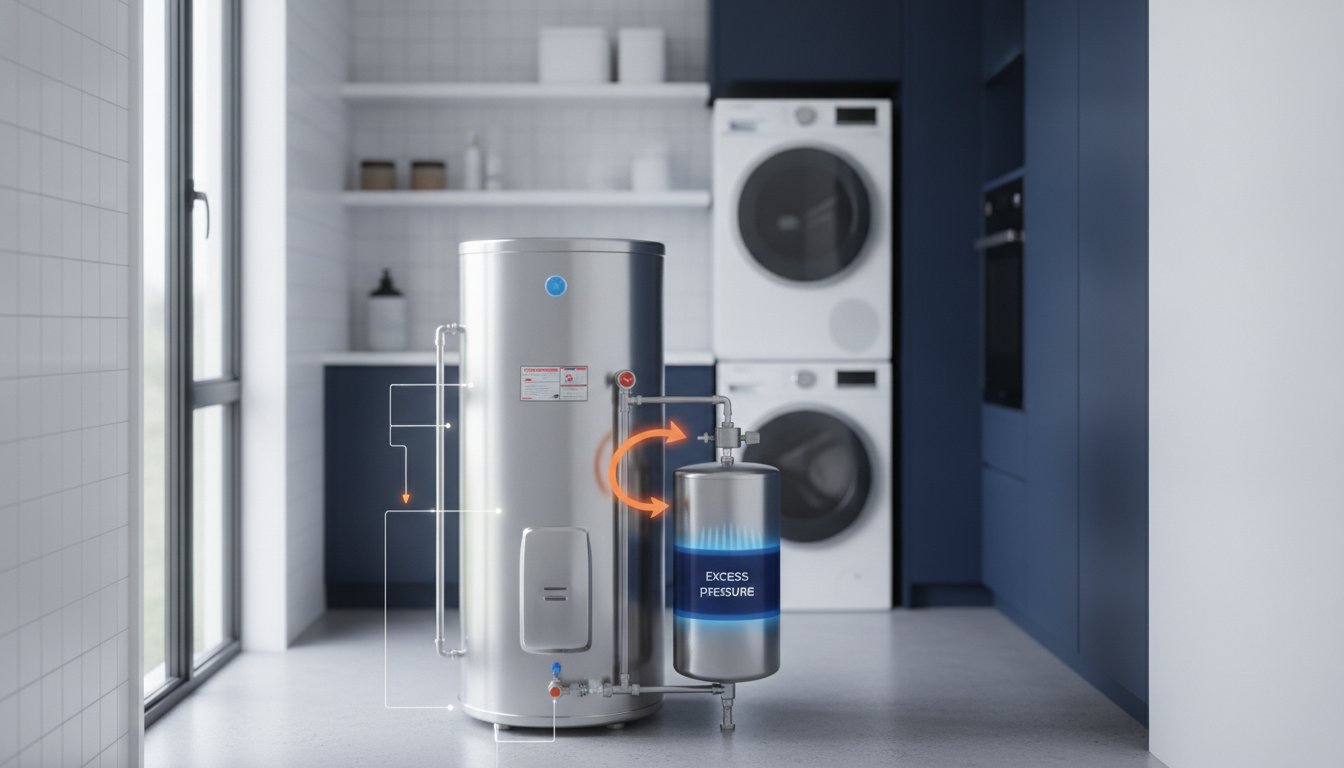
Water Heater Expansion Tank Purpose: Protecting Your Home from Thermal Expansion
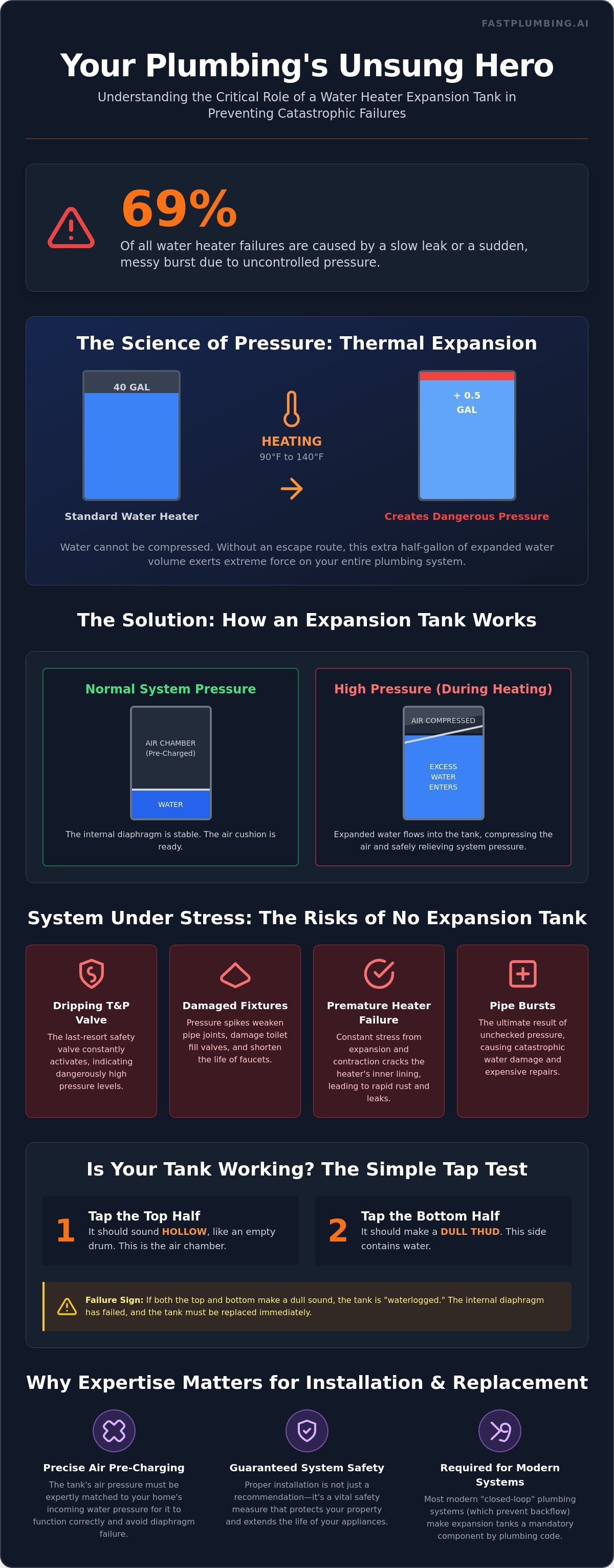
Did you know that 69% of all water heater failures are caused by a slow leak or a sudden, messy burst? It's a stressful reality that many homeowners face without warning. You might look at that small, metal canister sitting above your unit and wonder if it's just an unnecessary add-on. However, the water heater expansion tank purpose is actually to act as a safety lung for your entire home. When water heats up from 90°F to 140°F in a standard 40-gallon tank, it expands by nearly half a gallon. Without somewhere for that extra volume to go, the pressure builds until something snaps.
We know how frustrating it is to feel like you're being sold parts you don't need. You want a home that's safe and plumbing that just works without the confusing jargon. This guide will help you understand why that little tank is a mechanical necessity that prevents premature heater failure and pipe damage. We'll also show you how to check if your current tank is working correctly and exactly when you should call for a professional replacement to keep your property protected.
Key Takeaways
- Understand that the primary water heater expansion tank purpose is to act as a safety valve, absorbing excess water volume to prevent sudden pipe bursts.
- Learn how the internal rubber diaphragm keeps air and water separate to maintain steady, safe pressure throughout your entire home.
- Discover why modern "closed-loop" plumbing systems make these tanks a mandatory safety requirement rather than just an optional upgrade.
- Master the simple "Tap Test" to quickly identify if your tank is failing before it leads to an expensive emergency.
- See why expert installation and precise air pre-charging are vital to keeping your system running FAST and hassle-free for years to come.
What is the Primary Purpose of a Water Heater Expansion Tank?
Imagine your plumbing system is under a constant state of attack. Every time your water heater cycles on, the pressure inside your pipes climbs to dangerous levels. If you don't have a way to manage that stress, you're looking at a major disaster. The water heater expansion tank purpose is to act as a vital safety device that handles this internal pressure before it causes a pipe to burst or your tank to fail. To understand why this matters, you need to look at the science behind What is an Expansion Tank? and how it handles the water in your home.
When water is heated, it undergoes a physical change. Thermal expansion is the physical increase in water volume during the heating cycle. For example, if you have a standard 150-litre tank and heat the water from 30°C to 60°C, that water will actually expand by nearly 2 litres. Since water cannot be compressed, that extra volume has to go somewhere. Without an expansion tank, that pressure pushes directly against your pipes, faucets, and the water heater itself. This constant battering is what leads to the high rate of water heater failures caused by slow leaks or sudden, messy bursts.
The 'Shock Absorber' for Your Plumbing
Your plumbing system needs a way to cushion the impact of heating cycles. Think of an expansion tank like a shock absorber on your car. When you hit a pothole, the shocks absorb the energy so the frame of the vehicle doesn't take the hit. In your home, the "pothole" is the sudden pressure spike that happens the moment your heater kicks on. This tank provides a safe place for that extra water to move, which prevents sudden spikes that can damage your fixtures. More importantly, it protects the fragile inner glass lining of your water heater. If that lining cracks due to pressure, your tank will rust out FAST.
Preventing the 'Ticking Time Bomb' Scenario
Constant pressure fluctuations act like a silent killer for your appliance. Every time the water heats and cools, the metal in your water heater slightly expands and contracts. Over time, this repetitive stress weakens the welds, turning your heater into a ticking time bomb. You might notice your Temperature and Pressure (T&P) relief valve is constantly dripping or leaking. That valve is a last-resort safety feature, not a regular drain. An expansion tank solves this problem by absorbing the pressure first, keeping the T&P valve closed and preventing those annoying, dangerous leaks from starting in the first place.
How an Expansion Tank Works to Protect Your Home
It looks like a simple metal canister, but the internal design is what keeps your home safe. The water heater expansion tank purpose is achieved through a clever two-chamber system. Inside the heavy-duty steel shell, there is a flexible rubber diaphragm, or bladder, that divides the tank in half. One side is pre-charged with compressed air, while the other side is connected directly to your plumbing. When your water heater is running, the pressure builds. Instead of that pressure hammering your pipes, the extra water volume pushes into the tank. The air on the other side compresses like a spring to make room for it.
This process is dynamic. As you use hot water and the temperature in your main tank drops, the pressure decreases. The compressed air in the expansion tank then pushes that extra water back out into the system. This constant "breathing" keeps your overall system pressure stable and safe. Without this mechanism, you face the real dangers of not having an expansion tank, which often include cracked pipes and a flooded basement. If you suspect your system is under too much stress, our experts can provide a fast inspection to ensure everything is balanced.
The Role of the Internal Diaphragm
The rubber bladder is the most critical part of the assembly. For the tank to work, the air and water must remain completely separate. If that bladder fails or tears, the tank becomes "waterlogged." This means the air escapes, and the tank fills completely with water. Since water cannot be compressed, a waterlogged tank is useless. To prevent this, the air pressure inside the tank must be calibrated to match your home's incoming water pressure. If they don't match, the bladder stays under too much tension and will eventually snap, right?
Extending the Life of Your Fixtures
Most homeowners only worry about their water heater, but high pressure is a whole-home problem. When your system lacks an expansion tank, every faucet washer and toilet fill valve in your house takes a beating. You might notice your toilets "running" for no reason or faucets that start to drip even after you've replaced the seals. This high-pressure environment also causes silent damage to expensive appliances like dishwashers and washing machines. By absorbing those pressure spikes, the expansion tank acts as a whole-home shield, saving you from frequent, annoying repairs on your fixtures and appliances.
Closed-Loop Systems: Why You Likely Need an Expansion Tank
Most modern Australian homes now operate on what plumbers call a closed-loop system. In older properties, plumbing was often "open," allowing expanding hot water to push back into the municipal water main. While this naturally relieved pressure, it risked contaminating the public supply. Today, water meters are equipped with check valves or backflow preventers to keep your water strictly on your property. This change protects the community, but it effectively traps thermal expansion inside your pipes with no way out.
The water heater expansion tank purpose is to solve this specific problem by creating a relief point within your private system. Because the check valve prevents water from retreating to the street, the pressure from heating cycles has to be absorbed internally. The Plumbing Code of Australia (PCA) and AS/NZS 3500 standards now mandate these safety devices for most new installations in closed systems. It is a critical requirement designed to prevent the structural stress that leads to burst pipes and flooded laundry rooms.
The Danger of Backflow Preventers
Backflow preventers are essential for water safety, but they turn your plumbing into a high-pressure environment. When your heater cycles, the water expands and hits that one-way valve like a brick wall. This creates a "pressure cooker" effect that can lead to recurring leaks and the need for frequent water heater repair. Adding a tank is the most reliable way to stop this internal battering and protect your system's welds from cracking under the strain.
Code Compliance and AS/NZS 3500 Standards
If you are selling your home or undergoing a renovation, compliance with AS/NZS 3500 is non-negotiable. Building inspectors look specifically for these tanks to ensure the system is up to current Australian safety standards. A missing tank is a major red flag that can stall a property sale or lead to a failed inspection. Even more concerning, insurance providers may refuse to cover water damage claims if they find the leak was caused by high pressure in a non-compliant system. It is always better to verify your setup with a pro to ensure you are fully covered, right?
Signs of Failure: How to Tell if Your Tank is Broken
Most expansion tanks fail silently. You won't see a puddle on the floor until the damage is already done. Since the water heater expansion tank purpose is to manage invisible pressure spikes, you have to be proactive. If you haven't checked your tank in the last year, it's time for a quick diagnostic. These steps take less than five minutes but can save you thousands in property damage. You don't need special tools; just a little bit of attention to the sounds and sights in your utility room.
Start with the "Tap Test." Use a metal object like a screwdriver handle to lightly tap the tank. A functional tank is divided by a bladder; one side holds air and the other holds water. You should hear a clear, hollow ring on the air side and a dull thud on the water side. If the entire tank produces a heavy thud, it is completely full of water. This condition, known as being waterlogged, means the tank can no longer cushion your plumbing system. It's essentially a heavy paperweight hanging off your pipes at that point, right?
Next, perform the Schrader Valve test. This valve is usually hidden under a plastic cap on the top or end of the tank. It looks just like the valve on a car tire. Briefly press the pin inside the valve with a small tool. You want to hear a short hiss of air. If water squirts out instead of air, the internal rubber diaphragm has definitely ruptured. At this point, the tank is compromised. It's no longer protecting your system from thermal expansion and needs to be swapped out immediately.
Visual Clues and Physical Symptoms
Look closely at the connection point where the tank joins your plumbing. Rust, mineral deposits, or green corrosion are clear signs of a failing seal or a pinhole leak. You should also check the discharge pipe on your water heater's Temperature and Pressure (T&P) relief valve. If that pipe is damp or dripping, your expansion tank isn't absorbing the expansion correctly. Some homeowners also notice a sudden "surge" of high pressure when they first turn on a kitchen faucet. This happens because the trapped pressure has nowhere else to go but out of your fixtures.
The Risk of Ignoring a Failed Tank
A failed tank is a massive liability. It provides zero protection, which forces your water heater's inner lining to flex and crack every time the burner kicks on. This neglect leads to premature plumbing maintenance needs and significantly shortens the life of your water heater. We believe in being proactive to save you money. Fixing a small tank issue FAST prevents a catastrophic pipe burst later. If your tank failed any of these tests, contact our team for a professional replacement to restore your home's safety today.
Professional Installation: Why Speed and Expertise Matter
Installing a safety device isn't as simple as twisting a lightbulb. While the water heater expansion tank purpose is to protect your home, an improperly installed tank can actually become a liability itself. One of the most common mistakes is failing to "pre-charge" the tank. Before it even touches your pipes, a professional must use an air pressure gauge to ensure the tank's internal pressure perfectly matches your home's static water pressure. If these numbers don't align, the internal bladder stays under constant stress and will fail prematurely. A licensed plumber has the tools and the training to calibrate this balance correctly the first time.
Weight is another major factor that many homeowners overlook. When an expansion tank is empty, it's relatively light. However, as it fulfills its water heater expansion tank purpose and fills with water, it becomes significantly heavier. Water weighs exactly 1 kilogram per litre. A small 8-litre tank can suddenly put over 8 kilograms of stress on your copper lines. If the tank isn't supported with proper mounting brackets or positioned correctly, it can sag, pull on joints, and cause a major flood. Our team ensures that every installation is code-compliant and structurally sound to prevent these avoidable disasters.
The Dangers of DIY Expansion Tank Install
Trying to handle this as a weekend project often leads to more trouble than it's worth. DIYers frequently struggle with cross-threading or using the wrong type of sealant on the threaded connections. These tiny errors lead to slow, hidden leaks that rot out your drywall over time. When you hire a professional, you get more than just a tank installation. Our experts can also perform a full leak detection check while on-site. This ensures that your new tank is working and that no other hidden threats are lurking in your walls, right?
How Fast Plumbing, LLC Solves the Problem
We know that a plumbing issue feels like a crisis. That's why Fast Plumbing, LLC offers 24/7 availability and same-day service for all water heater concerns. We don't believe in making you wait around for a solution. When our technicians arrive, they bring 29 plus years of experience and a strict "Clean-Up Like It's Their Own" promise. We treat your property with the highest level of respect, leaving your utility room cleaner than we found it. If you're worried about the investment, you can easily get a plumbing repair costs estimate for your upgrade. Don't wait for a minor pressure spike to turn into a FAST emergency. Call us now and let us secure your home today.
Secure Your Home and Plumbing System Today
Your plumbing system is a major investment that deserves the best protection. Understanding the water heater expansion tank purpose is the first step in avoiding the 69% of heater failures caused by pressure damage. By absorbing thermal expansion, this small tank prevents pipe bursts and extends the life of every fixture in your home. Don't wait for a dripping relief valve or a flooded basement to tell you that your system is in trouble. A quick diagnostic check now can save you thousands in property damage later, right?
We are here to handle your plumbing needs with urgency and professional care. With 30 years of expert experience and our 1-minute callback guarantee, we ensure your home stays safe and dry. Whether you need an emergency replacement or a simple safety inspection, our 24/7 emergency service is always ready to help. Get your water heater expansion tank inspected FAST—contact us now! We'll treat your property like our own and get your system running perfectly in no time. Let's make your home's plumbing hassle-free today.
Frequently Asked Questions
Do I really need an expansion tank for my water heater?
You definitely need one if your home has a closed-loop plumbing system. Look near your main water shut-off for a backflow preventer or a pressure-reducing valve. If those devices are present, the water heater expansion tank purpose is to prevent pressure from being trapped in your pipes. Most modern building codes require these tanks for all new installations to prevent dangerous pressure spikes that lead to leaks.
How long does a water heater expansion tank typically last?
These tanks typically last between 5 and 10 years. Their lifespan depends heavily on your home's water quality and the stability of your incoming water pressure. Since the internal rubber bladder flexes during every heating cycle, it eventually wears out and loses its elasticity. It's a smart move to have a professional inspect the tank every time you have your water heater serviced.
Where is the expansion tank usually located on a water heater?
You will usually find the expansion tank installed on the cold water supply line, directly above the water heater. It is a small, metal tank that often looks like a blue or white propane canister. It should be mounted within a few feet of the heater to effectively absorb thermal expansion as soon as the water begins to heat up and expand.
What happens if my expansion tank fails and I don't replace it?
If you ignore a failed tank, your plumbing system stays under constant, high-pressure stress. This leads to dripping faucets, running toilets, and eventually, a ruptured water heater tank. Since a failed expansion tank provides no cushion for expanding water, the internal pressure can cause a catastrophic pipe burst that results in expensive water damage to your floors and walls.
Can an expansion tank be installed horizontally?
Yes, an expansion tank can be installed horizontally, but it requires specific mounting brackets to handle the weight. When the tank fills with water, it becomes quite heavy. If it isn't supported correctly, that weight can snap the copper pipes or fittings. Most plumbers prefer vertical installation to reduce stress on the plumbing joints, but horizontal is acceptable if your utility room has limited space.
How much air pressure should be in my expansion tank?
The air pressure in your tank must exactly match your home's static water pressure. Most residential systems range between 40 and 60 PSI. If the tank's pressure is too high or too low, the internal bladder won't move correctly, which makes the tank useless. You can check your home's pressure with a simple gauge at an outdoor hose bib before setting the tank's charge.
Is it normal for an expansion tank to be hot to the touch?
It is perfectly normal for the side of the tank containing water to feel warm or hot. This happens because the tank is absorbing hot water that has expanded out of your heater. However, the air-filled side of the tank should remain closer to room temperature. If the entire tank is cold even when the heater is running, it might not be receiving water correctly.
Will an expansion tank stop my water heater from making popping noises?
No, an expansion tank won't stop popping or rumbling noises coming from inside your heater. Those sounds are usually caused by sediment buildup at the bottom of the main tank. While the water heater expansion tank purpose is to manage pressure, popping noises indicate you need a professional tank flush to remove mineral deposits that are trapping steam bubbles.
