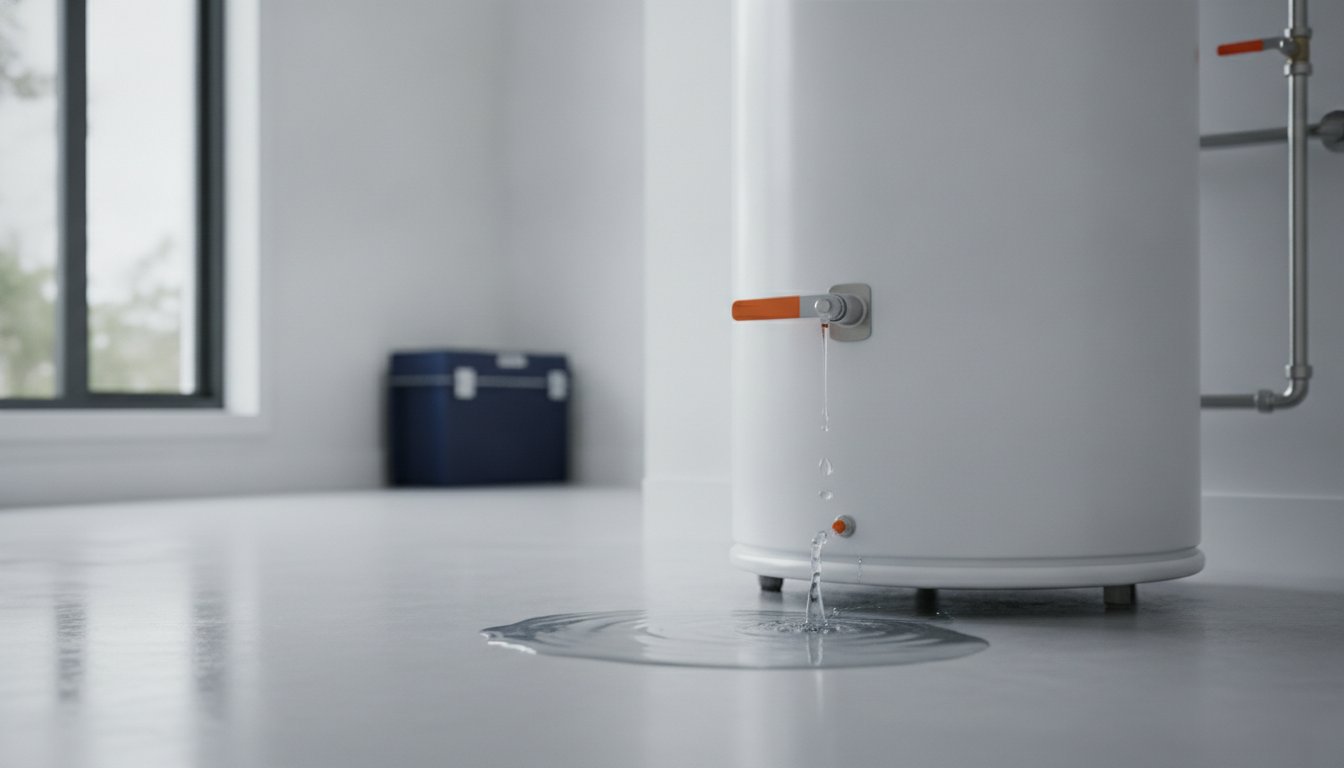
Water Heater Leaking from Bottom: Diagnosis, Safety, and Fast Fixes
Did you know the average insurance claim for water damage caused by a water heater failure is a staggering $4,444? Finding a water heater leaking from bottom is a household crisis that demands your attention before a small puddle turns into a flooded basement. You're likely feeling that familiar spike of panic. Is the gas line safe? Will this cost thousands to fix? It's a stressful situation, but we're here to help you stay calm and act quickly.
We agree that nobody should have to deal with the fear of property damage or the worry of being overcharged for an emergency replacement. Our goal is to help you identify the source of the leak and take immediate action to protect your home. We'll walk you through a simple diagnostic process to determine if you need a quick valve fix or a full tank replacement. By knowing the signs, you can avoid the 30% to 50% premium often charged for emergency replacements and get your home back to normal FAST and hassle-free.
Key Takeaways
- Stop immediate property damage with a step-by-step emergency shutdown of your unit's power and water sources.
- Use the "Dry-Down" test to determine if a water heater leaking from bottom is a simple component fix or a terminal tank breach.
- Identify whether a faulty T&P valve or a worn-out drain valve is the culprit behind the puddle in your home.
- Know when internal corrosion makes a replacement unavoidable and how to use the "10-Year Rule" to save money on long-term repairs.
- Get your home back to normal FAST with professional insights on choosing between a quick repair and a hassle-free upgrade.
Stop the Flood: Emergency Safety Steps for a Leaking Water Heater
Finding a water heater leaking from bottom is a race against time. Your home is at risk. Your first priority isn't the repair; it's safety. You must neutralize the power source and stop the water flow immediately to prevent a catastrophic flood or an electrical fire. Don't wait for a plumber to arrive before taking these steps. You can save yourself thousands in flooring and drywall repairs by acting right now. We understand the panic of seeing a puddle under your unit, but staying calm and following this process will keep your family safe.
Shutting Down Power and Fuel Sources
If you have an electric unit, head to your circuit breaker panel. Look for a dedicated double-pole breaker labeled "Water Heater." Flip it to the "OFF" position. This prevents the heating elements from burning out if the tank empties. It also removes the risk of electrocution if water reaches electrical components. For gas units, look at the bottom of the tank. You'll see a control valve with a dial. Turn that dial to the "OFF" position. Understanding How storage water heaters work helps you realize that a leaking tank can still be under intense pressure. If you smell rotten eggs, leave the house immediately. That smell indicates a gas leak. Do not flip any light switches or use your phone inside. Never leave a leaking gas unit with the pilot light on; an empty, firing tank can overheat and cause a fire.
Cutting Off the Water Supply
Next, you need to cut off the water supply to stop the pressure-driven leak. Look at the top of your tank. You'll find two pipes. One is the cold water inlet. It usually has a shut-off valve. If it's a round handle (gate valve), turn it clockwise until it stops. If it's a lever (ball valve), turn it 90 degrees so it's perpendicular to the pipe. This stops new water from entering the tank and feeding the water heater leaking from bottom. If the valve is stuck or corroded, don't force it. You might snap the handle and create a second, worse leak. If the tank valve won't budge, you'll need to shut off the main water valve for your entire home. This keeps the situation under control while you wait for professional help. Once the water is off, open a hot water faucet elsewhere in the house to relieve the remaining pressure. This slows the leak and gives you the breathing room to assess the damage without watching your floors soak up more water. We are here to get to your door FAST and solve the problem ASAP.
Is It Really the Bottom? Locating the Source of the Leak
Just because you see a puddle doesn't mean your tank is ready for the scrap heap. A water heater leaking from bottom is often a victim of gravity rather than a total internal failure. Water naturally follows the path of least resistance. It can start at a loose fitting on top and travel down the side of the jacket, pooling at the base. You need to distinguish between a terminal tank breach and a fixable component leak before you panic about the cost. This diagnostic phase is the most important step in saving your home from water damage.
Perform a "Dry-Down" test to get a clear answer. Grab a towel and wipe the entire unit, including the pipes, valves, and the floor. Wait about 15 to 20 minutes. Watch closely to see where the first sign of moisture reappears. If water is seeping out from under the outer insulation jacket, the internal tank is likely cracked. If it's dripping from a valve or a pipe connection, you probably have a simple repair on your hands. We want to help you avoid an unnecessary replacement if a minor fix will solve the problem.
Top-Down Leak Migration
Inspect the cold water inlet and hot water outlet nipples. These threaded connections can vibrate loose over time or succumb to minor corrosion. When they fail, water creates a steady trail down the tank side. This hidden path is why professional leak detection is so important for identifying hidden cracks that aren't visible to the naked eye. A small drip at the top can look exactly like a major failure at the bottom. Check the pipe fittings carefully. If you see moisture or mineral buildup around the threads, you've likely found your culprit.
The Condensation Factor
Don't overlook the "sweat" factor. When cold water fills the tank on a hot, humid day, condensation forms on the exterior. This is common during the summer months. Check the puddle. Is the water clear and cold? It's likely just condensation. Is the water warm, tea-colored, or rusty? That's a sign of internal tank failure. Remember this rule: If the tank is cold and the air is humid, it's likely sweat; if the water is warm or rusty, your tank is actively leaking. If you want a definitive answer without the guesswork, contact us for a professional diagnosis to solve the mystery ASAP. We'll treat your home like our own and ensure you get a clean, honest assessment of the situation.
Common Fixable Culprits: Drain Valves and T&P Valves
Not every puddle signifies a dead tank. Sometimes, a water heater leaking from bottom is actually a sign that your unit's safety features are working exactly as intended. Before you assume the worst, you need to check the two primary valves. These components are designed to manage pressure and allow for maintenance. If they fail, they create a mess that looks like a major disaster, but the fix is often straightforward and affordable. We want to help you identify these "easy wins" so you can save your budget for things that matter.
The Temperature and Pressure (T&P) Relief Valve is your tank’s primary safety gate. It's designed to open and "vent" water if the internal pressure or temperature gets too high. If your home lacks a thermal expansion tank, your water heater might be constantly venting to handle the pressure spikes that occur during heating cycles. This isn't a leak in the traditional sense; it's a safety response. Installing an expansion tank can stop these recurring drips and protect your plumbing system from long-term stress.
Troubleshooting the T&P Relief Valve
Start by checking the discharge pipe. This is the tube that runs from the valve down toward the floor. If you see moisture or active spraying at the end of this pipe, the valve has triggered. A faulty temperature regulator often causes the unit to overheat, forcing the valve to stay open. You can test the valve by briefly lifting the silver lever, but be careful. If the valve is old, it might not seal again once opened. If it continues to drip after a test, it's time to call in the pros. We can get a technician to your door, fast and hassle-free, to solve this safety issue ASAP.
The Drain Valve Dilemma
The drain valve is located at the very bottom of your tank. It's used for flushing out the sediment that causes 45% of all water heater failures. Many standard units come with cheap plastic drain valves that become brittle and crack over time. A brass valve is much more durable and less likely to fail. If you see water seeping from the threads, you might just have a loose packing nut. A quick turn with a wrench can sometimes stop the drip. However, if the internal seal has failed due to grit and sediment, you'll need a professional water heater repair to swap the component. We guarantee a clean-up like it's our own home, ensuring your utility room stays dry and functional. Don't let a small valve leak turn into a major headache; let us handle the heavy lifting for you.

The Point of No Return: When an Internal Tank Leak Means Replacement
Sometimes, the news isn't what you want to hear. If you have a water heater leaking from bottom and the water is seeping from inside the outer jacket, you've likely reached the point of no return. Unlike a leaky faucet or a clogged drain, a breached water heater tank cannot be patched. These tanks are pressurized vessels. Any attempt to weld or seal a crack from the outside is both impossible and dangerous. Once the inner lining fails, the structural integrity of the unit is gone. We understand this is a major headache. Our goal is to get a new, reliable unit installed FAST to minimize your downtime and protect your property.
Corrosion and the Anode Rod
Your tank faces a constant battle against electrolysis. The sacrificial anode rod is a magnesium or aluminum rod that attracts corrosive elements in the water to itself, essentially "dying" so the steel tank can live. Once this rod dissolves completely, those corrosive forces turn their attention to the steel walls of your tank. If you see rusty water pooling at the base, it’s a clear sign that corrosion has won. At this stage, a replacement is your only safe option to avoid a catastrophic burst. We can swap your unit ASAP and ensure your new tank is set up for a much longer lifespan.
Sediment Accumulation and Tank Cracking
Sediment is the primary cause of failure in 45% of cases. It settles at the base, creating a thick layer of insulation between the burner and the water. This leads to "hot spots" where the metal overheats and the glass lining eventually cracks. You might hear a distinct popping or rumbling sound as steam bubbles struggle to escape through the sediment layer. This constant thermal stress causes the metal to expand and contract until it finally gives way. To prevent this in the future, follow our plumbing maintenance checklist and flush your tank annually. If it's already too late and you're dealing with a water heater leaking from bottom, don't wait for the puddle to become a flood. Contact us now for an expert assessment and a hassle-free solution to your hot water crisis.
Professional Water Heater Solutions: Repairing vs. Upgrading FAST
Dealing with a water heater leaking from bottom is a major disruption to your daily life. You've identified the leak and weighed the risks. Now, you face the ultimate question: do you repair the unit or replace it entirely? Fast Plumbing, LLC provides a clear, no-nonsense path forward to help you make the right choice. Our goal is to stop the water, secure your home, and get your hot water back on today. We understand that an unexpected plumbing expense is stressful. That's why we prioritize transparent communication and rapid results to lower your blood pressure.
Don't wait for the puddle to become a flood. Homeowners who wait for a total failure often pay a premium for emergency replacements due to limited unit availability and overtime labor. Taking proactive steps now saves you money and prevents the catastrophic property damage we discussed earlier. Fast Plumbing, LLC is ready to help you navigate this crisis with professional-grade expertise and a focus on your specific needs.
The Repair vs. Replace Decision Matrix
Follow the "10-Year Rule" to protect your budget. Most standard tank water heaters have a reliable lifespan of 8 to 12 years. If your unit is over a decade old and facing a major component failure, a repair is often just a temporary band-aid on a terminal problem. Use a simple calculation: if the repair cost exceeds 50% of the replacement value, it's time to upgrade. Modern units offer significant energy efficiency gains that lower your monthly utility bills. You might even consider a tankless water heater to provide endless hot water and eliminate the risk of a future tank burst entirely. Fast Plumbing, LLC offers a 1-minute callback guarantee because we know every second counts when you have a water heater leaking from bottom.
Why FAST Action Matters
A small drip can turn into a catastrophic tank burst without warning. We provide 24/7 emergency response to handle these crises before they ruin your drywall or flooring. Our technicians follow a strict "Clean-Up Like It's Their Own" policy. This means we treat your property with the highest level of respect and never leave a mess behind. Fast Plumbing, LLC values your time as much as our own, moving quickly from your initial call to a completed, hassle-free installation. You deserve a reliable neighbor who has the tools to solve the problem ASAP, right?
Contact Fast Plumbing, LLC now for a rapid diagnosis and clean-up like it is our own. We will get to your door - fast and hassle-free.
Secure Your Home and Restore Your Hot Water Today
A water heater leaking from bottom doesn't have to mean a disaster for your home or your wallet. By shutting down the power and water immediately, you have already taken the most important step to prevent an expensive flood. Remember to check your T&P and drain valves before assuming the worst; however, don't ignore the signs of terminal corrosion if your tank is over ten years old. Knowing the difference between a simple valve fix and a total tank breach saves you time and prevents unnecessary stress.
We are here to take the pressure out of your plumbing emergency with our 1-minute callback guarantee and 24/7 service. Our fully licensed and insured technicians provide rapid solutions while treating your property with the highest level of respect. We promise a clean-up like it's our own, so you never have to worry about a mess after the job is done. Get your water heater fixed FAST – Call our 24/7 emergency line now! You can handle this crisis with confidence, and we are ready to help you get back to your normal routine today.
Frequently Asked Questions
Can I still use my water if the water heater is leaking?
You can still use cold water throughout your home as long as you only closed the dedicated shut-off valve on the water heater itself. If you had to close the main water valve for the whole house to stop the flood, you won't have any water service until a repair is made. Don't try to use hot water faucets during this time, as this can draw air or sediment into your plumbing lines.
Is a water heater leaking from the bottom an emergency?
Yes, finding a water heater leaking from bottom is a legitimate plumbing emergency that requires immediate action. A small puddle can quickly escalate into a catastrophic tank burst, leading to thousands of dollars in property damage. Since 69% of water heater failures involve leaks or bursts, you should treat any moisture at the base of your unit as a high-priority threat to your home's safety.
How much does it cost to fix a water heater leaking from the bottom?
The total cost depends entirely on whether the leak is caused by a fixable component or a terminal tank breach. Replacing a simple T&P valve or a drain valve is a relatively straightforward and affordable repair. However, if the internal glass lining has cracked due to corrosion or sediment buildup, the only solution is a full unit replacement. We provide transparent assessments to help you choose the most cost-effective path.
Can a leaking water heater explode if not turned off?
While extremely rare, a water heater can explode if the Temperature and Pressure (T&P) relief valve is stuck shut while the thermostat fails to turn off the heating element. A leak is actually often a sign that pressure is finding a way out of the system. However, you should still shut off the power and fuel sources immediately to eliminate any risk of fire or pressure-related failure while you wait for help.
How long does a typical water heater last before it starts leaking?
Most standard tank water heaters have a lifespan of 8 to 12 years before they are at risk of leaking. Statistics show that units older than 10 years account for nearly 70% of all property damage claims related to water heaters. If your unit has passed the seven-year mark, you should perform annual maintenance to prevent a sudden water heater leaking from bottom from catching you off guard.
Will insurance cover a water heater leaking from the bottom?
Most homeowners' insurance policies cover the "resulting damage" from a sudden leak, such as ruined flooring or drywall, but they rarely cover the cost of the water heater itself. If the leak was caused by a documented lack of maintenance, such as failing to flush sediment, your claim might be denied. It's best to check your specific policy details regarding "sudden and accidental" water discharge coverage.
Can I replace a T&P valve myself or do I need a plumber?
You should hire a licensed plumber to replace a T&P valve because it's a critical safety component for your home. If the valve isn't installed with the correct pressure rating or isn't sealed properly, your tank could become a safety hazard. We get to your door fast and hassle-free to ensure these safety devices are functioning perfectly, giving you total peace of mind and a clean-up like it's our own.
What is the difference between a tank leak and a valve leak?
A valve leak occurs at an external, replaceable component like the drain valve or the T&P relief valve. These are often simple, fixable culprits. A tank leak means the internal steel reservoir has corroded or cracked, allowing water to seep into the insulation jacket. Tank leaks are terminal and require a full replacement, while valve leaks can usually be solved with a quick part swap to get you back to normal ASAP.
