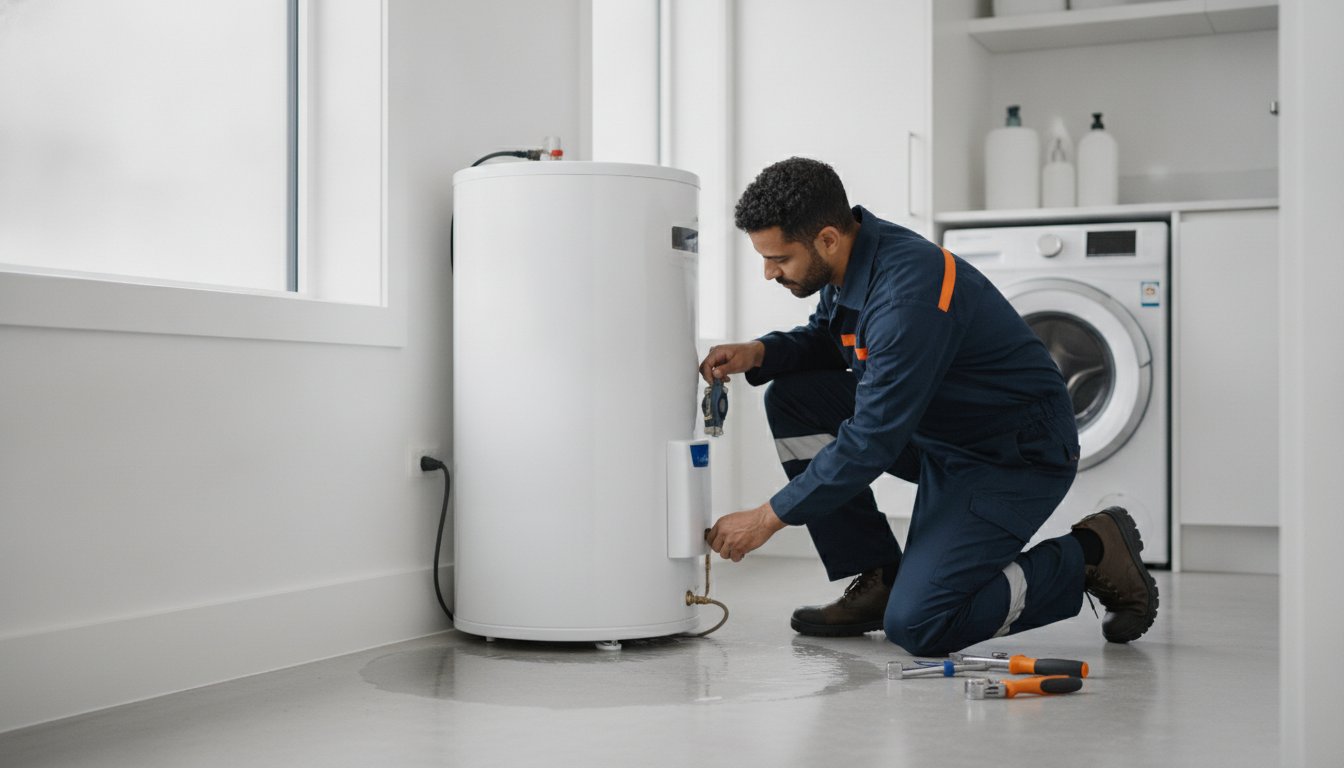
Water Heater Leaking From Bottom? Here is How to Fix It FAST
You walk into the utility room and hear that dreaded sound: a steady splash against the floor. If you find your water heater leaking from bottom, your mind immediately jumps to the worst case scenario. You're likely picturing a flooded basement, a massive replacement bill, and a cold morning shower for the whole family. It's a high-stress emergency, but panicking won't stop the water. You need a clear plan, and you need it FAST.
We understand the frustration of a sudden plumbing crisis. It's about more than just a pipe; it's about protecting your home and your peace of mind, right? This guide will show you exactly how to identify if that leak is a simple loose valve or a catastrophic tank failure. We'll walk you through the emergency steps to shut down your system and prevent further water damage before a professional arrives. From quick triage to knowing when to call for help ASAP, we'll help you get your home back to normal and your hot water running again.
Key Takeaways
- Take immediate control of the crisis by shutting off the water and power supply to stop flooding in its tracks.
- Learn how to diagnose if your water heater leaking from bottom is a minor valve issue or a terminal tank failure.
- Apply the "10-year rule" to decide if a professional repair or a full replacement is the safest choice for your home.
- Discover proactive maintenance steps like sediment flushing that can double the lifespan of your next water heater.
- Connect with Fast Plumbing, LLC ASAP to ensure a clean, hassle-free repair that gets your hot water running today.
Immediate Triage: 4 Steps to Take When Your Water Heater Leaks
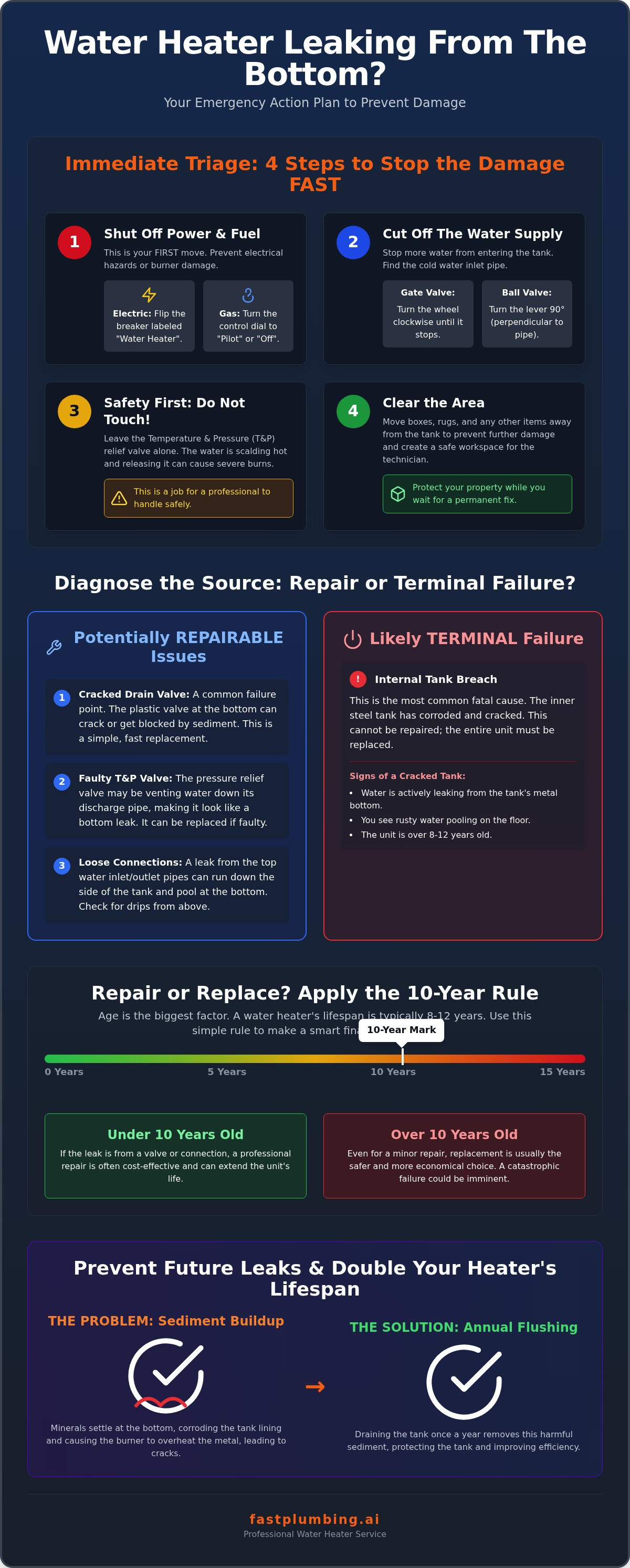
Seeing a puddle under your tank is a high-stress moment. Don't panic. You can stop the damage right now by following a simple triage plan. If you notice your water heater leaking from bottom, you're in a race against time to protect your floors and your wallet. You need to act within minutes to prevent a small drip from becoming a catastrophic flood. Follow these four steps to take control of the situation before the water spreads.
First, focus on safety. A leaking storage water heater combines water and electricity or gas, which is a dangerous mix. Second, stop the flow of water to the tank. Third, leave the Temperature and Pressure (T&P) relief valve alone for now. Yanking that lever while the water is still scalding can cause serious burns. Finally, clear the area. Move any boxes, rugs, or household items away from the tank ASAP. This prevents secondary damage and gives a professional a clean workspace to solve the problem FAST.
How to Shut Off the Power and Fuel
Shutting off the energy source is your very first move. If you have an electric heater, go to your breaker box. Look for the switch labeled "Water Heater" and flip it to the "Off" position. For gas units, look for the control dial at the base of the tank. Turn it to the "Pilot" or "Off" setting. Why is this so urgent? If the tank drains while the heat is still on, the heating elements can burn out or the gas burner could cause the tank to overheat and crack further. It's a major safety hazard you can't ignore, right?
Cutting Off the Water Supply
Once the power is off, you must stop more water from entering the tank. Look at the pipes at the top of the unit. You'll see a cold water inlet pipe with a shut-off valve. Most homes have one of two types:
- Gate Valve: This looks like a small wheel. Turn it clockwise as far as it will go.
- Ball Valve: This is a lever handle. Turn it 90 degrees so the handle is perpendicular to the pipe.
If that valve is stuck, rusted, or starts leaking when you touch it, don't fight it. Go directly to your home's main water shut-off valve. It's usually near the water meter or where the main line enters the house. Closing this stops all water flow to the entire property and secures the scene. This buys you the time you need to get an expert to your door, hassle-free and on-time. Taking these steps ensures the cleanup stays manageable while you wait for a permanent fix.
Common Causes of Water Leaking From the Bottom
Finding a water heater leaking from bottom doesn't always mean your tank is destined for the scrap heap. While some puddles signal a terminal failure, others are just a cry for a simple repair. You need to distinguish between a loose part and a structural breach before you commit to a full replacement, right? Identifying the source quickly saves you money and prevents unnecessary stress.
Sometimes the issue is purely environmental. Condensation often forms on the outside of the tank during high-demand periods or when the cold water intake is particularly chilly. This can create a small puddle that mimics a leak. If the water disappears when the unit isn't running hard, you might not have a leak at all. However, if the water is consistent, it's time to look closer at the mechanical components.
The Internal Tank Breach
The most common "fatal" cause of a bottom leak is a cracked internal tank. Over time, minerals and sediment settle at the bottom of the unit. This buildup acts as an insulator. In gas models, it causes the burner to overheat the metal tank floor, leading to fatigue and eventual cracks. In electric models, the sediment can corrode the inner lining. Once that glass lining fails, the steel tank begins to rust from the inside out. If you see rusty water pooling on the floor, it's a clear sign the inner tank has failed beyond repair. Age remains the biggest predictor here. Most tanks reach their limit between 8 and 12 years. If your unit is in that range, a crack is likely the culprit.
Valves and Connections
Not every leak means the tank is dead. Check the drain valve first. This is the faucet-like attachment at the base used for flushing the system. Plastic drain valves are prone to cracking or failing to seal if a piece of sediment gets stuck in the washer. A simple replacement of this valve can solve the problem FAST. You should also inspect the Temperature and Pressure (T&P) relief valve. If this valve is faulty or sensing too much pressure, it will vent water through its discharge pipe. This pipe usually ends near the floor, making it look like the bottom of the tank is leaking.
Water follows the path of least resistance. A leak at the top cold water inlet or hot water outlet can travel down the side of the tank, hidden behind the insulation jacket. It eventually pools at the base, leading many homeowners to assume the worst. If you can't pinpoint the source, our team can provide expert leak detection to solve the mystery ASAP and keep your home dry.
Repair vs. Replace: Is Your Water Heater Dead?
Deciding whether to sink money into a repair or invest in a new unit is the toughest part of a plumbing crisis. You don't want to throw away a perfectly good tank, but you also don't want to pay for a "band-aid" fix on a unit that's going to flood your laundry or utility room next month. We use a simple 50% rule to help you decide. If the cost of the repair exceeds half the price of a new installation, it's time to replace the unit. This protects your budget and ensures you aren't chasing bad money with good.
The age of your equipment is the most reliable predictor of success. Most traditional tanks are designed to last between 8 and 12 years. If your unit is over a decade old and you find your water heater leaking from bottom, the internal structure is likely compromised. High-pressure vessels can't be patched once the steel walls have thinned from years of heat and mineral contact. Structural leaks are unfixable, but external component failures are a different story.
When a Repair Makes Sense
Not every puddle means you need a new appliance. If the leak is coming from a loose heating element gasket, a faulty drain valve, or a top-side connection, a repair is the smart choice. These are "external" leaks. They don't involve the integrity of the tank itself. You can also extend the life of a middle-aged tank by replacing the sacrificial anode rod. This rod is designed to rust so your tank doesn't, right? If your tank is under 8 years old and the leak is confined to a replaceable part, check out our guide on water heater repair to see how we solve these issues FAST.
Signs It’s Time for a New Installation
Some symptoms tell us a tank is beyond saving. If the water pooling at the base is tea-coloured or contains visible rust flakes, the inner lining has failed. This is a terminal condition. You might also see multiple leaks appearing at once, which indicates the entire system is failing from the inside out. While a new installation is an investment, it often pays for itself through lower utility bills. Modern 2026 units are significantly more efficient than those built a decade ago. Upgrading now stops the emergency, prevents future water damage, and lowers your monthly energy costs. Fast Plumbing, LLC can help you choose a replacement and get it installed ASAP so your family doesn't have to endure another cold shower.
Preventing Future Leaks with Proactive Maintenance
You've dealt with the immediate crisis. Now, let's make sure it never happens again. Most homeowners ignore their water heater until it floods the floor, but that's a mistake. Proactive care can double the life of your unit and keep your utility bills low. A water heater leaking from bottom is often the final stage of years of avoidable neglect. You can stop the next emergency before it starts by following a few simple steps every year.
Beyond the basics, keep an eye on your home's water pressure. High PSI is a silent killer. If your water pressure is consistently over 80 PSI, it puts relentless stress on your tank's seams. This leads to pinhole leaks and structural fatigue. Installing a pressure-reducing valve or an expansion tank can solve this pressure problem ASAP. It's a small investment that protects every pipe in your house, right?
The Importance of Flushing Your Tank
Sediment is the enemy of every tank-style heater. As water sits, minerals settle at the base and create a thick layer of sludge. This sludge acts as an insulator. It forces your heater to run longer and hotter to reach the same temperature. This creates hot spots that weaken the metal and eventually cause your water heater leaking from bottom. To flush your tank safely, follow these steps:
- Shut off the power or gas supply.
- Connect a garden hose to the drain valve at the base.
- Open the valve and run the water into a floor drain or bucket until it's clear.
Regular maintenance keeps your system efficient and your floors dry. For more ways to protect your property, check out our plumbing maintenance checklist.
Checking the Anode Rod
The anode rod is your tank's bodyguard. It's a long metal rod that hangs inside the tank and attracts corrosive elements in the water. The sacrificial anode rod serves as the primary defense against tank corrosion by attracting minerals that would otherwise eat through the steel walls. When this rod is completely dissolved, the minerals start eating your tank instead. If you have hard water, you should inspect this rod every year. Replacing a worn rod is a simple, affordable fix that prevents a catastrophic tank failure. We can handle this for you during a routine visit, ensuring the job is done clean and hassle-free. Schedule your water heater maintenance today to get ahead of the next leak.
Get Professional Water Heater Service FAST
A water heater leaking from bottom is more than a mechanical failure; it is a direct threat to your home's integrity. While the triage steps you took earlier stopped the immediate flow, the underlying issue requires a permanent, professional resolution. Fast Plumbing, LLC specializes in these high-pressure moments, moving you from crisis to comfort in record time. We provide the authoritative diagnostics needed to determine if you truly need a new unit or if a simple gasket replacement will solve the problem FAST.
Choosing the right partner means finding someone who values your property as much as you do. We understand the anxiety that comes with a utility room flood, which is why we've built our business around extreme accountability. Our "Clean-Up Like It's Their Own" policy is a core promise to every homeowner. We don't just fix the leak; we ensure that once the job is done, your home is left spotless and dry. It is about providing a service that is both professional and deeply considerate, right?
Our 24/7 Emergency Response
Plumbing disasters don't follow a 9-to-5 schedule. Whether you discover a pool of water at 2:00 AM or on a holiday weekend, our team is ready to respond. We offer a 1-minute callback guarantee because we know that every second matters when a tank is compromised. When our licensed plumber arrives at your door, they come equipped with the professional-grade expertise to handle any water heater crisis on the spot. For extra peace of mind during this stressful time, you can review our emergency plumber checklist to see how we maintain the highest standards in the industry.
Transparent Pricing and Professional Results
We eliminate the ambiguity often found in emergency services. Fast Plumbing, LLC uses a logical, transactional approach that focuses on solving your problem without the hassle. With over 29 years of industry experience, our experts handle everything from minor valve repairs to complex tankless installations. We follow a strict three-step process: initial contact, property visit, and completed job, ensuring you are never left in the dark about the status of your repair. We prioritize your time and your budget by offering clear, upfront communication.
Don't let a small drip escalate into a catastrophic tank failure. Our team is ready to deliver a structured solution that protects your home and restores your hot water today. Call Fast Plumbing, LLC for an ASAP response! We bring professional results to your door, fast and hassle-free.
Restore Your Home's Hot Water FAST
Finding your water heater leaking from bottom is a major stressor, but you now have the tools to handle it. You know how to perform immediate triage by shutting off the power and water. You also understand the difference between a simple valve fix and a terminal tank failure. Whether your unit needs a quick part replacement or a full high-efficiency upgrade, the goal is to stop the damage before it spreads to your floors and walls. Don't let a puddle turn into a flood while you wait for a slow response, right?
We're here to provide the relief you need with our 24/7 emergency service and famous 1-minute callback guarantee. Our experts bring over 29 years of experience to your door, ensuring a professional result that includes our Clean-Up Like It's Their Own promise. We solve the problem quickly so you can get back to your normal routine without the hassle. Get an ASAP Water Heater Repair Quote today and let us handle the rest. Your home is in safe hands, and we'll have your hot water running again before you know it.
Frequently Asked Questions
Is a water heater leaking from the bottom an emergency?
Yes, any sign of a water heater leaking from bottom is an absolute emergency. A small puddle can quickly turn into a massive flood that destroys your floors and drywall. Beyond water damage, leaks near electrical components or gas lines pose serious safety risks. You should shut off the power and water immediately. Call a professional ASAP to prevent a manageable repair from becoming a total home disaster.
Can I still use my water if the heater is leaking from the bottom?
You can usually use your cold water if you have only shut off the dedicated valve to the heater. However, you must not use the hot water taps. Using hot water pulls more water into a leaking tank, which increases the internal pressure and makes the leak worse. If you had to shut off the main house valve, you won't have any water until a pro arrives to solve the issue.
How much does it cost to fix a leaking water heater?
The cost depends entirely on whether you need a simple part replacement or a full tank installation. Minor fixes like replacing a faulty drain valve or a gasket are relatively affordable. If the internal tank has breached, a full replacement is usually necessary. We provide transparent, flat-rate quotes once we diagnose the problem on-site. This ensures you know exactly what to expect without any hidden fees or surprise costs.
Why is my water heater leaking after being flushed?
This often happens because the drain valve didn't seat correctly after being opened. A piece of sediment or scale can get trapped in the valve's seal, preventing it from closing fully. In some cases, the flush removes heavy sediment that was actually plugging a small corrosion hole in the tank. Once the sediment is gone, the leak becomes visible. We can replace the valve or diagnose the tank integrity FAST.
Can a leaking water heater explode?
While extremely rare, a water heater can explode if the Temperature and Pressure relief valve fails while the unit continues to heat. A leak is actually a way for pressure to escape, but it signals that the tank's integrity is compromised. If you hear a loud popping or rumbling sound accompanied by a leak, shut off the power and gas immediately. This is a critical safety situation that requires professional attention ASAP.
What are the first signs of a water heater failing?
You will often notice subtle warnings before a major flood occurs. Common signs include popping or rumbling noises caused by sediment buildup at the bottom of the tank. You might also see tea-colored or rusty water coming from your hot water taps. A sudden drop in hot water temperature or a damp floor around the base of the unit are also clear indicators that your system is reaching the end of its life.
How long does a typical water heater last before it starts leaking?
Most traditional storage tanks last between 8 and 12 years before they start showing signs of wear. If your unit is over a decade old, the risk of a water heater leaking from bottom increases significantly. Factors like water hardness and how often you flush the tank also play a major role. Regular maintenance can push a tank toward the 15-year mark, but age remains the biggest factor in structural failure.
Does homeowners insurance cover a leaking water heater?
Standard homeowners insurance typically covers the water damage caused by a sudden leak, such as ruined flooring or drywall. However, most policies do not cover the cost of the water heater itself if it failed due to age or lack of maintenance. Every policy is different, so you should check with your provider. We can provide the professional documentation and expert diagnostics you need to help process your claim quickly and hassle-free.
