What to Do When Sewage Backs Up in Your House: An Emergency Protocol
Imagine walking into your bathroom only to find dark, foul-smelling sludge bubbling up from the floor waste. It is a stomach-turning sight that triggers instant panic for any Aussie homeowner. Knowing exactly what to do when sewage backs up in house is the difference between a minor headache and a total property catastrophe. You are likely worried about the stench, the potential for thousands of dollars in structural damage, and the health of your family. It is a high-stress situation, but you don't have to face it alone.
This emergency response guide provides a tactical protocol to protect your health, minimize property damage, and solve the backup FAST. Raw sewage is classified as "Category 3" black water. This means it is loaded with dangerous pathogens like E. coli and salmonella that require immediate, professional attention. We will walk you through the essential steps to stop the flow, keep your pets safe, and ensure a permanent repair to your sewer line. Let's get your home back to a safe, clean, and functional condition right now.
Stop all water usage immediately-no flushing toilets or running taps-to prevent the backup from worsening. This guide explains exactly what to do when sewage backs up in house by helping you diagnose if the issue is a simple local clog or a major main line failure. You will also learn about the serious health risks of "black water" and why professional remediation is the only safe way to protect your family from dangerous pathogens. Discover how video camera technology and hydro jetting solve blockages FAST, and find out how to protect your property permanently with backwater prevention valves and regular professional maintenance.
The Emergency Response Protocol: Immediate Steps to Take
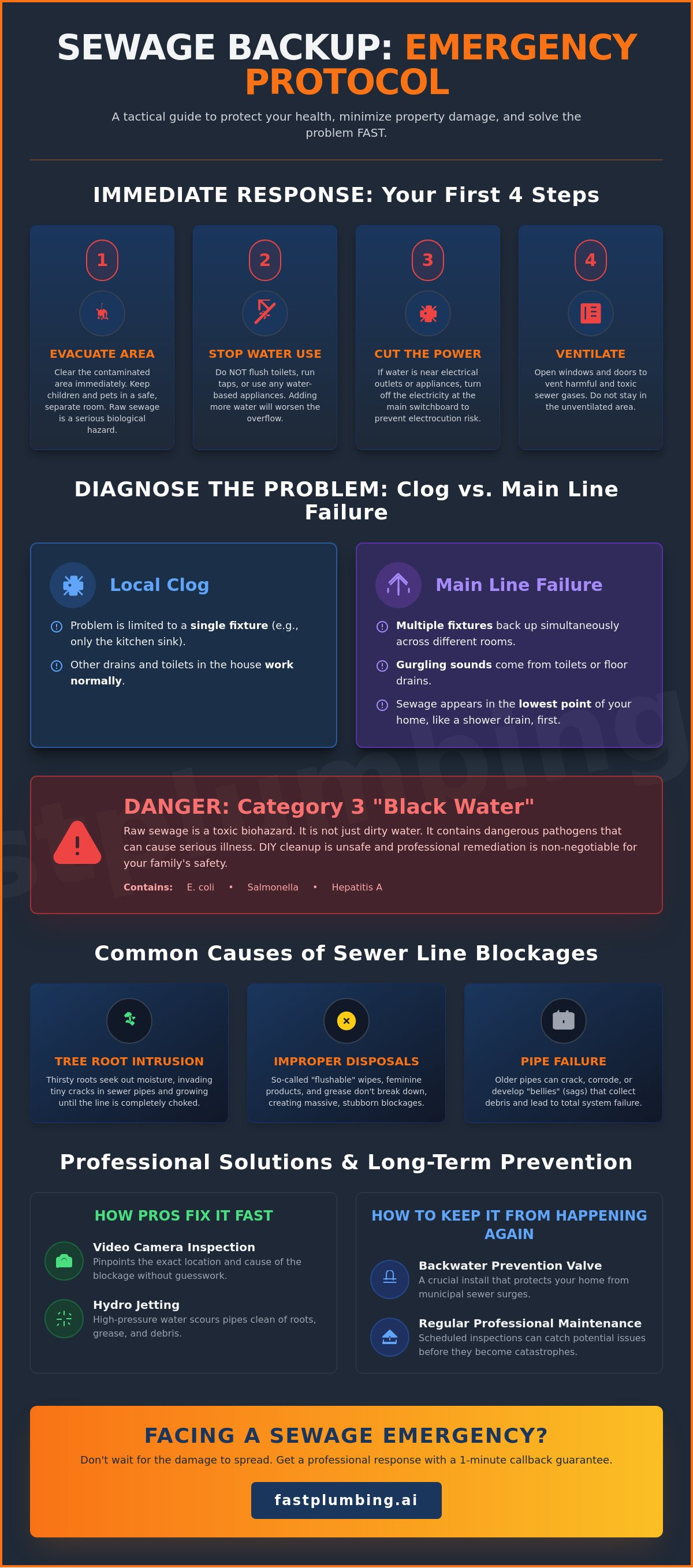
When you see sludge rising in your drain, your first instinct is to fix it. Stop. You need a tactical response to protect your family from bio-contamination. Knowing what to do when sewage backs up in house begins with one word: Evacuate. Raw sewage is a biological hazard. It carries bacteria that can cause serious illness, so clear the area immediately. Keep children and pets in a safe room or outside. Don't take chances with their health.
Next, stop all water usage. Don't run the dishwasher, don't have a shower, and definitely don't flush the toilet. Your home's Sanitary sewer system is blocked; any water you add will only push more waste back into your living space. Locate your main water meter and shut it off to prevent accidental usage. If the sewage is near power points or electrical appliances, turn off the electricity at the main switchboard. Safety comes first. Finally, open your windows and doors to vent toxic sewer gases ASAP. These fumes are more than just a bad smell; they can be harmful to your health if they linger in an enclosed space.
Securing the Area and Preventing Spread
Controlling the mess is vital to minimizing property damage. Place old towels at the base of bathroom doors to stop the overflow from reaching your carpeted areas or skirting boards. This prevents the moisture from wicking into the walls. Whatever you do, never attempt to flush the toilet to "clear" the blockage. This is a common mistake that leads to a massive overflow. Focus on containment. If you have to walk near the spill, wear rubber boots and disposable gloves. Don't let the contamination spread to other rooms on your shoes; keep the mess confined to one spot if possible.
When to Call for Emergency Assistance
A sewage backup is a "Category 3" emergency, also known as black water. This isn't just dirty water; it is a cocktail of pathogens including E. coli and Hepatitis A. You need a professional plumber who understands the urgency. Look for a team that offers a 1-minute callback guarantee. In a crisis, you shouldn't be waiting hours for a return phone call. You need a 24/7 expert who can arrive with the right gear to stop the backup and start the cleanup. They should treat your property with respect, cleaning up like it's their own. Speed is the only way to prevent permanent structural bio-contamination. You need a tactical response, not just a casual cleanup. Call the experts who can solve the problem FAST and show you exactly what to do when sewage backs up in house to keep your home safe.
Diagnosing the Backup: Is It a Local Clog or a Main Line Failure?
Is the problem limited to one room, or is your entire home under threat? Determining the scale of the issue is the first step in deciding what to do when sewage backs up in house. If only your kitchen sink is overflowing, you likely have a local clog in that specific pipe. However, if waste is bubbling up in the bathtub while you flush the toilet, you are facing a main line failure. This is a much more serious situation that requires a professional response to prevent widespread damage.
Listen for the "gurgle." This distinct sound coming from your floor wastes or toilets often signals air trapped by a blockage deep in the system. You should also check the lowest points in your home. In most Aussie houses, this is the shower tray or a laundry floor drain. If sewage surfaces there first, the main line is almost certainly the culprit. Don't ignore external factors either. Heavy rainfall can quickly overwhelm municipal systems, or local council roadwork might have accidentally damaged a pipe. Identifying these signs early helps you act before the mess spreads to your carpets and skirting boards.
Signs of a Main Sewer Line Blockage
A main line blockage behaves differently than a simple clogged sink. You will notice multiple drains backing up simultaneously across different rooms. A classic red flag is seeing water rise in the shower or floor waste every time you flush a toilet. This happens because the waste has nowhere to go but up the nearest exit. You might also notice a persistent, foul odor coming from every drain in the house, indicating that the entire sewer line is compromised and needs immediate attention.
Common Causes of Residential Sewage Backups
Why does your plumbing fail when you need it most? In Australia, tree root intrusion is a leading cause. Thirsty roots from garden trees find tiny cracks in older pipes and grow until the line is completely choked. Another common disaster is flushing "non-flushable" items like wet wipes or feminine products. These materials don't break down; they snag on pipe joins and create massive blockages. Finally, older pipes can suffer from structural failure or "bellies" where the line sags, collecting debris until the flow stops entirely. Knowing these causes helps you understand what to do when sewage backs up in house and how to prevent it from happening again.
The Hazards of Raw Sewage: Why Safety is Non-Negotiable
Raw sewage is not just a messy inconvenience. It is a biological threat known as Category 3 or "Black Water." This classification means the liquid is grossly contaminated and can cause serious illness or death if ingested or absorbed. When considering what to do when sewage backs up in house, you must treat the area like a biohazard zone. This waste carries a toxic payload of bacteria and viruses. E. coli, Salmonella, and Hepatitis A are common residents in residential sewage. These pathogens don't just sit on the surface; they can become airborne or linger on every item they touch.
Standard household cleaners are not enough for this job. While bleach might kill some surface germs, it won't fully sanitize the deep bio-film that sewage leaves behind. There is also the invisible danger of sewer gas. Hydrogen sulfide, often identified by its "rotten egg" smell, can cause headaches, dizziness, and even unconsciousness in high concentrations. Safety is not an option; it is the priority. If you don't have the right equipment to neutralize these threats, you are putting your family at risk. This is why professional remediation follows the IICRC S500 standard to ensure your home is truly safe to inhabit again.
Personal Protective Equipment (PPE) Requirements
If you must enter the splash zone to retrieve valuables, you need a full tactical kit. This includes N95 masks to prevent inhaling aerosolized pathogens, heavy-duty rubber gloves, and eye protection. Any clothing that comes into contact with the waste should be discarded or washed separately in boiling water with industrial-grade disinfectant. Professionals take this a step further. They use specialized gear to ensure they don't track contaminants into clean areas of your home. They follow a strict "clean-up like it's their own" standard, ensuring every corner is decontaminated FAST and thoroughly.
Items That Must Be Discarded Immediately
Porous materials act like sponges for bacteria and cannot be saved. If the sewage has touched them, they must go. This includes carpet, padding, and plasterboard. These materials trap pathogens deep inside where cleaners can't reach. You must also discard stuffed animals, mattresses, and upholstered furniture. Don't take risks with items that sit close to your skin or where children play. Finally, throw away any food items, medicines, or cosmetics stored near the backup area. Even if the packaging looks sealed, the risk of cross-contamination is too high. Knowing what to do when sewage backs up in house means making the tough call to bin these items to protect your health.
Professional Remediation: How Experts Solve the Problem FAST
You've cleared the family out and stopped the water. Now what? When deciding what to do when sewage backs up in house, the solution must be definitive. You don't want a "patch job" that fails next week. Professionals use a specific tactical approach to clear the line and ensure it stays clear. This involves high-tech diagnostics followed by powerful clearing methods that go beyond anything you can buy at a local hardware store. We focus on speed and accuracy to lower your stress and protect your property.
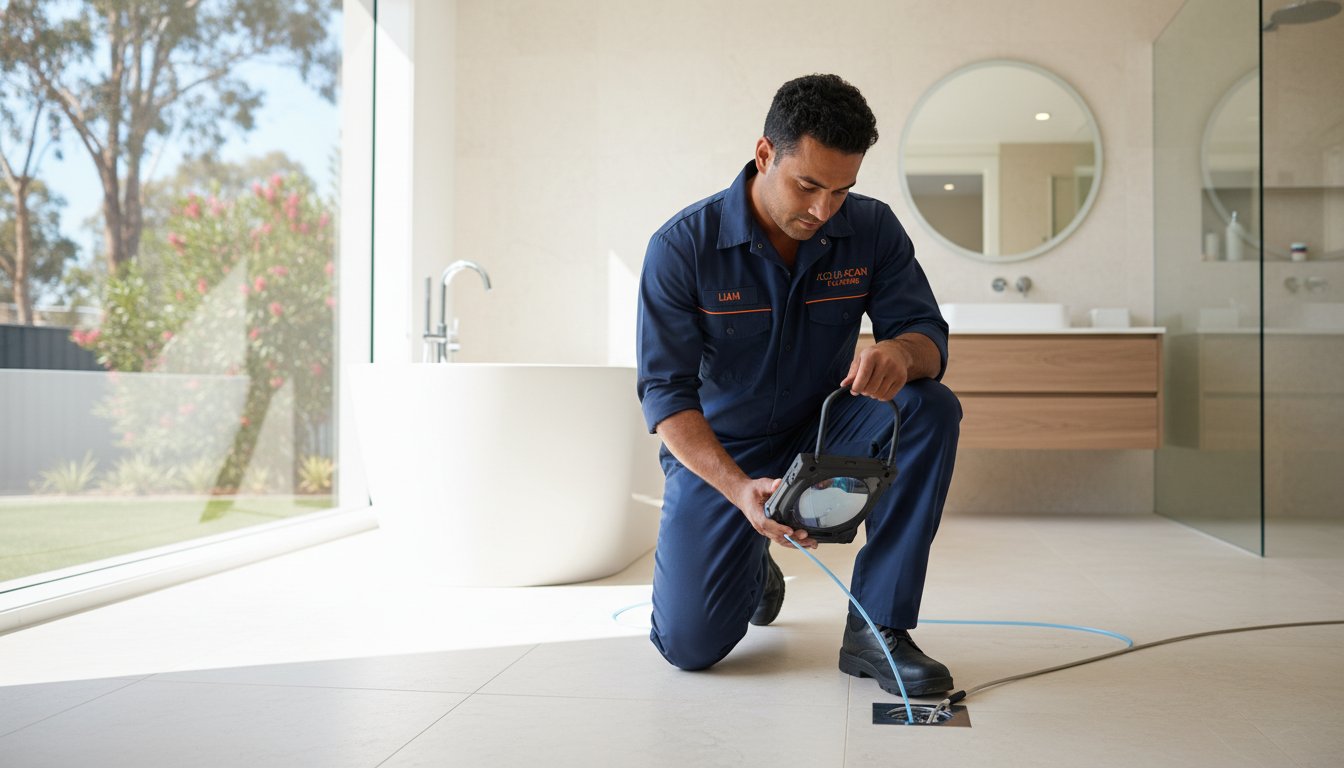
Guessing where a blockage is located leads to unnecessary digging and higher costs. Modern plumbing experts use fiber-optic cameras to see exactly what is happening inside your pipes. These cameras travel deep into your sewer lines, providing a real-time feed of the interior. We can identify tree roots, cracks, or complete pipe collapses without lifting a single spade. This footage is also vital for your insurance claim. It provides undeniable proof of the damage and the cause, helping you get the coverage you deserve.
Diagnostic Tech: Video Pipe Inspections
Fiber-optic technology has changed the way we handle sewage emergencies. Instead of digging up your entire lawn to find a break, we send a high-definition camera through the line. This allows us to pinpoint the exact location of the obstruction. Whether it's a "bellied" pipe holding water or a massive root ball, we see it clearly. This precision means we only fix what is broken. It saves you time, money, and the hassle of a destroyed garden. We provide you with the recording so you have a permanent record of your pipe's condition for future reference.
High-Impact Solutions: Hydro Jetting vs. Snaking
A standard plumber's snake is often a temporary fix for a major backup. It might punch a small hole through a clog, but it often leaves grease and smaller debris behind. Hydro jetting is the superior choice for a total solution. This method uses high-pressure water to scour the internal walls of the pipe. It removes years of sludge buildup and can even cut through stubborn tree roots. It restores the pipe to its original diameter, making it much harder for new clogs to form. If the inspection reveals a collapsed line, trenchless repair options allow us to fix the pipe from the inside, avoiding massive excavation.
Prevention is just as important as the initial fix. Regular drain cleaning is the best way to avoid these emergencies in the future. By maintaining your system, you stop small issues from becoming "black water" catastrophes. Don't wait for the next backup to happen. Book a professional inspection today to ensure your pipes are clear and your home is protected. We solve your plumbing crises FAST so you can get back to your life.
Long-Term Prevention: Keeping Sewage Out for Good
Once the immediate crisis is solved, the focus shifts to permanent protection. Knowing what to do when sewage backs up in house isn't just about the emergency response; it's about ensuring you never face that foul-smelling mess again. You want a permanent shield for your property. This requires a combination of smart technology, structural upgrades, and better household habits. We help you move from a reactive state to a proactive one, lowering your stress and protecting your home's value.
Installing a backwater prevention valve is one of the most effective moves you can make. This device acts as a one-way gate. It allows waste to flow out of your home but slams shut if the municipal main starts to reverse toward your property. If your home still relies on old clay or cast iron pipes, consider upgrading to modern PVC. In many older Australian suburbs, clay pipes are a ticking time bomb. They are notorious for attracting thirsty tree roots that eventually crush the line. Modern PVC is smooth, durable, and far less likely to fail under pressure. We also recommend being mindful of your landscaping; keep large, aggressive trees well away from your sewer lines to prevent future intrusions.
Smart Habits for a Backup-Free Home
The "No Wipes" rule is non-negotiable. Even products labeled as flushable often fail to break down in our sewer systems. They snag on pipe joins and create massive blockages that lead to overflows. In the kitchen, never pour cooking grease or oils down the sink. These fats solidify as they cool, acting like glue for other debris. Finally, make it a habit to regularly test your sump pump and backflow valves. These systems are your last line of defence during heavy rain, so you need to know they work before the clouds break.
The Value of Maintenance Programs
Proactive inspections are significantly cheaper than emergency repairs. A "hassle-free" annual plumbing check-up allows us to catch tiny cracks or early root intrusions before they turn into a Category 3 nightmare. By scheduling regular drain cleaning, you ensure your pipes remain at their original capacity. Building a relationship with a reliable 24/7 plumber now means you aren't scrambling for a stranger during a midnight flood. We pride ourselves on clear communication and treating your property as if it were our own. It is about total peace of mind, right? Let's keep your home safe, dry, and functional for the long haul.
Secure Your Home and Restore Your Peace of Mind
A sewage backup is one of the most stressful events a homeowner can face. By now, you know exactly what to do when sewage backs up in house: evacuate the area, stop all water usage, and call in the experts. Remember that raw sewage is a Category 3 biohazard. It requires professional-grade equipment to neutralize safely. Relying on a quick "snake" fix isn't enough. You need the scouring power of hydro jetting and the precision of video camera inspections to ensure the problem is gone for good.
Don't let a plumbing crisis spiral into a permanent property disaster. With over 29 years of emergency experience, our licensed and insured master plumbers are ready to help. We offer a 1-minute callback guarantee because we know every second counts when your health and home are on the line. We will treat your property with the utmost respect, cleaning up like it's our own. Facing a sewage emergency? Call Fast Plumbing, LLC NOW for 24/7 service! We are here to get your life back to normal fast and hassle-free. You've got this, and we've got your back.
Frequently Asked Questions
Is it safe to stay in a house with a sewage backup?
No, it is generally not safe to stay in a home with an active sewage backup. Raw sewage is a biohazard that releases airborne pathogens and toxic gases like hydrogen sulfide. If the backup is widespread or affects your primary living areas, you should relocate until a professional team completes the cleanup and sanitisation. Protecting your family from "black water" exposure is the top priority.
Will homeowners insurance cover a sewage backup in my house?
Coverage depends entirely on your specific policy and whether you have a "sewer backup endorsement." Many standard Australian home insurance policies do not automatically cover backups unless the cause is a sudden pipe burst. Check your Product Disclosure Statement (PDS) for specific inclusions. We recommend contacting your insurer immediately to document the damage and start the claims process while we handle the repairs.
How long does it take for mold to grow after a sewage backup?
Mold can begin to colonise on porous surfaces within 24 to 48 hours of moisture exposure. Because sewage is rich in organic matter, it provides the perfect food source for rapid fungal growth. This is why you need to know what to do when sewage backs up in house immediately. Fast extraction and professional drying are the only ways to prevent a secondary mold infestation from taking root.
Can I use Drano or chemical cleaners to fix a main line backup?
Never use chemical cleaners to solve a main sewer line blockage. These products are designed for minor hair clogs in sink P-traps and are too weak to clear tree roots or heavy sludge. The harsh chemicals can sit in your pipes, causing heat damage or corrosion. If the line is totally blocked, the chemicals will just sit in the standing sewage, creating a dangerous splash hazard for the plumber.
What is the difference between a sewer backup and a clogged drain?
A clogged drain is a local issue affecting only one fixture, such as a slow kitchen sink. A sewer backup is a systemic failure where the main line is obstructed. If you see waste bubbling up in the shower when you flush the toilet, that is a main line backup. Distinguishing between them helps you decide what to do when sewage backs up in house and whether you need an emergency response.
How much does it typically cost to fix a main sewer line backup?
The cost to fix a main line backup varies significantly based on the severity of the blockage and the repair method required. Simple clearing with hydro jetting is typically less expensive than structural repairs. If your pipes have collapsed or suffered heavy root intrusion, you may need trenchless relining. We provide a clear assessment after a video camera inspection so you know exactly what the solution involves without any hidden surprises.
What should I do if sewage comes out of my shower when I flush?
Stop flushing immediately and turn off your main water supply. This is a critical sign that your main sewer line is completely blocked. Every time you flush, you are adding more waste to a system that has nowhere to go but up through your lowest drains. Call an emergency plumber ASAP to clear the line before the sewage overflows onto your bathroom floor and causes permanent structural damage.
Can tree roots really cause my sewer to back up?
Yes, tree roots are the leading cause of sewer failures in Australia. Thirsty roots can detect the moisture inside your pipes and enter through microscopic cracks or old clay joins. Once inside, they grow into massive "root balls" that snag debris and eventually stop all flow. We use high-pressure hydro jetting to cut through these roots and restore your pipes to full capacity FAST and hassle-free.
