Plumbing Emergency: 2026 Homeowner’s Crisis Guide
Do you actually know where your main water shut-off valve is, or are you about to lose your flooring to a $5,000 flood? It's the sound every homeowner dreads. Whether it's a gushing pipe or a backed-up sewer, the panic is real. You're likely worried about the massive repair bill, the mess, and whether a professional will even show up on a Sunday night. Knowing exactly what to do in a plumbing emergency is the difference between a quick fix and a total home renovation.
We understand the stress of watching water rise while waiting for help. With 2026 supply chain tariffs of 50% on copper and steel pushing the cost of replacement parts higher, acting FAST to minimize damage is more important than ever. This guide provides a clear roadmap to stop the flow, manage gas risks, and protect your investment. We'll walk through a three-step containment strategy and explain how to secure a reliable 24/7 expert who treats your home with respect and arrives ASAP.
Key Takeaways
- Master the "Righty-Tighty" rule to shut off local isolation valves clockwise and stop water damage before it spreads to your flooring.
- Identify critical safety red flags, such as gas odors or electrical hazards, that require you to exit the property immediately.
- Learn exactly what to do in a plumbing emergency to distinguish between a minor leak and a foundation-threatening slab leak.
- Prepare your home for a FAST repair by documenting damage for insurance and clearing a direct path to your main water shut-off.
- Discover how a 1-minute callback guarantee and professional cleanup ensure your crisis is resolved without leaving a lingering mess behind.
Immediate Steps to Stop Water Damage FAST
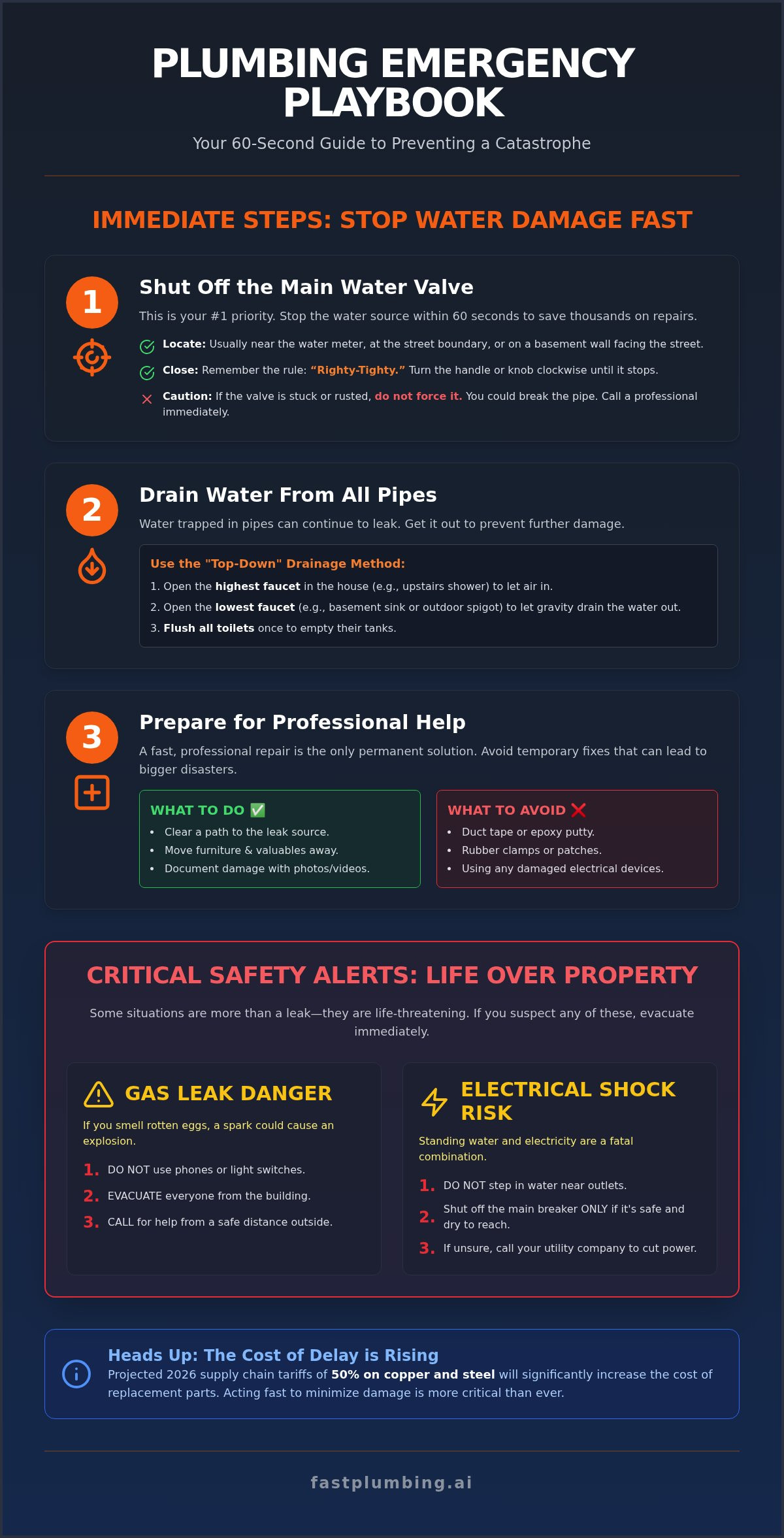
Water is spreading across your floor, and every second counts. You need to act now. Knowing exactly what to do in a plumbing emergency starts with killing the water supply at the source. Don't waste time looking for towels yet. Your priority is the main shut-off valve. If you stop the flow within the first sixty seconds, you can save thousands in flooring and drywall repairs. This is about containment and control.
Locate and Close the Main Water Shut-Off Valve
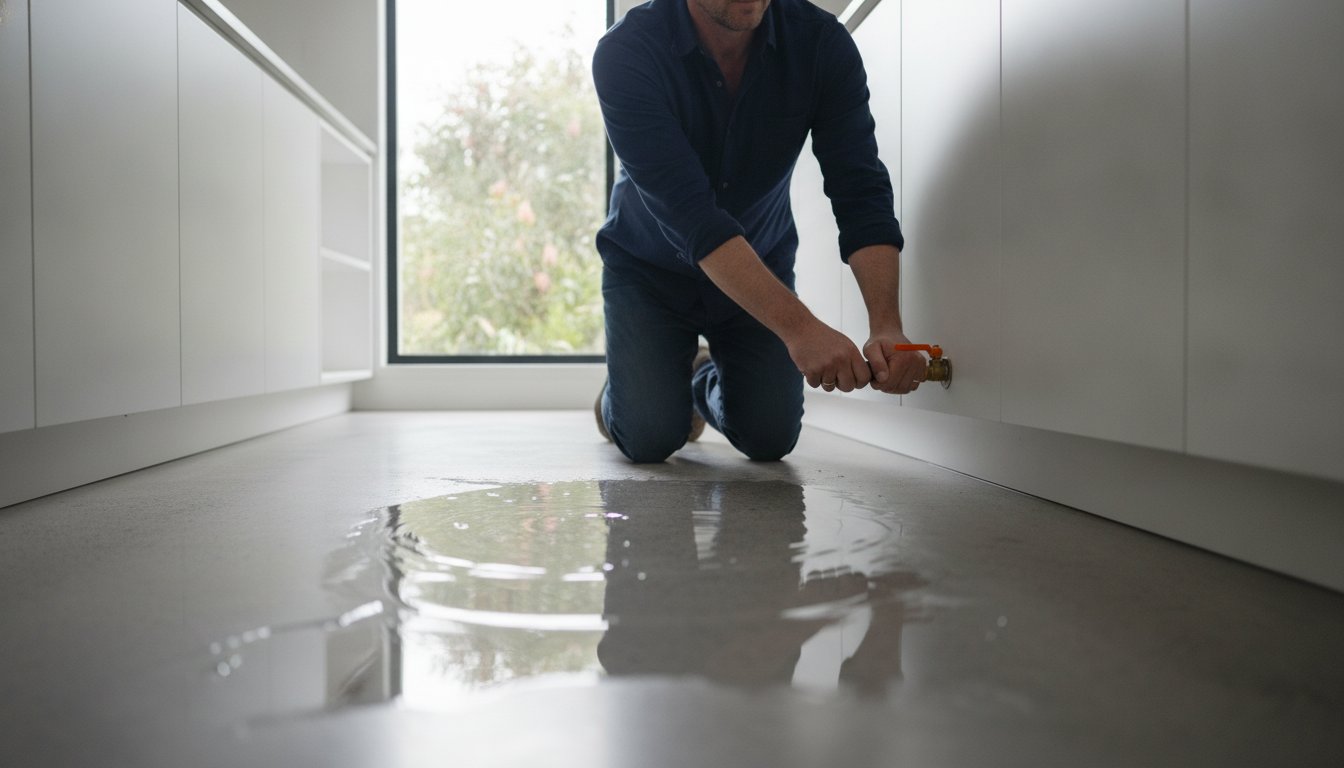
Stop the flood by finding your main water shut-off valve immediately. In most residential properties, this is located near the water meter or at the street boundary. If you have a basement, it is often on the wall facing the street. Once you find it, remember the "Righty-Tighty" rule. Turn the handle clockwise until it stops completely. A basic understanding your plumbing system helps you distinguish this heavy-duty valve from the smaller local isolation valves found under sinks or behind toilets. If the valve is rusted or stuck, don't force it with a heavy wrench. You could snap the pipe and create a secondary geyser. Instead, call for professional help ASAP. Check a nearby kitchen or bathroom tap to confirm the flow has actually stopped.
Drain the Remaining Water from Your Pipes
Even after the main valve is closed, several gallons of water remain trapped in your pipes. This residual pressure can continue to leak into your ceiling or walls for several minutes. Use the "top-down" drainage method to clear the lines. Start by opening the highest faucet in the house to let air into the system. Then, open the lowest faucet, such as a laundry tub or an outdoor hose bib. This allows gravity to pull the remaining water out of the pipes and away from the leak site. Don't forget to flush every toilet once to empty the tanks. This simple step prevents additional moisture damage while you wait for a technician to arrive. It's a proactive move that protects your home's structure.
Avoid the temptation of DIY "quick fixes" during the peak of the crisis. Duct tape, epoxy putty, or rubber clamps rarely hold up against the standard pressure of a residential water system. These temporary patches often fail within minutes, leading to a false sense of security and more expensive structural damage later. Our team provides a 1-minute callback guarantee because we know that professional intervention is the only way to truly solve the problem. We'll get to your door FAST and handle the repair correctly the first time. We even promise to clean up like it's our own home, so you aren't left with a secondary mess to deal with once the leak is gone. We value your time and your property, right?
Identifying High-Risk Situations: When It’s More Than Just a Leak
Sometimes, a plumbing failure moves beyond property damage and becomes a genuine life-safety threat. You need to recognize these red flags immediately. While stopping a flood is urgent, protecting your family from gas or electricity is the absolute priority. If the situation feels dangerous, it probably is. Trust your instincts and get to safety before worrying about the pipes.
Handling Emergency Gas Leaks and Sewer Backups
Do you smell rotten eggs? That's the scent of mercaptan, which gas companies add to natural gas so you can detect a leak. If you catch that whiff, don't grab a wrench. Don't flip a light switch or use your phone inside the house. A single spark can trigger an explosion. Get everyone out of the building first. Once you're at a safe distance, call for help. Professional gas line repair is non-negotiable. Sewer backups are just as risky. This "black water" is filled with bacteria and pathogens. Avoid contact with the water and stay away from the area until a professional arrives.
Managing Electrical Hazards in Flooded Areas
Do not step into standing water if it has reached the height of your electrical outlets. This turns your floor into a conductor. You must understand electrical safety during a water leak to avoid a fatal shock. If it's safe to reach your main breaker panel, shut off the power to the flooded areas. If the panel is in a damp basement or near the leak, stay away. Call the utility company to cut power from the street before the plumber enters the area. Safety is the first step in solving the crisis.
Knowing what to do in a plumbing emergency means knowing when to step back and let the experts take over. We offer a 1-minute callback guarantee because we know these situations are terrifying. Our team is trained to handle high-risk scenarios with a military-like focus on safety and speed. We'll get there FAST to secure the site and solve the problem. We even promise to clean up like it's our own home, so you aren't left with a hazardous mess once the repair is finished. You deserve a partner who prioritizes your safety, right?
Diagnostic Guide: Is It an Urgent Emergency or a Routine Repair?
Not every drip requires a midnight call, but waiting too long on a hidden issue can be a costly mistake. You need to know how to separate a minor annoyance from a structural threat. A single leaking faucet might wait until morning, but a sudden spike in your water bill usually points to something much worse. Understanding what to do in a plumbing emergency involves identifying the source before it erodes your home's value or foundation.
Hidden Threats: Slab Leaks and Burst Pipes
Some of the most dangerous plumbing failures happen where you can't see them. If you notice warm spots on your flooring or hear the faint sound of rushing water when every tap is off, you likely have a slab leak. These occur under your home's concrete foundation and can lead to shifting soil or cracked walls. Burst pipes behind drywall are equally destructive. While over 60% of new residential installations in 2026 now use PEX tubing, detection still requires expert eyes. We use professional infrared technology to pinpoint these hidden threats FAST. Waiting even a few days can lead to mold growth and expensive structural repairs, right?
Main sewer line clogs are another high-stakes crisis. If multiple drains in your home are backing up simultaneously, you are facing a total system failure. This isn't a job for a store-bought liquid cleaner. Professional sewer line repair is the only way to prevent raw sewage from flooding your living spaces. We prioritize these calls because the health risks and property damage are immediate and severe.
Water Heater Failures: Leaks vs. Explosive Risks
Is your water heater acting up? A small puddle at the base of the tank often signals a failing inner liner. This is a ticking clock. Once the tank starts leaking, a total rupture is often days away, which can dump 150 to 200 liters of water into your home instantly. Pay close attention to the Temperature and Pressure (T&P) relief valve. If it's constantly dripping or spraying, the pressure inside the tank is reaching dangerous levels. Experts in water heater repair can diagnose whether this is caused by simple sediment buildup or a more serious mechanical failure.
We treat every diagnostic call with the same military-like discipline. Our team provides a 1-minute callback guarantee because we know that even a "routine" leak feels like a crisis when it's your home. We'll arrive ASAP, identify the root cause, and solve the problem with a level of respect for your property that borders on the personal. We even promise to clean up like it's our own home, leaving you with total peace of mind, right?
Preparing for the Plumber’s Arrival and Damage Documentation
Once you've stopped the active flow of water, your focus must shift to the recovery phase. You aren't just waiting for a repair; you're securing your financial future. Knowing exactly what to do in a plumbing emergency involves preparing your home for the technician and your insurance company simultaneously. Clear the clutter and get your phone ready. Every action you take now speeds up the restoration process and simplifies your eventual claim. It is about moving from crisis management to home recovery.
Creating a Photo Record for Insurance Claims
Documentation is your most powerful tool when dealing with an insurance adjuster. Start by taking wide-angle shots of the entire room to show the full scale of the flooding. Then, capture high-definition close-up photos and videos of the specific leak source. Record all damaged property, including soaked electronics, ruined floorboards, and water-logged furniture. Do not throw away the damaged pipe or failed valve. Place the part in a bucket for the adjuster to inspect. Physical evidence is often the key to getting your full payout, especially when supply chain issues have made replacement components more expensive. Detailed records prevent disputes over the cause and extent of the damage.
Safe Temporary Containment Strategies
While you wait for an expert to arrive, use basic triage methods to limit secondary damage. Place buckets under active drips and use plastic sheeting to direct any remaining moisture away from cabinetry or skirting boards. If you have standing puddles on your flooring, use mops and towels to soak up as much as possible. Move high-value items and area rugs out of the splash zone immediately. Ventilation is also critical. Open windows and run fans to circulate air, which helps prevent mold from taking hold in damp drywall. These small steps protect your home's structure while the professional is in transit.
Finally, clear a direct, wide path from your front door to the leak site and the main shut-off valve. We pride ourselves on being the fastest service in the industry, and a clear workspace allows us to start the repair the moment we step inside. Write down a quick timeline of the event. Note the exact time you discovered the leak and when the water was successfully shut off. This information helps our plumbers diagnose the failure and provides a clear record for your insurance provider. When you need a professional who respects your property and arrives with a military-like focus on speed, contact Fast Plumbing, LLC for emergency assistance. We'll arrive FAST and handle the "Clean-Up Like It's Their Own" promise so you can get back to normal, right?
Why Professional Emergency Response is Your Best Defense
When the immediate panic of a leak is managed, the real work of restoration begins. You need a resolution that sticks. Attempting a complex repair yourself often leads to secondary failures that can rot your subflooring or compromise your home's structural integrity over time. Knowing what to do in a plumbing emergency includes knowing exactly when to hand the wrench to a licensed expert. At Fast Plumbing, LLC, we bring over 29 years of master plumber experience to your doorstep. We ensure every fix complies with local Australian standards, providing you with long-term security instead of a temporary patch that might fail when you least expect it.
Before our technician arrives, you can use our emergency plumber checklist to verify that we have the credentials and insurance required to protect your home. We believe in transparent pricing and a military-like focus on punctuality. This accountability prevents the "crisis surcharge" trap often found in the industry. We understand that your home is your most valuable asset, and we treat it with the professional care it deserves, right?
Our 1-Minute Callback Guarantee and Rapid Response
Waiting hours for a return call is unacceptable when your hallway is underwater. We've eliminated that stress entirely. Our 1-minute callback guarantee means you're connected to a professional almost instantly. We maintain 24/7 emergency availability because pipes don't wait for business hours to burst. Whether it's a public holiday or the middle of the night, we arrive to your door - fast and hassle-free. Same-day service is our baseline, not a special request. We value your time as much as you do, which is why our logistical flow is designed for maximum speed and efficiency.
Clean-Up Like It’s Our Own: Restoring Your Home’s Safety
Most homeowners fear the mess a plumber leaves behind as much as the original leak. We've solved that problem with our "Clean-Up Like It’s Our Own" promise. Our technicians treat your property with the same care they would their own home, wearing protective gear and using drop cloths to prevent further damage. We remove the debris, dry the surfaces, and ensure the area is safe for your family before we consider the job finished. It's about professional accountability from the first click to the final handshake. If you're currently facing a crisis, Call Fast Plumbing, LLC now for immediate help—FAST! We'll solve the issue and restore your peace of mind, right?
Take Control of Your Home’s Safety Today
You now have the tools to handle a household crisis with confidence. By locating your main shut-off valve and documenting every detail for your insurance adjuster, you've already saved yourself thousands in potential losses. Understanding what to do in a plumbing emergency is about moving from panic to professional resolution. Whether it's a hidden slab leak or a burst pipe, your quick action has protected your foundation and your family's safety.
Don't let a temporary leak become a permanent headache. With 29+ years of master plumber experience and 24/7 emergency availability, our team is ready to step in and finish the job. We promise a "Clean-Up Like It's Our Own" guarantee, so your home returns to normal without any lingering mess. Every second matters when water is rising, right? We're here to provide the fast, hassle-free solution you need to get your life back on track. You've got this, and we're standing by to help you through it.
Need an Emergency Plumber? Get a 1-Minute Callback Now!
Frequently Asked Questions
What is considered a true plumbing emergency?
A true plumbing emergency is any situation that threatens your property with immediate water damage or poses a health and safety risk. This includes burst pipes, main sewer line backups, and gas leaks. If you are unsure what to do in a plumbing emergency, remember that if the water or gas cannot be contained by a local valve, it requires an ASAP response to prevent structural failure or hazardous exposure.
How do I find my main water shut-off valve?
Your main water shut-off valve is typically located near the water meter at the street boundary or where the main supply line enters your home. In houses with basements or crawlspaces, it is often found on the wall facing the street. Look for a gate valve or a ball valve handle. Knowing this location before a crisis hits is the best way to stop a flood before it destroys your flooring, right?
Can I wait until morning to call a plumber for a leak?
You should only wait until morning if you can successfully isolate the leak using a local shut-off valve without losing water to the rest of the house. If the main line is compromised or water is entering your walls, waiting even a few hours can lead to mold growth and foundation erosion. The cost of a 24/7 call is always lower than the cost of a full room restoration and professional cleanup.
What should I do if I smell gas in my home?
Evacuate everyone from the premises immediately if you detect the "rotten egg" odor of a gas leak. Do not use your phone, flip light switches, or start your car, as any spark could trigger an explosion. Once you are at a safe distance from the property, call for professional gas line repair and alert your utility company. Safety must always come before property, so don't linger to open windows.
Does homeowners insurance cover emergency plumbing repairs?
Homeowners insurance typically covers sudden and accidental water damage, such as a burst pipe, but it rarely covers the cost of the plumbing repair itself or issues caused by lack of maintenance. Always document the scene with photos and videos before the technician begins. This evidence helps your adjuster process the claim for damaged flooring and personal belongings more effectively, ensuring you get the support you deserve.
How much does an emergency plumber cost per hour in 2026?
Emergency plumbing rates vary based on your specific region, the complexity of the job, and the time of the call. Homeowners should expect to pay a premium for after-hours, weekend, or holiday service compared to standard business hours. Most reputable companies will provide a transparent estimate after an initial assessment. Our focus is on providing a FAST, reliable solution that minimizes your total repair and restoration costs.
Should I turn off my water heater if the water is shut off?
Yes, you should turn off your water heater if you have shut off the main water supply to the house. If the tank drains or the water level drops while the heating elements are still active, it can cause the unit to overheat or burn out. For gas models, turn the dial to the "Pilot" setting. For electric models, shut off the dedicated breaker in your electrical panel to protect the system from damage.
What can I do to prevent a sewage backup from getting worse?
Stop using all water fixtures immediately, including toilets, sinks, and washing machines, to prevent a sewage backup from resurfacing in your home. Any water you send down the drain will have nowhere to go and will likely overflow into your lowest tubs or floor drains. Keep children and pets away from the affected area, as this "black water" is a biohazard. Call for professional hydro jetting or sewer line repair ASAP to clear the blockage.
