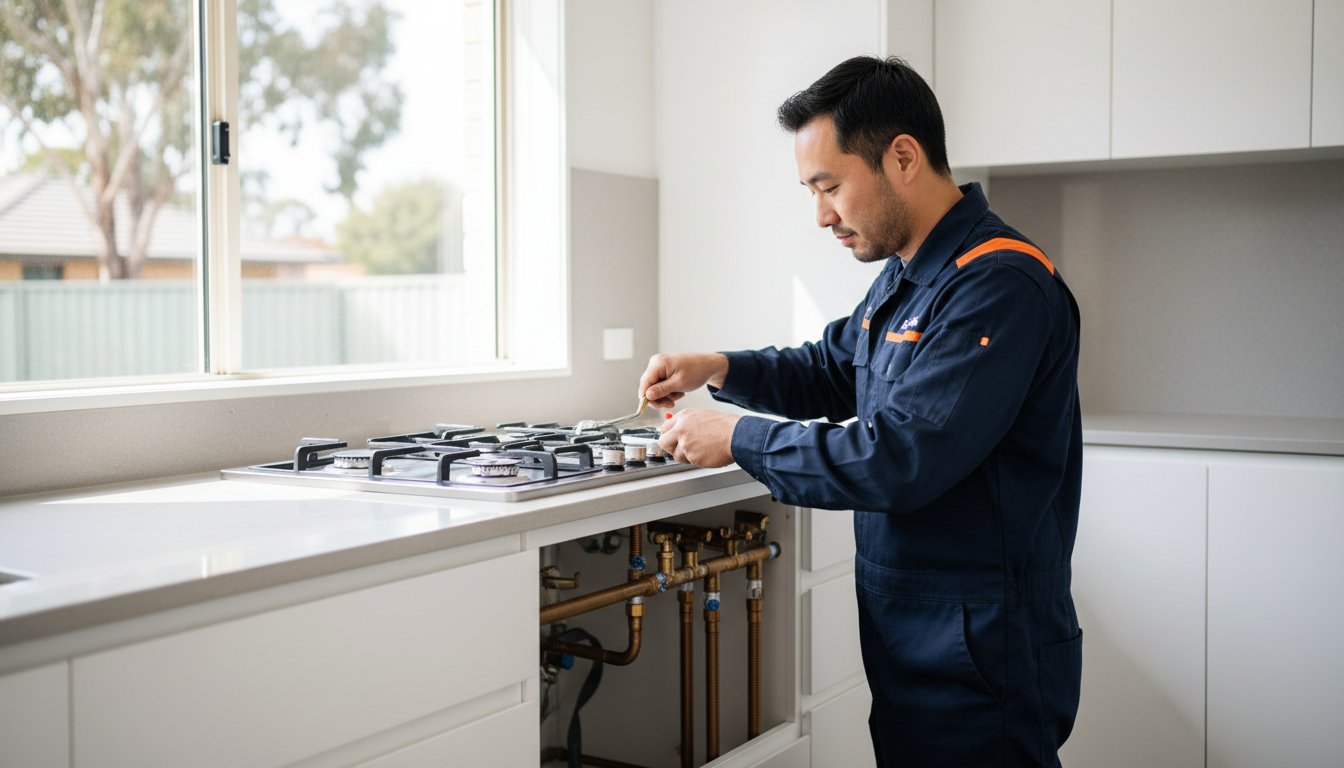
Safe Gas Appliance Hook Up: The 2026 Homeowner’s Guide to Professional Installation
Did you know that 25% of homeowners who attempt a DIY gas appliance hook up end up with dangerous complications like gas leaks? It's a staggering figure that highlights why "doing it yourself" isn't always the smart move. We know you're excited to start using your new stove or hot water system. You want it done FAST, but you're probably worried about carbon monoxide risks or accidentally voiding your manufacturer warranty. It's stressful to worry about whether your home meets the latest Australian safety standards. Right? You just want to enjoy your new purchase without the fear of a hidden leak or a rejected insurance claim.
You deserve a setup that's safe, legal, and ready to go without the headache. This 2026 guide covers everything you need for a hassle-free installation. We'll explain the essential safety steps, the strict legal requirements for Australian properties, and the professional process that guarantees your peace of mind. We're going to preview the exact steps required to get your new appliance running safely with a valid compliance certificate in hand. Let's make sure your home stays protected while your new appliance works perfectly from day one.
Key Takeaways
- Understand the legal requirements in Australia that mandate a licensed professional for every gas appliance hook up to keep your home safe and insured.
- Identify whether your home needs a bayonet point or a fixed connection and learn how to assess if your current gas lines can handle the new load.
- Follow our professional 5-step installation process that prioritizes a pre-installation safety audit for a completely hassle-free experience.
- Ensure your manufacturer warranty stays valid by obtaining a Gas Certificate of Compliance upon completion of the job.
- Experience the FAST difference with our 1-minute callback guarantee and our promise to clean up your property like it's our own.
Understanding the Risks and Regulations of Gas Appliance Hook Ups
A gas appliance hook up is a highly regulated technical procedure. It involves connecting your unit to the main fuel source and ensuring the entire system is airtight and properly vented. In Australia, this isn't just a recommendation; it's the law. Only licensed gas fitters can perform this work because of the extreme risks involved. If a connection isn't perfect, you aren't just looking at a minor repair. You're looking at potential fires, explosions, or carbon monoxide poisoning. These aren't just "worst-case scenarios." They're real dangers that happen when safety protocols are ignored. We want you to feel safe in your kitchen or laundry. That starts with a professional connection that guarantees your family's safety.
But what exactly are we talking about here? What is a gas appliance? It includes everything from your kitchen cooktop and oven to your outdoor BBQ and hot water system. Each of these requires a precise, secure connection to function safely. Beyond the immediate physical danger, there's a major financial risk. Most Australian home insurance providers will flat-out refuse a claim if they discover an unlicensed person performed the gas work. One mistake could cost you your entire home and leave you with zero financial protection. It's simply not worth the gamble.
The Legal Framework: AS/NZS 5601.1 Standards
Every safe installation in Australia follows the AS/NZS 5601.1 standards. These rules are the "bible" for gas safety. They cover both Natural Gas and LPG systems to ensure every pipe, valve, and vent is positioned correctly. A licensed gas fitter doesn't just "hook it up." They verify that your ventilation is adequate and that the gas pressure is stable. Following these standards is the only way to ensure your appliance operates efficiently and safely.
Why a "Handyman" Connection is a Safety Risk
It’s a common misconception that a gas appliance hook up is as simple as "tightening a hose." It isn't. Handymen often lack the specialized tools to perform a manometer pressure test. This test is the only way to confirm there are zero leaks in the system. Gas pressure and flow rates must be calibrated specifically for your appliance's megajoule (MJ) rating. If the pressure is too high, you risk a fire. If it's too low, the appliance won't work properly. Slow, undetected leaks are the biggest threat. They can build up behind cabinets for weeks before a single spark triggers a disaster. You want it done right the first time, right?
Technical Requirements: Preparing Your Home for a New Gas Connection
Getting a new appliance is exciting, but your home’s infrastructure must be ready to handle the load. A professional gas appliance hook up involves more than just plugging in a hose. We first assess your existing gas line capacity to ensure it can support the megajoule (MJ) rating of your new unit. If you're upgrading from an old four-burner stove to a high-powered commercial-style range or adding a large tankless water heater, your current pipes might be too small. Adding a high-demand appliance to an undersized system causes "pressure drop," which leads to weak flames and poor performance. You want your new investment to work at 100% capacity from the moment it's installed, right?
Every appliance needs a specific type of connection. We generally see two styles in Australian homes: bayonet points and fixed connections. Bayonet points are common for portable gas heaters or BBQs, allowing you to plug and unplug the unit easily. Fixed connections are mandatory for permanent fixtures like ovens, cooktops, and gas dryers. Regardless of the connection type, a dedicated shut-off valve is a non-negotiable safety requirement. This valve allows you to isolate the gas supply to that specific appliance during maintenance or in an emergency. If you're unsure about your current setup, it’s best to check your gas lines before the delivery truck arrives.
Pipe Sizing and Gas Pressure Needs
Pipe sizing is a critical part of a safe gas appliance hook up. If the internal diameter of your copper or PEX piping is too narrow for the distance it travels, the gas pressure will fall below safe operating levels. We use specialized regulators to maintain a steady flow, but these can't compensate for a pipe that is physically too small. This is a common issue when homeowners add outdoor heaters or gas-powered pool heaters to an existing system. Ensuring the correct pressure prevents "sooting" and carbon monoxide issues caused by incomplete combustion.
Ventilation and Clearance Standards
Safety also depends on where the appliance sits. Australian standards require strict clearances from combustible materials like wooden cupboards, curtains, or plastic splashbacks. For a gas stovetop, you typically need a minimum of 600mm vertical clearance to a rangehood, though some manufacturers require 750mm. Ventilation is equally vital. Indoor appliances like gas dryers must be properly flued or used in well-ventilated spaces to prevent the buildup of harmful gases. Following these professional gas appliance installation guidelines ensures your home remains a safe environment for your family.
The 5-Step Professional Gas Appliance Installation Process
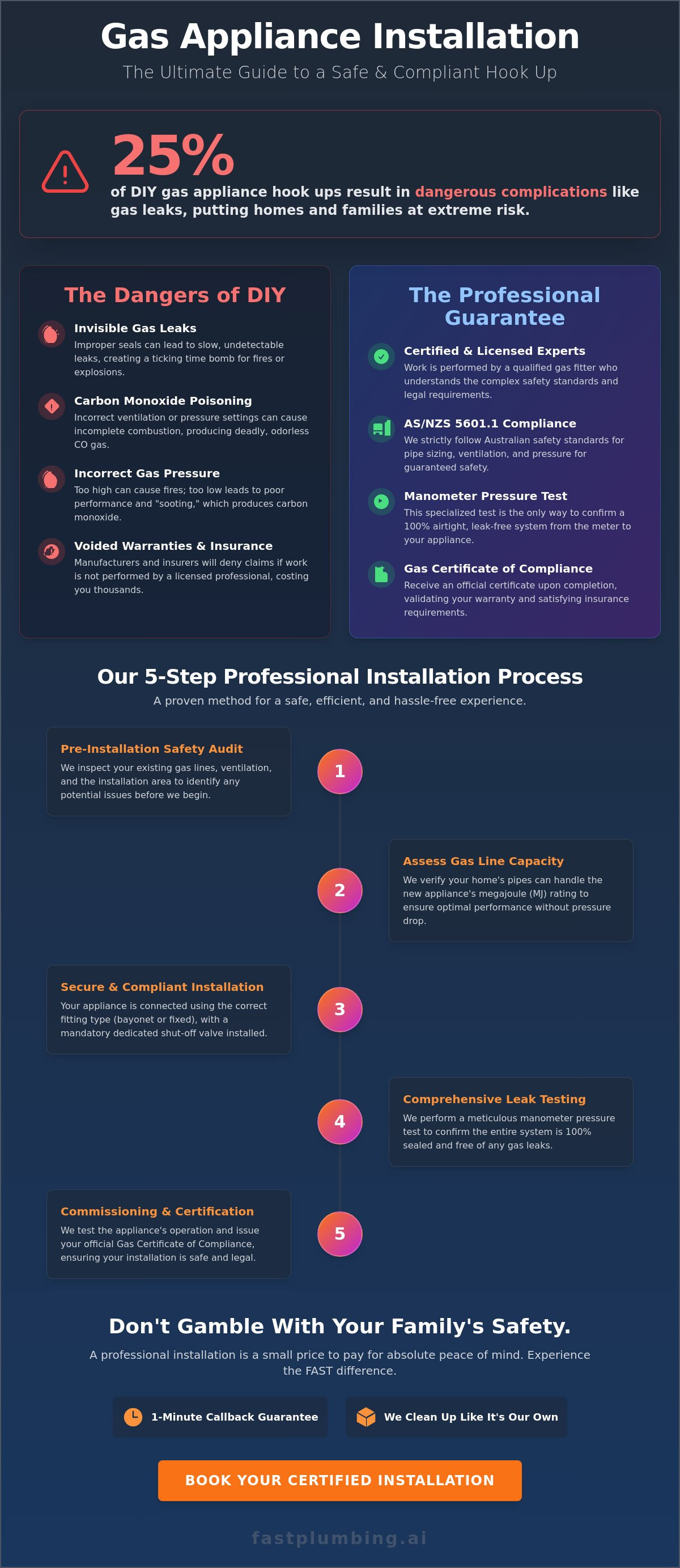
A professional gas appliance hook up follows a specific, five-step protocol designed to eliminate every possible failure point. It isn't a "plug and play" situation where you just hope for the best. You want to start cooking or washing right away. We get it. But moving too fast without a plan is how accidents happen. By following a structured process, we ensure your new unit is safe, compliant, and ready for years of heavy use. This systematic approach is why professional installations reduce project delays and errors by approximately 40% compared to DIY attempts.
- Step 1: Pre-Installation Safety Audit. We don't just look at the new appliance. We inspect the existing gas line for corrosion, previous shoddy repairs, or hidden leaks. This ensures the foundation of your system is solid.
- Step 2: Secure Mounting and Positioning. Your appliance must be perfectly level and secured. This prevents stress on the gas joints and ensures burners or heating elements function as the manufacturer intended.
- Step 3: Precision Connection. Using only Australian-approved flexible hoses or rigid copper lines, we perform the actual gas appliance hook up. We use high-grade sealants and fittings that are rated specifically for the gas type in your home.
- Step 4: Multi-Point Leak Testing. This is the most critical stage. We don't just look for big bubbles; we use precision instruments to find the tiny leaks that a human can't see or smell.
- Step 5: Commissioning and Briefing. We fire up the unit, check the pressure, and walk you through the safety features. You’ll know exactly how to operate your new appliance with total confidence.
The Critical Leak Testing Phase
We never rely on a simple "soapy water" test. While it's a good first step, it can miss micro-leaks that lead to long-term gas buildup. Instead, we use a manometer to measure the "gas tightness" of your entire system. Gas tightness is a mandatory safety metric that proves your pipes can hold pressure without even a fraction of a drop over a set period. Following strict gas appliance safety guidelines is the only way to protect your property and ensure your insurance remains valid.
Commissioning: Ensuring Peak Performance
Commissioning is about more than just seeing a blue flame. We check the burner aeration to ensure the gas is burning cleanly and efficiently. This prevents the production of excess carbon monoxide and keeps your energy bills lower. We also test the "flame failure" safety device. This modern feature automatically cuts the gas supply if the flame goes out. It's a lifesaver if a boil-over or a gust of wind extinguishes your stove. Once we’re finished, we provide a quick-start safety guide so you can get back to your routine. Hassle-free and safe. Right?
DIY vs. Professional Fitting: Costs, Risks, and Compliance
It’s tempting to think you’re saving money by tackling a gas appliance hook up yourself. You might look at a professional quote and think you can just buy a hose at the local hardware store. But those upfront savings are an illusion. DIY gas work is one of the most expensive mistakes a homeowner can make. You end up paying for the tools, the materials, and then the professional labor to correct the inevitable leaks or pressure issues. Why pay twice? Save your time and money by getting it done right the first time. We handle the hard work so you don't have to. Our team arrives on time and works efficiently to get your home back to normal.
The hidden costs of DIY add up fast. You’ll need specialized pipe cutters, thread sealants, and testing equipment like a manometer. Buying these for a one-off job is a waste of cash. Plus, using the wrong fittings can lead to permanent damage to your new appliance's manifold. If you strip a thread or crack a housing, that brand-new stove is heading straight for the scrap heap. It’s a massive headache you just don't need. Right? Let a pro manage the technical details while you focus on your day. We bring all the right gear and the expertise to use it safely.
What is a Gas Certificate of Compliance?
In Australia, a Gas Certificate of Compliance is your most important document. Think of it as your "get out of jail free" card for home insurance. If a fire or leak occurs, your insurer will immediately ask for this record. Without it, they can legally reject your claim. This leaves you with a massive bill for property damage. You must keep this certificate for the entire life of the appliance. It proves the installation meets the AS/NZS 5601.1 standards we discussed earlier. For more details on why this paperwork is non-negotiable, check out our Gas Line Repair Pillar for complete safety documentation info.
Protecting Your Appliance Warranty
Manufacturers are incredibly strict about their warranties. If your new unit has a faulty ignition or a burner issue, the technician will check the installation first. Most brands require proof of professional installation for any claim to be valid. Improper gas pressure can easily fry sensitive electronic ignitions or cause "sooting" that ruins the internal components. By choosing a professional service, you protect your investment. You get a "done right the first time" guarantee and the peace of mind that your warranty is fully intact. Ready to get started? Book your professional installation now and skip the DIY stress.
FAST Gas Line Solutions: Why Our Hook Up Service is Different
Wait times for a professional gas appliance hook up shouldn't keep you from enjoying your new home upgrade. We understand the frustration of a delivery truck arriving only for you to realize the connection isn't ready. That’s where Fast Plumbing, LLC steps in. We offer a 1-minute callback guarantee to get your project moving immediately. Whether it’s a standard cooktop install or an urgent gas line issue, we’re available 24/7 to solve your problems. Our goal is to lower your stress and provide a solution that is safe, reliable, and incredibly quick. You want to use your new appliance today, not next week. Right?
At Fast Plumbing, LLC, our approach is built on extreme confidence and responsiveness. We don't just show up; we arrive with a plan and the right tools to finish the job on the first visit. We treat every household as if it were our own, ensuring that the technical complexity of gas work never becomes a burden for you. This level of accountability is what sets Fast Plumbing, LLC apart from the average provider. We provide a definitive answer to your plumbing needs with a focus on speed and safety that you can trust.
Rapid Response for New Appliance Deliveries
Coordination is the key to a stress-free experience. At Fast Plumbing, LLC, we work with your delivery schedule to ensure a plumber is at your door exactly when you need them. Our "Same Day Service" promise means you won't be staring at a boxed oven or a cold water heater for days on end. Fast Plumbing, LLC prides itself on being fast and hassle-free from the first click to the final connection. If you're curious about how we structure our services, check out our guide on Plumbing Repair Costs to understand our transparent fee structure. We believe in clear communication without hidden extras or surprise "call-out" fees.
A Military Focus on Punctuality and Cleanliness
At Fast Plumbing, LLC, we maintain a disciplined focus on punctuality because we know your time is valuable. If we say we’ll be there, we’ll be there. More importantly, we treat your property with the highest level of respect. Fast Plumbing, LLC's "Clean-Up Like It’s Our Own" policy is a core brand promise. We never leave metal shavings, old fittings, or oily debris behind on your floors or cabinetry. We leave your kitchen, laundry, or outdoor area spotless and ready for use. It’s about more than just a connection; it’s about a professional level of care that respects your home. Fast Plumbing, LLC's "to your door - fast and hassle-free" mantra ensures you get the service you deserve without the typical trade mess. Call Fast Plumbing, LLC now to get your new appliance running safely today.
Ready for a Safe and Hassle-Free Installation?
You now understand that a proper gas appliance hook up is about more than just a working stove. It's about meeting strict Australian safety standards and protecting your home insurance. By choosing a professional path, you avoid the 25% failure rate associated with DIY attempts and ensure your manufacturer warranty remains fully intact. You've learned how critical pressure testing and correct pipe sizing are for the long-term performance of your new investment. Why risk a slow leak or a rejected insurance claim when a structured, safe solution is just a phone call away? Right?
With 29+ years of Master Plumber expertise, we bring a military-like focus to every job. We promise to Clean-Up Like It’s Our Own, leaving your kitchen or laundry spotless. Don't let a new appliance sit in its box for another day. Get Your Gas Appliance Hooked Up FAST - Call Now! Experience the peace of mind that comes with our 1-minute callback guarantee. We are ready to get your home running safely and efficiently. Let's get that new appliance fired up the right way today.
Frequently Asked Questions
Can I legally install my own gas cooktop in Australia?
No, you cannot legally install a gas cooktop yourself in any Australian state. All gas work must be performed by a licensed gas fitter to comply with national safety regulations. Attempting a DIY installation is not only dangerous but can lead to heavy fines and the immediate cancellation of your home insurance coverage.
How long does a standard gas appliance hook up take?
A standard gas appliance hook up typically takes between one and two hours to complete. This timeframe covers the physical connection, mandatory pressure testing, and a final safety check. If your home requires new gas lines or a valve upgrade, the process will take a bit longer to ensure everything is perfect. We work fast to get your kitchen or laundry back in action. Right?
Do I need a new gas line for a high-BTU commercial-style stove?
You will likely need a larger gas line for a high-megajoule (MJ) commercial-style stove. These powerful units require a much higher volume of gas than a standard four-burner cooktop. If your existing pipes are too narrow, the appliance won't get enough fuel, leading to weak flames and poor cooking performance. We assess your line capacity before every installation to prevent these issues.
What is the average cost of a professional gas appliance installation?
The cost of a professional installation depends on several factors, including the type of appliance and the complexity of the existing pipework. Costs are influenced by the length of the gas run, the need for new shut-off valves, and the accessibility of the connection point. To get an accurate price for your specific home, it's best to request a quote that covers your unique requirements.
What should I do if I smell gas immediately after a new hook up?
Turn off the gas supply at the main meter immediately and evacuate your home. Do not operate any electrical switches, use a phone inside, or create any sparks, as these can ignite the gas. Once you are safely outside, call a professional to conduct an emergency leak detection and repair. Your safety is the only thing that matters in this situation.
Does a gas dryer need a special type of ventilation?
Yes, a gas dryer must be flued to the outside of your home to safely exhaust combustion by-products. Unlike some electric models, gas dryers cannot vent into the room because they produce small amounts of carbon monoxide and significant moisture. Proper external venting is a mandatory safety requirement that keeps your indoor air clean and dry.
Is a compliance certificate mandatory for all gas appliance replacements?
A Gas Certificate of Compliance is mandatory for every gas appliance replacement or new connection in Australia. This document is your proof that the work was done by a licensed professional and meets the AS/NZS 5601.1 safety standards. You must keep this certificate to protect your manufacturer's warranty and to ensure any future insurance claims are valid.
Can a plumber also install the electrical components of a gas oven?
Most plumbers handle the gas appliance hook up but cannot legally perform electrical wiring unless they hold a separate electrical license. While we ensure the gas connection is airtight and safe, you will usually need a licensed electrician to connect the power for electronic igniters, fans, and oven clocks. We focus on what we do best: providing safe and reliable gas solutions.
