Tankless Water Heater Pros and Cons: Is the Upgrade Worth It in 2026?
What if your morning shower didn't have a 10-minute time limit before the ice-cold reality hits? You're likely tired of running out of hot water during back-to-back loads of laundry, right? It's frustrating to watch a bulky tank take up half your closet while your energy bills keep climbing. You want a system that's FAST, reliable, and actually saves you money. Understanding the tankless water heater pros and cons is the first step toward a hassle-free home that never runs cold.
We know you're looking for a way to stop wasting money on a tank that heats water nobody is using. This article delivers the honest truth about tankless systems so you can decide if the upgrade fits your budget and lifestyle. We promise to cover the 30% federal tax credit, the reality of 24% higher energy efficiency, and why the new 2026 DOE regulations only affect commercial units for now. This guide previews everything from hidden installation costs to the maintenance required to keep your system running for 20 years or more.
Key Takeaways
- Learn why switching from a bulky storage tank to an on-demand system provides endless hot water for your entire family.
- Get a transparent breakdown of tankless water heater pros and cons, including the truth about energy savings versus upfront installation costs.
- Use our practical decision framework to audit your home's gas and water capacity before you invest in an upgrade.
- Discover why professional sizing is the most critical step to ensure your new system handles back-to-back showers without a hitch.
- Find out how to minimize downtime during your replacement so you can get back to your routine FAST and hassle-free.
The Tankless Shift: Why Modern Homeowners Are Ditching the Tank
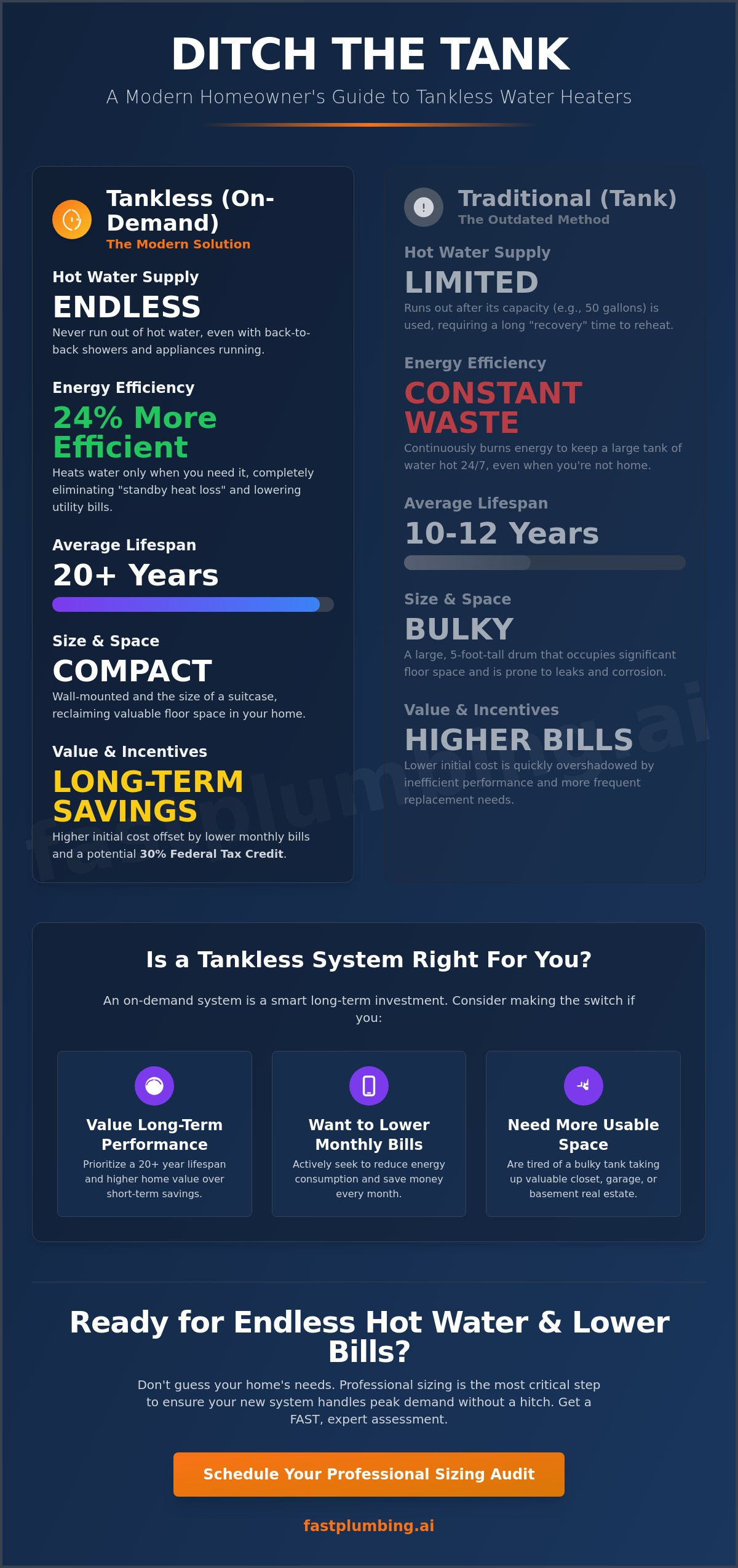
Modern homeowners are tired of waiting. In 2026, the trend is all about FAST home modernization. People want systems that work at the speed of their lives. That is why the shift toward "on-demand" heating is accelerating. Traditional tanks are basically large kettles that keep 50 gallons of water hot all day, even when you are at work or sleeping. A tankless system only fires up when you turn on the tap. It is a smarter, leaner way to manage your home's energy. If you are analyzing tankless water heater pros and cons, the first thing to realize is that you are moving from storage-based heating to flow-based heating. This shift isn't just about convenience. It is about longevity. A standard tank usually quits after 10 years because of constant water contact. A well-maintained tankless unit can easily last 20 years or more, right? This makes it a long-term investment rather than a temporary fix.
How On-Demand Heating Works Under the Hood
Think of it like a high-speed computer for your water. When you open a faucet, a flow sensor detects the movement. This triggers a high-efficiency heat exchanger to kick into gear immediately. Tankless water heating technology allows the unit to flash-heat water as it passes through the internal coils. Gas-fired units use a powerful burner to create intense heat, making them ideal for larger homes. Electric models use high-draw heating elements to achieve the same goal. Both types eliminate the need for a massive reservoir. There is a common myth that these systems provide "instant" hot water at the tap. In reality, the unit heats the water instantly, but it still has to travel through your pipes to reach the shower. You still have to clear the cold water out of the line, but once the hot water arrives, it never stops.
Tank vs. Tankless: The Core Infrastructure Difference
The difference comes down to how your home handles energy. Traditional tanks suffer from "standby heat loss." They lose heat through the tank walls every minute of the day. You are paying to heat water at 3:00 AM while you're asleep. Tankless units eliminate this waste entirely. Because old tanks hold water constantly, they are prone to sediment buildup and rust. This is why water heater repair is a more frequent headache for those sticking with storage tanks. You are essentially managing a ticking clock of corrosion. Switching to a flow-based system removes that 50-gallon liability from your garage or closet. It is a cleaner, more reliable infrastructure choice for the modern era. Making the switch means you stop managing a crisis and start enjoying a solution. You reclaim several square feet of floor space while ensuring your family has what they need when they need it. It is about taking total control of your home's utility costs.
The Pros: Why You’ll Love Going Tankless
Imagine never hearing your kids yell because the shower went cold mid-lather. That is the immediate relief of a tankless upgrade. It solves the single biggest headache in modern plumbing by providing a system that works as FAST as your family does. When you weigh the tankless water heater pros and cons, the "pro" column starts with a simple promise: you'll never run out of hot water again. It is a total shift in how your home functions, moving from a "limited supply" mindset to an "on-demand" reality.
Endless Hot Water for Growing Families
Standard tanks are limited by their physical size. Once those 50 gallons are gone, you're stuck waiting an hour for the system to recover. Tankless units don't have a ceiling. They provide a continuous, high-speed stream of hot water for as long as the faucet is open. The secret to this success is Gallons Per Minute (GPM). GPM is the specific measurement of how much hot water your unit can deliver to multiple fixtures at the exact same time. If you have a busy household with back-to-back showers and a running dishwasher, matching the GPM to your peak demand is the key to a hassle-free experience.
Reclaiming Your Closet: The Compact Design Advantage
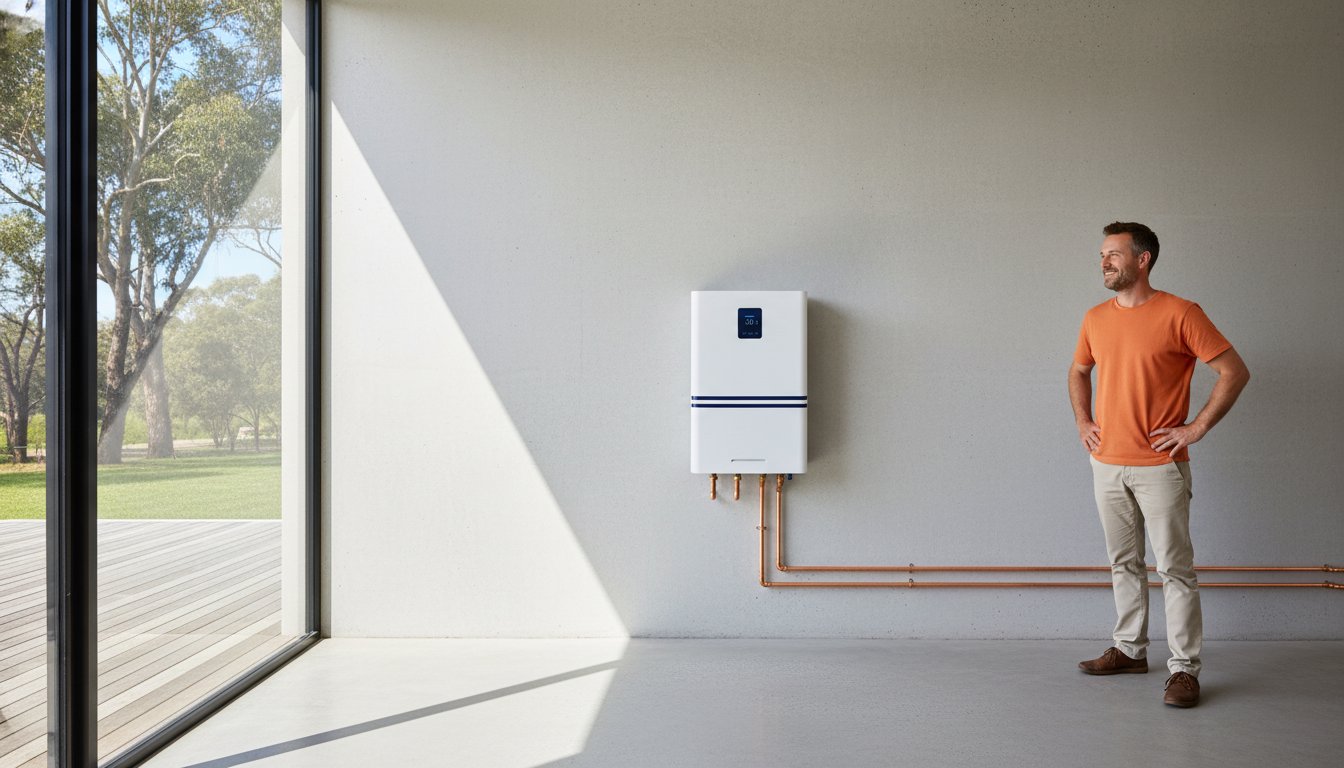
Look at your current water heater. It is likely a massive, 5-foot-tall metal drum taking up valuable floor space. A tankless unit is roughly the size of a carry-on suitcase. Because they are wall-mounted, you can reclaim several square feet of space in your garage, basement, or utility closet. This compact design adds real value to your home's usable square footage. It turns a crowded corner back into a clean, organized area. If you're curious about how a wall-mount unit would look in your space, you can explore our tankless options to see the different sizes available.
Efficiency is where the investment really pays off. Traditional tanks waste money heating water while you sleep or work. The energy efficiency of tankless heaters is significantly higher because they eliminate standby heat loss entirely. According to the U.S. Department of Energy, homes using 41 gallons or less of hot water daily can see a 24% to 34% increase in energy efficiency. This reduction in energy use also lowers your home's carbon footprint. You get a lower monthly bill and a more sustainable household. This balance of personal savings and environmental impact is a major factor in the tankless water heater pros and cons discussion for 2026.
The Cons: Real-World Hurdles and Hidden Costs
Every home upgrade has a catch. While the benefits of on-demand hot water are clear, you must face the reality of the initial investment. The upfront cost of the unit and the labor to install it are significantly higher than a standard tank. You aren't just buying a new appliance; you're often redesigning how your home uses energy. When evaluating tankless water heater pros and cons, the "con" side is almost entirely front-loaded. You pay more on day one to save money over the next two decades. It is a strategic move, but it requires a larger initial budget, right?
One specific quirk you should know about is the "cold water sandwich." This happens when you turn the shower off and then back on quickly. A small amount of hot water is already in the pipes, followed by a brief burst of cold water that entered the system before the unit could fire up again. It is a minor dip in temperature that lasts only a few seconds, but it can be a surprise if you aren't expecting it. This is a common characteristic of flow-based heating that storage tanks don't have.
Technical Hurdles: Gas Lines and Venting
You cannot simply "swap" a tank for a tankless unit. These systems have high BTU requirements to heat water instantly. Most older homes have half-inch gas lines, but a powerful tankless unit often requires a three-quarter-inch line to function safely. Venting is another major change. You cannot use your old water heater's chimney vent. Tankless units require dedicated PVC or stainless steel venting to handle different exhaust temperatures. These infrastructure changes are why plumbing repair costs and installation fees can vary so much from one home to the next. It is a complex job that requires a professional touch to ensure everything is up to code.
The Maintenance Reality: Annual Descaling
If you live in an area with hard water, maintenance is not optional. Calcium and magnesium scale will build up on the heat exchanger over time. This buildup acts like a barrier, forcing the unit to work harder and reducing its efficiency. You must perform an annual flush using food-grade vinegar to clear the system. This process takes about 60 minutes and is vital for protecting your investment. Ignoring this step can lead to early part failure and might even void your manufacturer's warranty. Even with this requirement, many homeowners find the trade-off worth it for the long-term benefits of going tankless. Staying on top of descaling ensures your system remains FAST and reliable for its full 20-year lifespan. It is a small price to pay for a hassle-free hot water supply that never runs out.
Is Tankless Right for You? A Practical Decision Framework
Deciding to upgrade is about more than just wanting a "fancy" gadget. It is about matching technology to your family's daily rhythm. Before you commit, you need to look at your home's current capacity and your future plans. If you are seeing when to replace a water heater indicators, like rusty water or strange noises, you have a deadline. You need a solution that is FAST and reliable. But is a tankless system the right fit for your specific floor plan? Let's walk through the decision framework to see if the tankless water heater pros and cons tilt in your favor.
- Do you have three or more people showering back-to-back?
- Is your current gas line at least 3/4 inches wide?
- Do you plan to stay in your home for at least five more years?
- Is your garage or utility room feeling cramped?
If you answered "yes" to most of these, you're a prime candidate for an upgrade, right?
Calculating Your ROI: When the Investment Pays Off
The financial math for 2026 is clearer than ever. You can expect to save between $100 and $200 annually on utility bills by making the switch. Plus, the federal tax credit can cover 30% of your project cost, up to $600. When you compare the 20-year lifespan of a tankless unit to buying and installing two separate tank heaters over the same period, the long-term math starts to favor the upgrade. For most households, the break-even point occurs around year seven or eight. From that point on, the system is essentially paying you back in energy savings every single month.
Sizing Your System for Peak Demand
Getting the size right is the difference between a hot shower and a cold surprise. You need to calculate your simultaneous flow rate. This means adding up the GPM of every fixture you might use at once. A whole-home unit is designed to handle the entire house, while point-of-use models sit under a single sink. Avoid the temptation to "over-size" your system just to be safe. Buying a unit that is too large for your needs is an expensive mistake that increases your upfront costs without adding any extra benefit to your daily routine. If you want to get your sizing exactly right, schedule a professional assessment to find the perfect match for your home.
Making the Switch FAST: Professional Installation and Next Steps
Once you have weighed the tankless water heater pros and cons, it is time to move toward a solution. You don't want to spend weeks researching only to have a botched installation ruin your investment. Professional sizing is the most critical step in this entire process. If the unit is too small, your promise of "endless" water won't even cover a single shower. If it is too large, you have wasted money on capacity you will never use. We focus on a FAST approach to get your home back to normal with zero stress. You need a system that works from the moment the power is turned on, right?
On installation day, our team handles the heavy lifting. We manage the transition from your old tank to the new wall-mounted unit. This involves specific upgrades to your water lines, gas connections, and venting systems. We ensure every connection is tight and every vent is clear. We know your time is valuable. That is why we work efficiently to minimize downtime. You shouldn't have to go without hot water for days just to get an upgrade. We get the job done ASAP so you can start enjoying those long showers immediately.
Why Speed and Precision Matter in Plumbing
Plumbing isn't just about water flow; it is about the safety of your family. Improper tankless venting is a serious risk that can lead to carbon monoxide buildup in your home. This is why precision matters more than anything else. We don't cut corners. Our technicians are trained to handle high-efficiency heat exchangers with military-like focus. If you have an urgent question during the process, we offer a 1-minute callback guarantee to give you peace of mind. We arrive to your door - fast and hassle-free. Most importantly, we promise to treat your property with total respect. We call it "Clean-Up Like It's Our Own." You won't find a stray screw or a drop of solder on your floor when we leave.
Your 3-Step Path to Endless Hot Water
We follow a streamlined process to take the guesswork out of your upgrade. We want you to feel confident in every step of the tankless water heater pros and cons journey. Our three-step method is designed for rapid information processing and clear results.
- Step 1: Infrastructure Audit. We visit your property to check your gas line capacity and venting paths to ensure compatibility.
- Step 2: Transparent Pricing. You receive a flat-rate quote for the installation. No hidden fees or surprise costs after the work starts.
- Step 3: FAST Setup. Our experts install the unit and provide a full walkthrough of the digital controls and maintenance needs.
Ready to upgrade? Get your tankless consultation FAST!
Take the Next Step Toward Endless Hot Water
You now have the honest truth about tankless water heater pros and cons to help you decide if the upgrade is worth it in 2026. You have seen how on-demand heating eliminates the frustration of cold showers while cutting your monthly energy costs. This infrastructure change is a long-term investment that provides reliability for 20 years or more. It is about making your home work for you instead of you working around a failing tank. We are ready to make this transition simple and stress-free. Our team is available for 24/7 Emergency Service if your current system has already quit. We guarantee a 1-minute callback because we value your time as much as you do. Plus, we promise to "Clean-up like it's our own" so you never have to deal with a mess. Stop settling for a system that can't keep up with your life, right?
Get a FAST, transparent quote on your tankless upgrade today!
Take control of your home's comfort and start enjoying the benefits of modern plumbing right now. We are ready to help you solve your hot water problems for good.
Frequently Asked Questions
How much does a tankless water heater cost to install compared to a tank?
Tankless installations require a larger initial investment because they are infrastructure upgrades rather than simple appliance swaps. You are paying for specialized venting and often a larger gas line to handle the high BTU demand. While the upfront price is higher, you are investing in a system that lasts twice as long as a standard tank. This is a major factor when weighing the tankless water heater pros and cons for your budget.
Will I really have 'instant' hot water with a tankless system?
You won't get hot water at your faucet any faster than you do now. The term "instant" refers to how quickly the unit heats the water, not how fast it reaches your shower. The water still has to travel through your home's pipes. If your bathroom is far from the heater, you will still wait for the cold water to clear the line before the heat arrives.
Can a tankless water heater run out of hot water if too many people shower?
A tankless system will never run out of hot water because it heats it on demand. You could shower for three hours and the water would stay hot. However, if you run three showers and a dishwasher at once, the system might struggle to keep up with the total flow. This is why professional sizing is so critical to ensure your GPM matches your household's peak needs.
Do I need to upgrade my electrical panel or gas line for a tankless heater?
Most homes need at least a 3/4-inch gas line to provide enough fuel for a tankless unit to fire up. Older homes with 1/2-inch lines will definitely need an upgrade to function safely. For electric models, you might need to upgrade your electrical panel to handle the high amperage required. We check these infrastructure requirements during our initial audit to ensure your installation is FAST and safe.
How often do I need to flush my tankless water heater?
You must flush your unit every 12 months to maintain its efficiency and protect the heat exchanger. This process removes mineral deposits that naturally accumulate over time. If you live in an area with very hard water, you might need to do this every six months. Regular maintenance is the only way to ensure your system continues to provide endless hot water without a hitch, right?
What is the 'Cold Water Sandwich' and can it be fixed?
A "Cold Water Sandwich" is a brief dip in temperature when you cycle the water off and on quickly. You can solve this problem by installing a small storage buffer tank or a unit with a built-in recirculation pump. These solutions keep a small amount of hot water ready to go at all times. It eliminates that sudden burst of cold water in the middle of your shower.
Is a tankless water heater worth it if I have hard water?
Tankless heaters are worth it in hard water areas, but they require extra protection to stay reliable. Scale builds up faster in these conditions, which can damage the internal components and void your warranty. We recommend installing a water softener alongside your heater to neutralize the minerals. This protects your investment and keeps your system running at peak performance for its full lifespan.
How long does a tankless water heater typically last?
A tankless unit typically lasts 20 years or more, which is nearly double the lifespan of a traditional storage tank. Because they don't hold standing water, they aren't as prone to the rust and corrosion that kills standard heaters. This durability is one of the biggest benefits in the tankless water heater pros and cons debate. It means fewer replacements and less stress over the long haul.
