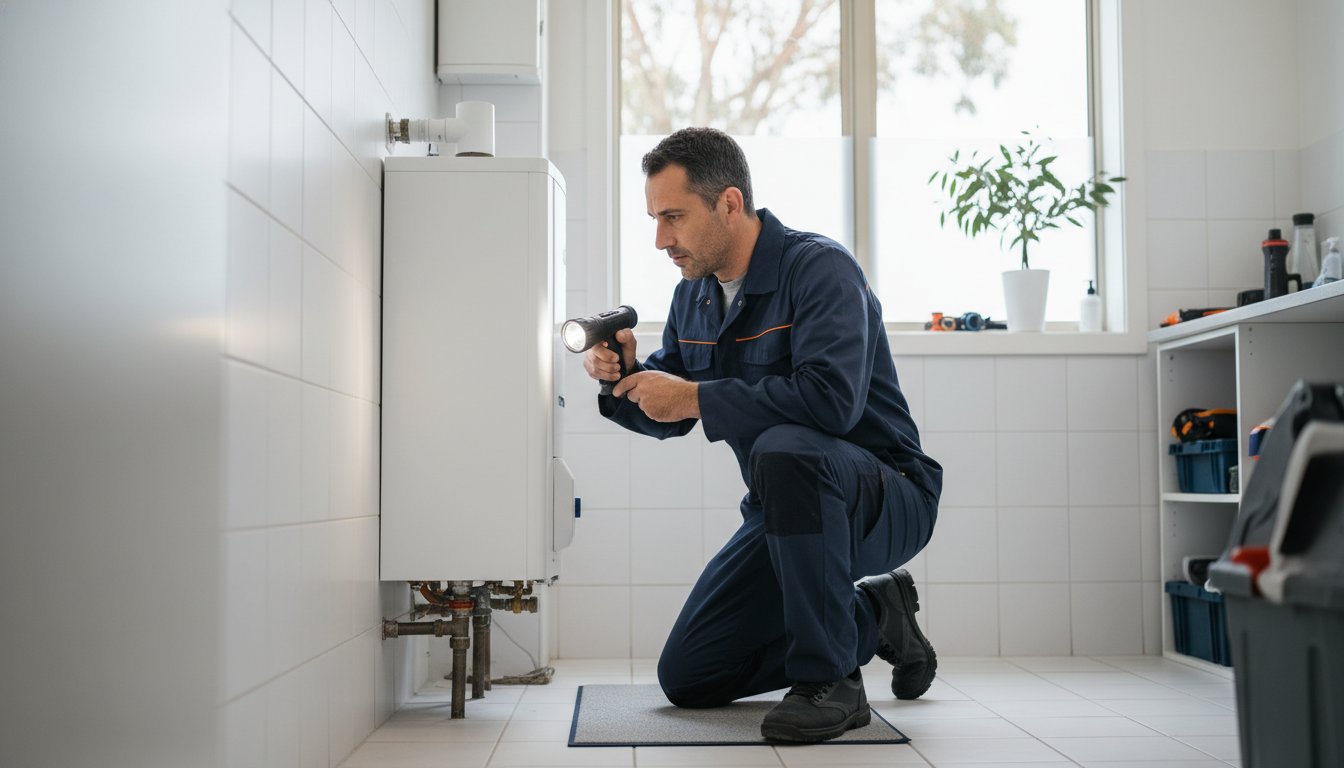
Why Your Water Heater Pilot Light Is Out & How to Fix It FAST (2026)
Your water heater pilot light going out isn't just a random annoyance; it's actually a safety system working exactly as it was designed to do. We know the feeling. You step into the shower expecting a warm wake-up call, but you're met with an icy blast instead. It's frustrating, it's cold, and if you're worried about gas leaks or expensive repair bills, it's incredibly stressful. You want your hot water back, and you want it back now, right?
You don't have to shiver through another day or guess about your family's safety. We'll help you understand exactly why your water heater pilot light out is happening and how to fix it FAST. You'll learn how to relight the flame safely, identify if a mechanical part like the thermocouple has failed, and know when it's time to call in a professional for a permanent solution. We're going to walk you through a simple, hassle-free process to get your home back to normal. Let's get that water hot again ASAP.
Key Takeaways
- Identify the common culprits behind your water heater pilot light out, ranging from simple air drafts to gas supply interruptions.
- Master the safe relighting process by following the critical five-minute wait rule to ensure all residual gas has cleared.
- Diagnose mechanical failures like a worn-out thermocouple or carbon buildup in the pilot tube that prevent the flame from staying lit.
- Protect your home by recognizing high-pressure gas leak signs, such as hissing sounds or the distinct smell of rotten eggs.
- Learn the specific warning signs, like an orange burner flame, that mean it's time to call a professional for a permanent fix.
What Causes a Water Heater Pilot Light to Go Out?
Finding your water heater pilot light out is frustrating, but it's important to remember that this little flame is part of a sophisticated safety network. Essentially, the pilot is a small, continuous flame that stands ready to ignite the main burner whenever your tank needs to heat up. When that flame disappears, the entire system stops working to protect your home. You might be asking, What is a pilot light? simply put, it is the heart of your gas appliance's ignition system. Understanding why it failed is the first step to getting your hot water back FAST.
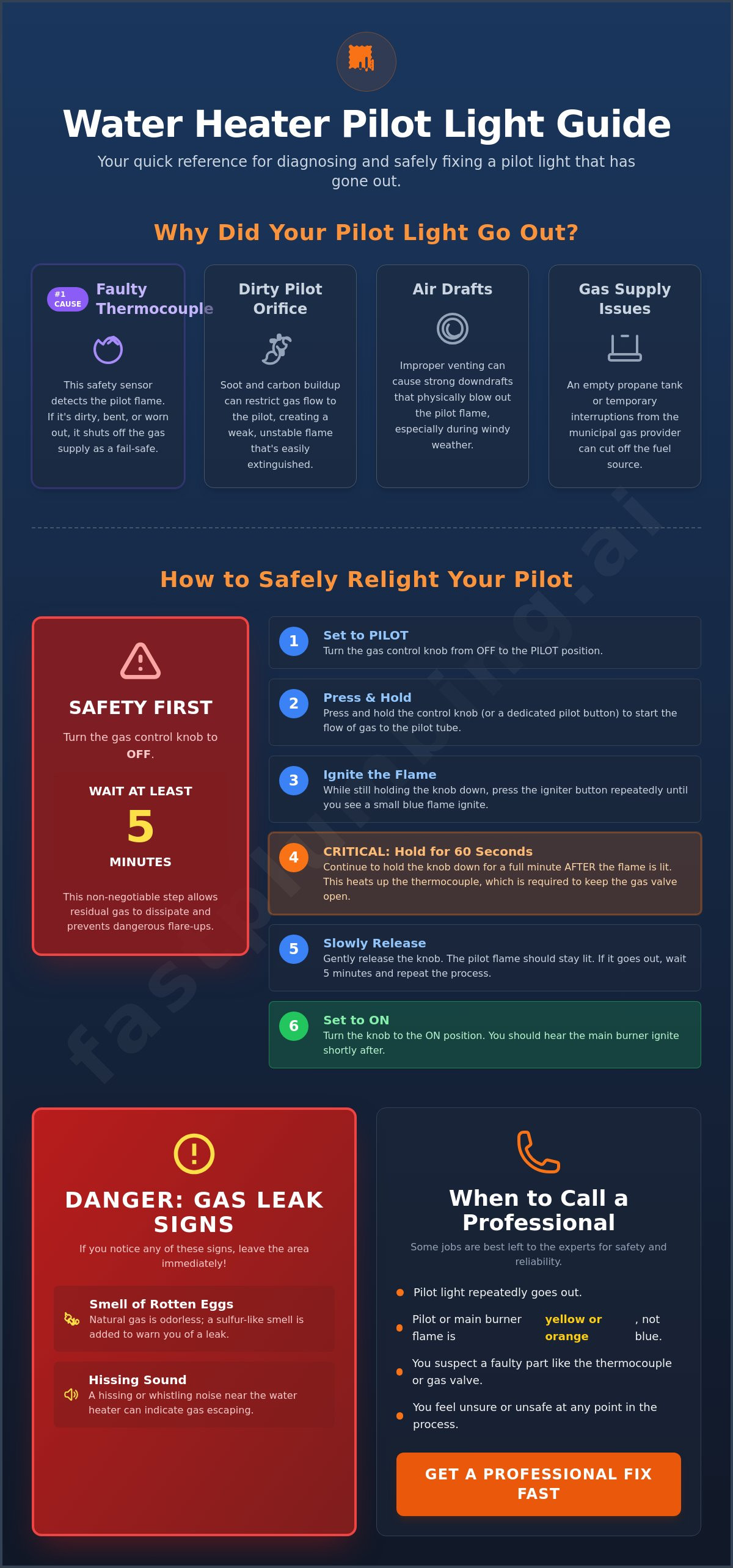
Mechanical triggers are often the culprit. Over months or years of operation, carbon deposits and soot can build up around the pilot orifice. This tiny opening must remain perfectly clear to maintain a steady gas flow. If dirt or debris restricts that flow, the flame becomes weak and unstable. A flickering, yellow flame is much easier to extinguish than a strong, blue one. If your pilot has been struggling for a while, a thorough cleaning might be all it needs to stay lit.
The Role of the Thermocouple in Your System
The thermocouple is a small but mighty safety sensor located right next to the pilot flame. It works by converting heat into a tiny electrical voltage. This electricity sends a signal to the gas control valve, telling it that it's safe to keep the gas flowing. If the thermocouple becomes dirty, bent, or simply wears out, it stops sending that signal. This triggers a "fail-safe" mechanism. The valve snaps shut instantly to prevent raw gas from leaking into your home. It's a brilliant safety feature, but it's also the number one reason homeowners lose their hot water.
External Environmental Factors
Sometimes, the cause is literally blowing in the wind. Improper venting or a damaged vent cap can allow powerful backdrafts to travel down the flue. These gusts can snuff out a pilot light in seconds, especially during severe weather. You should also consider your gas supply. If you rely on a propane tank, check the gauge immediately to ensure you aren't running on empty. For those on municipal lines, temporary pressure fluctuations from the utility provider can occasionally cause a shutdown, leading to your water heater pilot light out. Whatever the cause, identifying it quickly helps you decide if you can handle the fix yourself or if you need professional help ASAP.
How to Relight Your Water Heater Pilot Light Safely
Finding your water heater pilot light out is a major inconvenience, but relighting it is a task most homeowners can handle. You just need to follow a specific sequence to stay safe. Start by locating the gas control valve on the front of your tank. Turn the knob to the OFF position. Now, you must wait at least five minutes before doing anything else. This wait time is non-negotiable. It allows any residual gas to clear out of the burner chamber. Skipping this step increases the risk of flammable vapor ignition, which can lead to serious injury or property damage. Safety is our top priority, right?
Essential Tools and Preparation
While you wait for the gas to dissipate, clear the area around the base of the heater. Remove any flammable materials like cleaning supplies, rags, or cardboard boxes. Most modern units feature a built-in piezo igniter, which is a small red or black button that clicks when pressed. If your unit is an older model, you will need a long-reach multi-purpose lighter. Never use a short match or a pocket lighter. You want to keep your hands a safe distance from the combustion chamber. If you find the process confusing or the manufacturer instructions are missing from the tank, it's a good idea to consult a professional about your water heater system to ensure it's operating correctly.
Once the five minutes are up, follow these steps to get the flame back FAST:
- Turn the gas control knob to the PILOT position.
- Press the knob (or the dedicated pilot button) all the way down and hold it. This starts the flow of gas to the pilot tube.
- While holding the knob down, click the igniter button repeatedly. You should see a small blue flame through the sight glass at the bottom of the tank.
- Continue holding the knob down for at least 60 seconds after the flame appears.
- Slowly release the knob. If the flame stays lit, turn the knob to the ON position.
The "Wait and See" Method
Why do you have to hold the button for a full minute? This is the most common mistake homeowners make. As we mentioned in the previous section, the thermocouple is a safety sensor that needs to get hot to work. It takes about 30 to 60 seconds of direct contact with the flame to generate the electrical signal that "locks" the gas valve open. If you release the button too soon, the safety system thinks there is a leak and cuts the gas immediately. If the flame goes out the moment you let go, try the process one more time. If it fails again, you aren't just looking at a simple blowout; you likely have a mechanical issue that needs to be solved ASAP.
Why Your Pilot Light Won’t Stay Lit: Troubleshooting Components
If you followed the relighting steps and the flame vanished the moment you let go of the knob, you're likely dealing with a component failure. It is a common sign of a water heater pilot light out that goes beyond a simple draft or a temporary gas fluctuation. Most often, the issue lies with the thermocouple. This copper rod acts as the safety brain of the gas valve. If you want to understand the science behind it, you can read about how a thermocouple works. Essentially, if this part doesn't sense enough heat, it assumes there's a gas leak danger and shuts everything down to keep your home safe.
Cleaning vs. Replacing the Thermocouple
Sometimes the sensor isn't actually broken; it's just buried under soot. Carbon deposits can build up on the tip, acting like a layer of insulation that prevents the sensor from "feeling" the flame's heat. A thermocouple failure is technically defined as a voltage drop below 10 millivolts, which is far too low to keep the gas valve held open. You can try gently cleaning the tip with a piece of fine sandpaper to remove the grime. However, if the copper is burnt through or heavily warped, cleaning won't solve the problem. This is when a professional water heater repair becomes necessary to swap the part and restore your hot water ASAP.
Don't overlook the pilot tube itself. This tiny pipe delivers the gas directly to the pilot burner. If carbon deposits block the orifice, the flame will be too small to reach the thermocouple, causing the system to trip. You should also check the small copper supply line for any visible kinks. A bent line restricts gas flow just like a pinched garden hose. If these external parts are clear but the unit still won't stay lit, the internal electronics of the gas control valve may have failed entirely. We see this often in older units where the valve simply stops responding to the thermocouple's signal.
Air Intake and Combustion Issues
Your water heater needs to breathe to stay lit. Most modern tanks feature a Flame Arrestor Screen at the bottom designed to prevent accidental fires. If this screen gets covered in household dust, lint, or pet hair, it suffocates the pilot flame. Without a steady supply of oxygen, the flame will flicker, turn orange, and eventually die. Check the screen for blockages and clear them away to restore proper airflow. You should also inspect the burner assembly for heavy corrosion. If the metal is flaking off in large chunks, it can't maintain the steady combustion needed to keep your system running. We solve these "suffocation" issues daily to get homes back to normal fast and hassle-free, right?
Identifying Critical Safety Risks and Gas Leak Signs
Safety is the only thing more important than getting your hot water back. When you deal with a water heater pilot light out, you are dealing with a gas appliance. Natural gas is naturally odorless, so utility companies add a chemical called mercaptan. It creates that unmistakable "rotten egg" or sulfur smell. If you catch even a whiff of this near your unit, stop what you are doing immediately. You might also hear a faint hissing sound coming from the gas control valve or the supply lines. This is the sound of high-pressure gas escaping into your home. It's a crisis that needs a solution ASAP.
Pay attention to how you feel. Gas leaks aren't always loud or smelly. If you start feeling dizzy, nauseous, or suddenly lightheaded while standing near the water heater, treat it as an emergency. Follow this protocol to keep your family safe:
- Do not turn any lights on or off.
- Do not use your phone or any electronic devices inside the house.
- Locate the main gas shut-off valve on the pipe leading into the heater and turn it to the OFF position.
- Open windows only if they are already accessible, but prioritize getting everyone out of the building.
- Call for help from a safe distance once you are outside.
When Relighting Becomes Dangerous
You should never attempt to relight the pilot if you smell gas. It's that simple. If the pilot has been out for a while and the safety valve didn't close properly, gas can pool inside the combustion chamber. This "gas pooling" creates a highly volatile environment. Striking a match or clicking the igniter in a gas-filled chamber can lead to a small explosion or a flash fire. If your first two relighting attempts failed, don't keep trying. Repeatedly pumping gas into the chamber without a flame is dangerous, right?
Professional Gas Line Inspection
Suspected leaks require a specialized gas line repair expert. While some DIY guides suggest using soapy water to look for bubbles, this is often insufficient for small or hidden leaks. Professionals use electronic gas detectors that can sense microscopic traces of gas long before they become a fire hazard. We provide 24/7 emergency response because we know gas issues don't wait for business hours. If you suspect a leak or your unit keeps failing, contact our expert plumbing team for an immediate inspection to ensure your home is safe and secure.
When to Call a Professional for Water Heater Repair
Sometimes, a simple relighting isn't the end of the story. If you have successfully followed the steps to light the flame but find your water heater pilot light out for the third time in a single day, stop. This is a clear signal that a safety component has failed or your gas pressure is inconsistent. Repeatedly trying to force a failing system to work isn't just frustrating; it's a risk to your home's safety. You need a permanent solution that goes beyond a temporary spark. We are here to provide that answer ASAP, right?
There are specific visual warning signs that require an expert eye immediately. Take a look at the flame through the sight glass. A healthy pilot and burner flame should be a crisp, steady blue. If you see a flickering yellow or orange flame, your system is suffering from incomplete combustion. This is often caused by a lack of oxygen or a dirty burner, and it can lead to dangerous carbon monoxide buildup. You should also check the exterior of the tank. If you notice visible soot, dark scorch marks, or melted plastic around the draft hood, your water heater is backdrafting. This is a critical safety failure that needs professional intervention fast and hassle-free.
Age is another factor that shouldn't be ignored. If your water heater is over 10 years old, it is approaching the end of its reliable lifespan. While we can often replace a thermocouple or a valve, an older unit might be suffering from internal tank fatigue or heavy sediment buildup that makes repairs less cost-effective. In these cases, we'll give you an honest assessment of whether a fix is worth your money.
The FAST Solution: Why Professional Diagnostic Wins
Expert plumbers don't rely on guesswork. We use specialized tools like manometers to measure the precise gas pressure entering your system. If the pressure is off by even a fraction of an inch of water column, your pilot won't stay lit. We also help you decide between a simple part replacement, like a new thermocouple, or a full burner assembly swap. Making the right call now prevents a total system breakdown later. If your unit is showing its age, you might want to learn when to replace a water heater to avoid an emergency flood in your basement.
Fast Plumbing’s Commitment to Your Home
We treat your property with the highest level of respect. Our "Clean-Up Like It’s Their Own" promise means our technicians leave your utility room spotless. We don't leave a mess for you to deal with after the job is done. We also value your time above all else. Our 1-minute callback guarantee ensures that you aren't left waiting for hours when you have a household crisis. We provide the expert, no-nonsense service you need to get your hot water back today. Get your water heater fixed FAST—call our experts now!
Get Your Hot Water Back Today
You deserve a hot shower without the stress of a failing appliance. We have walked through the steps to relight your system safely and explained why that tiny thermocouple is so critical to your home's safety. Remember, if you smell gas or see an orange flame, step away and let a professional handle the risk. It's simply not worth the gamble, right?
Dealing with a recurring water heater pilot light out issue is a clear sign that your system needs expert attention before it leads to a total breakdown. With over 29 years of master plumbing experience, our licensed and insured team is ready to solve your problem 24/7. We don't believe in making you wait. That is why we offer a 1-minute callback guarantee to get your repair scheduled ASAP. We will arrive on time and treat your home with the respect it deserves.
Restore your hot water FAST with our 24/7 expert repair services!
Don't shiver through another cold morning. We are ready to help you get your home back to normal fast and hassle-free.
Frequently Asked Questions
Is it dangerous if my water heater pilot light goes out?
It is usually not dangerous because modern units have a safety valve that shuts off the gas flow when the flame disappears. However, your water heater pilot light out becomes a major safety risk if you smell gas or if the valve itself is faulty. If you detect a rotten egg odor, exit your home immediately and call for help ASAP. Never try to relight the unit if gas has pooled in the chamber.
How much does it cost to fix a water heater pilot light that keeps going out?
The cost to fix a pilot that keeps failing depends on which part has reached its limit. In 2026, the national average to have a professional replace a thermocouple ranges from $100 to $350. If the gas control valve is the culprit, professional replacement typically costs between $200 and $500. These rates are driven by labor and diagnostic fees rather than the price of the parts themselves.
Why does my pilot light go out when the burner kicks on?
This usually happens because of a drop in gas pressure or a dirty pilot orifice. When the main burner demands a large amount of gas, it can "starve" a weak pilot flame if the supply isn't steady. A dirty pilot tube might also produce a flame that is too small to stay stable during the ignition of the main burner. We solve these pressure issues fast and hassle-free, right?
Can a dirty air filter cause the pilot light to go out?
Yes, a clogged flame arrestor screen acts exactly like a dirty air filter and can suffocate the flame. This screen is located at the bottom of the unit and catches dust, lint, and pet hair. When airflow is restricted, the pilot doesn't get enough oxygen to stay lit. Cleaning this screen is a simple way to prevent your water heater pilot light out from becoming a recurring headache.
How long should a water heater thermocouple last?
A standard thermocouple typically lasts between 6 and 10 years depending on water quality and usage. Over time, the constant exposure to high heat causes the metal to degrade or develop heavy carbon buildup. If your unit is over a decade old, a failing thermocouple is often the first sign that your system is reaching the end of its reliable service life.
What happens if I leave the gas on but the pilot light is out?
Modern water heaters feature a fail-safe valve designed to stop the gas flow the moment the pilot goes out. If the system is working correctly, the gas won't just pump into your home. However, you should never rely solely on this mechanical part. If the valve is old or damaged, gas can leak, creating a serious fire hazard. Always turn the gas knob to OFF if the flame is out.
Can wind really blow out a water heater pilot light?
Yes, powerful backdrafts caused by high winds or improper venting can easily blow out the pilot flame. This is especially common in homes with outdoor vents or damaged vent caps. If your pilot only fails during stormy weather, your venting system likely needs an inspection. Ensuring your vent is clear and properly shielded keeps your hot water running regardless of the weather outside.
Should I replace my water heater if the pilot light keeps failing?
You should consider replacement if the unit is over 10 years old and the repair costs are high. With the average cost to repair a water heater in 2026 sitting at approximately $615, putting that money toward a new, high-efficiency unit is often the smarter choice. We help you weigh the cost of continued repairs against the long-term savings of a new installation to find the best solution for your home.
